Can You Paint Laminate Cabinets? Portland Homeowner Guide
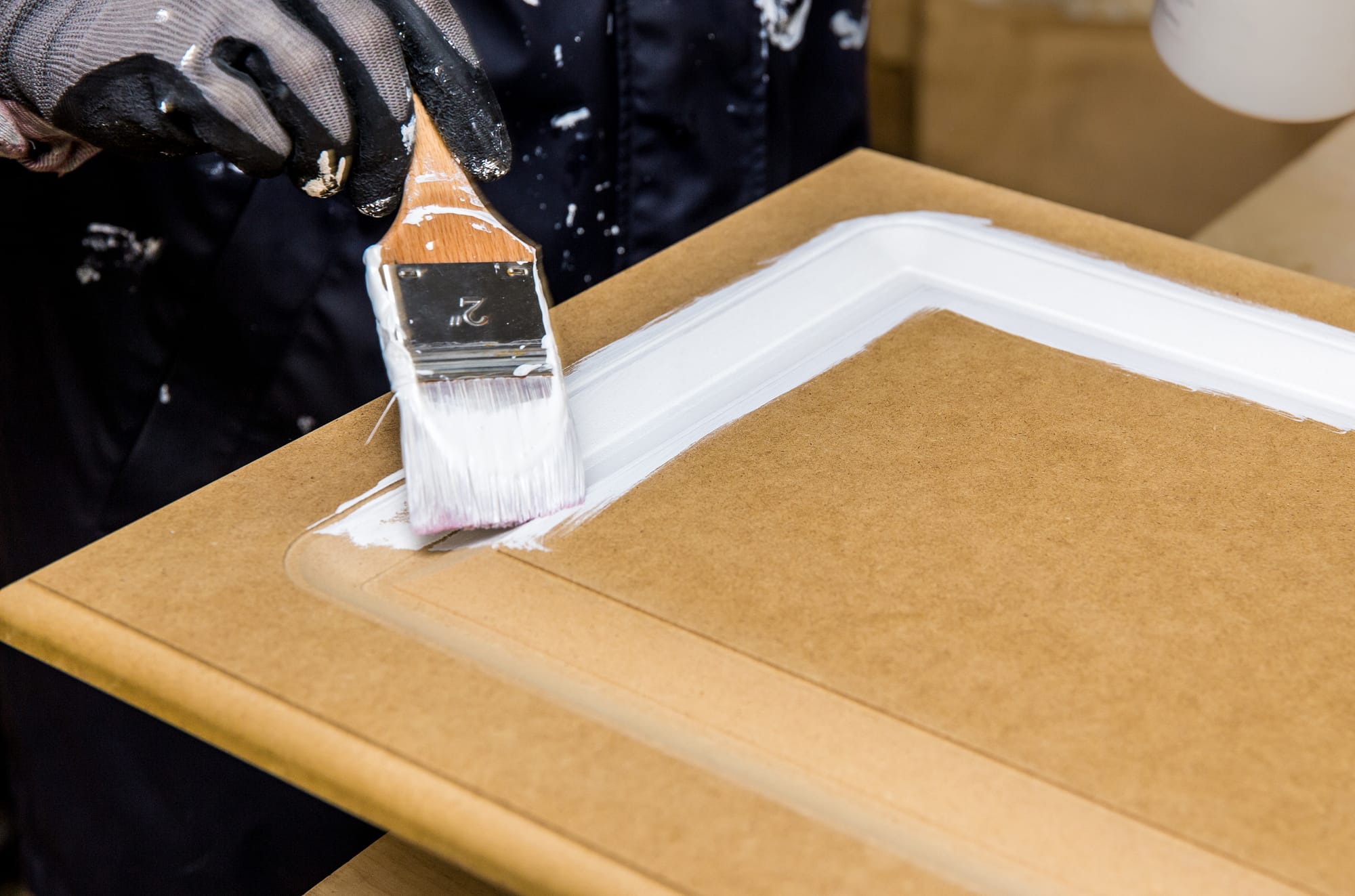
Key Features
- Laminate cabinets can be painted when adhesion is handled correctly.
- Bonding primer is not optional. It is the bridge between slick laminate and cabinet paint.
- Professional cabinet coatings last longer than standard wall paint and are better suited for daily kitchen use.
Explore More Resources
- Cabinet Painting Services in Portland
- Cabinet Painting Cost Portland Oregon
- Cabinet Refinishing vs Replacement Cost
- Interior Painting Services in Portland
- Request an Estimate
A question we hear constantly from Portland homeowners is:
“Can laminate cabinets actually be painted?”
The answer is yes, but there is a giant asterisk attached.
Many kitchens built between the 1980s and early 2000s used laminate, melamine, MDF, particleboard, or thermofoil-style cabinetry instead of solid wood. A lot of those cabinets are still structurally fine, but the finish looks dated, yellowed, glossy, or just plain tired. That puts homeowners in a weird spot: replace the cabinets and spend a small fortune, or refinish what’s already there.
For many homes, especially if the cabinet boxes are still solid, laminate cabinet painting can be a practical way to modernize the kitchen without tearing everything apart. But this is not a slap-some-paint-on-it situation. Laminate is slick, non-porous, and designed to resist stuff sticking to it. Great for wiping off spaghetti sauce. Terrible for paint adhesion.
If you’re considering cabinet refinishing in Portland, the big question is not only whether laminate cabinets can be painted. The better question is whether your specific cabinets are good candidates for painting.
For homeowners comparing options, this article pairs well with our cabinet painting services in Portland, our guide to cabinet painting cost in Portland, and our breakdown of cabinet refinishing vs replacement cost.
Things to Know
- Laminate is smooth and non-porous, which makes paint adhesion harder.
- Peeling laminate, swollen MDF, or separating thermofoil may not be worth painting.
- Cabinet doors usually need to be removed, cleaned, sanded, primed, sprayed or carefully finished, then reinstalled.
- Dark color changes, white finishes, and high-use kitchens require better prep and more patience.
- Painted laminate cabinets need time to cure before they reach full durability.
Quick Answer: Can Laminate Cabinets Be Painted?
Yes, laminate cabinets can be painted successfully when the process includes:
- Deep cleaning and degreasing
- Scuff sanding or mechanical abrasion
- Dust removal and surface inspection
- High-adhesion bonding primer
- Durable cabinet-grade paint or enamel
- Proper cure time before heavy use
The biggest mistake homeowners make is assuming paint will stick to laminate the same way it sticks to wood. It will not. Laminate needs a system, not wishful thinking in a gallon can.
What Are Laminate Cabinets?
Laminate cabinets are usually built from a composite core with a decorative surface bonded to the outside.
Common cabinet materials include:
- Particleboard
- MDF
- Melamine
- Plastic laminate
- Thermofoil
- Veneered composite panels
The outside layer is what you see. The inside material is usually not solid wood. That is not automatically bad. Plenty of laminate cabinet boxes are still strong decades later. The issue is that the outside surface is slick, sealed, and not naturally friendly to paint.
Laminate vs. Thermofoil vs. Melamine
Homeowners often call everything “laminate,” but there are a few different surfaces hiding under that label.
Laminate cabinets
A hard plastic-like layer bonded to the cabinet surface. Usually more durable than cheap contact-style coverings.
Melamine cabinets
A resin-coated surface often used inside cabinet boxes, shelves, and some cabinet faces.
Thermofoil cabinets
A vinyl-like film heat-bonded over MDF doors. These are common in older kitchens and can be tricky if the film starts peeling.
Painted MDF cabinets
These are smoother than wood but usually more paint-friendly than plastic laminate if properly prepared.
The difference matters because some surfaces are better candidates for refinishing than others.
Why Are Laminate Cabinets Harder to Paint?
Laminate is built to resist staining, moisture, and daily kitchen mess. That same resistance is exactly why paint struggles to stick.
The main challenges are:
- Slick plastic surface
- Poor mechanical bond
- Grease contamination
- Glossy top layer
- Existing edge wear
- Heat damage near appliances
- Peeling or lifting surface material
Paint needs either something to soak into or something to grip. Laminate gives it neither unless the surface is properly prepared.
That is why painting laminate cabinets without prep usually ends badly. It may look good for a few weeks, then edges start chipping, doors start peeling, and suddenly the “cheap refresh” becomes a cabinet crime scene. Nobody needs that drama before coffee.
How Do You Know If Laminate Cabinets Are Good Candidates for Painting?
Before painting laminate cabinets, inspect the cabinets honestly.
Good Candidates
Laminate cabinets are usually worth considering if:
- Cabinet boxes are solid
- Doors close properly
- Laminate is firmly attached
- Edges are not peeling
- Surfaces are not swollen
- Layout still works for the kitchen
- You like the cabinet style enough to keep it
- Replacement cost feels unnecessary
Bad Candidates
Painting may not be the right move if:
- The laminate layer is peeling badly
- Thermofoil is separating from the door
- MDF or particleboard is swollen
- Cabinet boxes are sagging
- Doors are warped
- Water damage is active
- Hinges are failing or pulling out
- You hate the cabinet layout
Painting can improve the finish. It cannot magically fix a failing cabinet structure. If the cabinet is falling apart, painting it is basically putting a tuxedo on a raccoon. Technically dressed up, still a problem.
What Is the Most Important Step in Painting Laminate Cabinets?
Surface preparation. Every time.
Prep determines whether laminate cabinet paint lasts or fails.
A proper prep process usually includes:
- Removing cabinet doors and drawer fronts
- Labeling doors and hardware
- Cleaning grease and residue
- Deglossing or sanding the surface
- Repairing minor chips or defects
- Removing dust completely
- Applying bonding primer
- Light sanding between primer and finish coats
- Applying cabinet-grade coatings
- Allowing proper dry and cure time
Skipping prep is the fastest way to ruin the project.
For a deeper look at how cabinet work is priced and planned, read our cabinet painting cost guide for Portland homeowners.
Why Is Cleaning So Important Before Painting Laminate Cabinets?
Kitchen cabinets collect more contamination than people realize.
Common buildup includes:
- Cooking grease
- Hand oils
- Smoke residue
- Cleaning product residue
- Dust
- Food splatter
- Wax or polish
- Silicone-based cleaners
That contamination blocks adhesion. Paint may stick to the grease instead of the cabinet. Then the grease lets go, and the paint goes with it.
Before sanding, cabinets should be thoroughly degreased. Sanding greasy cabinets just smears the contamination around and drives it into the surface. That is not prep. That is chaos with sandpaper.
Do Laminate Cabinets Need to Be Sanded Before Painting?
Yes. Laminate cabinets usually need sanding or scuff sanding before primer.
The goal is not to grind through the laminate. The goal is to dull the glossy surface and create a better mechanical bond for primer.
What Scuff Sanding Does
Scuff sanding helps:
- Remove gloss
- Create micro-scratches
- Improve primer grip
- Expose surface defects
- Reduce peeling risk
The surface should look evenly dulled before primer. If it still looks shiny, it probably has not been prepared enough.
What Not to Do
Do not aggressively sand through the laminate layer. Once you expose the particleboard or MDF underneath, you can create swelling, fuzzy edges, and uneven absorption.
Gentle, consistent abrasion is the goal.
Why Is Bonding Primer Essential for Laminate Cabinets?
Bonding primer is the bridge between laminate and paint.
Standard wall primer is not designed for slick cabinet surfaces. It may stick okay at first, but cabinets are touched, cleaned, bumped, opened, closed, and exposed to kitchen humidity daily. They need stronger adhesion than a typical wall.
Bonding primer helps:
- Grip slick laminate
- Improve paint adhesion
- Reduce peeling
- Create a stable base coat
- Improve finish consistency
- Block some stains or discoloration
For DIY homeowners building a supply list, a good starting point is professional-grade cabinet painting prep supplies. Quick disclosure: this is an affiliate link, which means we may earn a small commission if you buy through it. It does not change your price, and we only recommend tools and materials that fit the actual job.
What Paint Works Best on Laminate Cabinets?
Laminate cabinets need durable coatings built for trim, doors, and cabinetry.
Standard interior wall paint is usually too soft. It may look fine at first, but it can scratch, chip, or feel tacky under daily use.
Best Coating Types for Laminate Cabinets
Waterborne alkyd enamel
Durable, smoother than standard acrylic, and commonly used for trim and cabinets.
Acrylic cabinet coatings
Good flexibility, adhesion and color retention when used with the right primer.
Hybrid enamel paints
Designed to provide a harder finish while still offering water cleanup.
Urethane-modified cabinet coatings
Often used when durability and smoothness are priorities.
Cabinet Paint Comparison Box
Waterborne Alkyd Enamel
Cost: Medium to high
Durability: Strong
Best for: Kitchens, trim, cabinet doors
Main advantage: Smooth finish with good hardness
Acrylic Cabinet Coating
Cost: Medium
Durability: Good
Best for: Moderate-use kitchens and bathroom vanities
Main advantage: Strong adhesion and easier application
Hybrid Enamel
Cost: Medium to high
Durability: Strong
Best for: Cabinet refinishing and high-touch surfaces
Main advantage: Washable finish with better leveling
Regular Wall Paint
Cost: Low
Durability: Poor for cabinets
Best for: Walls, not doors or drawers
Main problem: Too soft for daily cabinet use
Should Laminate Cabinets Be Sprayed or Brushed?
Laminate cabinets can be brushed and rolled, but spraying usually creates a smoother finish.
Spray Finishing
Spray finishing provides:
- Smoother cabinet doors
- Fewer brush marks
- Better leveling
- More even coverage
- Factory-style appearance
This is why many professional cabinet painters spray doors and drawer fronts off-site or in a controlled setup.
Brush and Roll Finishing
Brush and roll application can work for cabinet boxes or DIY projects, but the final texture is usually more visible.
Brush and roll may be acceptable if:
- Budget is limited
- Only boxes are being painted
- The homeowner accepts slight texture
- The color is forgiving
- The finish is not high-gloss
For the cleanest result, doors and drawer fronts usually benefit from spray application.
What Does the Laminate Cabinet Painting Process Look Like?
Here is the cleaner version of the process most homeowners should expect.
Step 1: Cabinet Evaluation
Before any coating work begins, the cabinets should be inspected.We look for:
- Peeling laminate
- Swollen panels
- Loose hinges
- Damaged edges
- Grease buildup
- Previous paint failure
- Water damage
- Door alignment issues
If the cabinets are not good candidates, we would rather say that upfront than sell a project that should not happen.
Step 2: Door and Hardware Removal
Doors and drawer fronts should be removed and labeled. Hardware should be organized so reinstallation does not become a scavenger hunt.
This matters more than people think. A messy removal process creates headaches later.
Step 3: Cleaning and Degreasing
All surfaces need to be cleaned thoroughly. Kitchen cabinets, especially around stoves and handles, can be loaded with grease.
Step 4: Scuff Sanding
The laminate surface is dulled to improve adhesion.
Step 5: Repairs
Small chips, edge issues and minor surface defects can often be filled and sanded smooth. Major peeling or swelling is a different story.
Step 6: Bonding Primer
A high-adhesion primer is applied and allowed to dry properly.
Step 7: Sanding Between Coats
Light sanding between coats improves smoothness and helps the final finish look more professional.
Step 8: Finish Coats
Cabinet-grade paint is applied in thin, controlled coats.
Step 9: Cure Time
Dry does not mean cured. Cabinets may feel dry quickly, but the coating continues to harden over time.
Step 10: Reinstallation and Adjustment
Doors, drawers, and hardware are reinstalled. Final adjustments are made so everything lines up cleanly.
How Long Do Painted Laminate Cabinets Last?
When prepared correctly and coated with a durable cabinet system, painted laminate cabinets can last many years.
Typical lifespan ranges:
- Heavy-use kitchen: 5–7 years before visible wear may show
- Moderate-use kitchen: 7–10 years
- Low-use vanity or secondary space: 10+ years possible
Durability depends on:
- Prep quality
- Primer choice
- Paint system
- Application method
- Cabinet condition
- Cleaning habits
- Household use
- Cure time before heavy use
The finish will usually wear first around handles, edges, trash pull-outs, sink areas and frequently used drawers.
How Much Does It Cost to Paint Laminate Cabinets?
Pricing depends on the size of the kitchen, cabinet condition, coating system, color change, and whether doors are sprayed.
Common cost factors include:
- Number of doors and drawers
- Cabinet box complexity
- Amount of degreasing needed
- Existing finish condition
- Repairs required
- Primer system
- Number of finish coats
- Spray setup
- Hardware changes
- Timeline and access
For a full cost breakdown, see our guide: Cabinet Painting Cost Portland Oregon.
Cost Factor Box
Small vanity or laundry cabinets
Lower cost, less disruption, often a good test project.
Average kitchen cabinet repaint
Moderate to higher cost depending on number of doors, prep and spray finish.
Large kitchen with island and built-ins
Higher cost due to door count, masking, staging, coating time and reinstallation.
Damaged laminate or peeling thermofoil
May not be cost-effective to paint if the surface is failing.
Laminate Cabinet Painting vs Cabinet Replacement
Laminate cabinet painting makes the most sense when the cabinets are structurally sound and the homeowner wants a visual upgrade without a full remodel.
Refinishing May Make Sense If:
- Cabinet layout works
- Boxes are solid
- Doors are in decent shape
- Budget matters
- You want less disruption
- You like the general cabinet style
- You are preparing to sell or refresh the home
Replacement May Make Sense If:
- Layout is terrible
- Boxes are damaged
- Doors are warped
- Laminate is peeling everywhere
- You want a new kitchen configuration
- You need new storage features
- Water damage is severe
For a deeper decision guide, read Cabinet Refinishing vs Replacement Cost.
DIY vs Professional Laminate Cabinet Painting
Laminate cabinet painting is possible as a DIY project, but it is not the easiest painting project in the house.
DIY vs Pro Comparison Box
DIY Laminate Cabinet Painting
Cost: Lower upfront
Time: High
Risk: Medium to high
Best for: Small vanities, laundry cabinets, low-risk projects
Biggest concern: Adhesion failure, brush marks, poor cure time
Professional Cabinet Painting
Cost: Higher upfront
Time: Faster and more structured
Risk: Lower when done properly
Best for: Kitchens, resale prep, high-use cabinets
Biggest advantage: Better prep, coatings, finish quality and process control
Cabinet Replacement
Cost: Highest
Time: Longest
Risk: Project disruption and remodeling delays
Best for: Damaged cabinets, layout changes, major remodels
Biggest advantage: New boxes, doors and storage layout
Common Mistakes When Painting Laminate Cabinets
Skipping Degreasing
This is the big one. Grease destroys adhesion.
Using Regular Wall Paint
Wall paint is not built for cabinet abuse.
Not Sanding Enough
If the surface stays glossy, primer has less to grip.
Using the Wrong Primer
Bonding primer matters. This is not the place to get cute and cheap.
Painting Over Peeling Thermofoil
If the surface layer is already letting go, paint will not magically lock it down forever.
Rushing Cure Time
Cabinet coatings need time to harden. Putting doors back into heavy use too quickly can cause early damage.
Ignoring Hardware
New pulls and hinges can dramatically improve the final look. Old hardware on fresh cabinets can make the project feel half-finished.
How Should You Maintain Painted Laminate Cabinets?
Painted laminate cabinets are durable, but they are not bulletproof.
Maintenance Tips
- Use soft cloths for cleaning
- Avoid abrasive scrub pads
- Clean grease regularly
- Use mild soap and water
- Avoid harsh chemical cleaners
- Use cabinet pulls instead of grabbing painted edges
- Let the finish cure before heavy cleaning
- Keep moisture controlled around sinks and dishwashers
A cabinet paint job can last much longer when homeowners treat the surface properly during the first few weeks after painting.
Why Laminate Cabinet Painting Makes Sense in Many Portland Homes
Portland has plenty of homes from the 80s, 90s and early 2000s with laminate or thermofoil-style cabinets. In many of those homes, the cabinets are not “bad.” They are just dated.
That is where refinishing can be a strong option.
Laminate cabinet painting can help homeowners:
- Modernize the kitchen
- Avoid full replacement cost
- Improve resale appeal
- Update older finishes
- Coordinate with new counters or flooring
- Refresh rental or investment properties
- Reduce remodel disruption
For homeowners already updating walls, trim or other interior surfaces, pairing cabinets with interior painting services in Portland can create a much more complete transformation.
What Should You Ask Before Hiring a Cabinet Painter?
Before hiring a cabinet painter for laminate cabinets, ask direct questions.
Cabinet Painter Checklist
- Have you painted laminate cabinets before?
- What primer do you use for slick surfaces?
- Do you degrease before sanding?
- Are doors sprayed or brushed?
- How do you label and reinstall doors?
- What coating system do you recommend?
- How long before cabinets can be used normally?
- What happens if laminate is peeling?
- Do you include minor repairs?
- Can I see cabinet project examples or reviews?
A good contractor should be able to explain the process clearly. If the answer is “we just sand it a little and paint it,” run. Politely, but run.
You can also check our painting process and reviews if you want to understand how we approach prep, communication and follow-through.
Want a Cleaner Kitchen Without Replacing Everything?
If your laminate cabinets are structurally sound, cabinet painting may be one of the highest-impact upgrades you can make without a full remodel.
The trick is doing it correctly.
That means:
- Honest cabinet inspection
- Proper cleaning
- Proper sanding
- Bonding primer
- Cabinet-grade coatings
- Controlled application
- Realistic expectations
If you are in the Portland metro area and want help deciding whether your laminate cabinets are worth painting, you can request a cabinet painting estimate.
In Our Experience
We see a lot of laminate and thermofoil cabinetry in Portland-area homes built from the 1980s through the early 2000s. Some of it is absolutely worth refinishing. Some of it is not. The difference is usually cabinet condition, not cabinet age. If the boxes are solid and the surface is still bonded well, a proper cabinet painting system can make a dated kitchen look dramatically better. If the laminate is peeling, swollen or separating, replacement may be the smarter move. The honest answer beats the easy sale every time.
People Also Ask
Can laminate cabinets be painted successfully?
Yes. Laminate cabinets can be painted successfully when they are cleaned, sanded, primed with bonding primer and finished with durable cabinet-grade paint.
Will paint stick to laminate cabinets?
Paint will stick to laminate cabinets only when the surface is properly prepared. The most important steps are degreasing, scuff sanding and using a high-adhesion bonding primer.
How long do painted laminate cabinets last?
Painted laminate cabinets often last 5 to 10 years depending on prep quality, coating system, kitchen use and cleaning habits.
Is it better to paint or replace laminate cabinets?
Painting is usually better when the cabinets are structurally sound and the layout works. Replacement is better when boxes are damaged, laminate is peeling badly or the kitchen layout needs to change.
Can you paint peeling laminate cabinets?
Minor edge issues may be repairable, but badly peeling laminate or separating thermofoil is usually a poor candidate for painting.
Keyword
Internal Links for This Article
Cabinet painting services in Portland
https://www.lightmenpainting.com/services/cabinet-painting
Use near the intro, mid-article CTA and final CTA.
Cabinet Painting Cost Portland Oregon
https://www.lightmenpainting.com/blog/cabinet-painting-cost-portland
Use in the cost section.
Cabinet Refinishing vs Replacement Cost
https://www.lightmenpainting.com/blog/cabinet-refinishing-vs-replacement-portland
Use in the refinishing vs replacement section.
Interior painting services in Portland
https://www.lightmenpainting.com/services/interior-painting
Use in the Portland kitchen/interior refresh section.
Estimate Request
https://www.lightmenpainting.com/estimates
Use in the final CTA.
Painting Process
https://www.lightmenpainting.com/process
Use in the hiring/contractor evaluation section.
Reviews
https://www.lightmenpainting.com/reviews
Use near the hiring trust section.
Portland Homeowner Takeaway
Laminate cabinets can be painted, but the project has to be handled like a cabinet coating system, not a weekend wall-painting project. The surface needs to be cleaned, sanded, primed with a bonding primer and finished with cabinet-grade coatings. If the cabinets are solid, refinishing can save money and give your kitchen a major upgrade. If the laminate is peeling or the boxes are damaged, replacement may be the better call.
Lightmen Painting Serving
Lightmen Painting serves Portland, Tigard, Lake Oswego, Tualatin, West Linn, Milwaukie, Sherwood, Happy Valley, Oregon City, Beaverton, Hillsboro and Gresham.Need help deciding whether your laminate cabinets are worth painting?
Request an estimate: https://www.lightmenpainting.com/estimates
Email: scheduling@lightmenpainting.com
Call: 503-389-5758
CCB# 228370
Definitions
- Laminate Cabinets-Cabinets with a plastic-like decorative surface bonded to MDF, particleboard or composite material.
- Cabinet Painting-The process of applying primer and durable coatings to cabinet doors, drawers and boxes.
- Bonding Primer-A primer designed to adhere to slick, glossy or hard-to-paint surfaces.
- Cabinet Refinishing-Updating existing cabinets with paint, stain or coatings instead of replacing them.
- Thermofoil Cabinets-Cabinet doors usually made from MDF wrapped in a heat-bonded vinyl-like surface.
- Melamine-
- A resin-coated surface often used on cabinet interiors, shelves and some cabinet faces.
- Waterborne Alkyd Enamel-A durable paint that offers oil-like hardness with water-based cleanup.
- Cabinet Adhesion-How well primer and paint bond to the cabinet surface.
- Scuff Sanding-Light sanding used to dull a glossy surface and improve primer grip.
- Spray Finishing-Applying paint with a sprayer to create a smoother, more even finish.
- Cabinet Cure Time-The time required for cabinet paint to fully harden after drying.
- MDF Cabinets-Cabinets or cabinet doors made from medium-density fiberboard, a smooth engineered wood product.
Can you paint laminate cabinets? Yes, laminate cabinets can be painted when they are properly cleaned, sanded, primed and coated with durable cabinet paint. Laminate cabinet painting is different from painting wood cabinets because laminate surfaces are smooth, slick and non-porous. Portland homeowners considering cabinet refinishing should understand that bonding primer is essential for adhesion, and professional cabinet coatings are better suited for daily kitchen use than standard wall paint. Painted laminate cabinets can last for many years when the cabinet boxes are solid, the laminate is not peeling, and the finish system is applied correctly. Laminate cabinet painting in Portland can be a practical alternative to cabinet replacement when homeowners want to update an older kitchen without the cost and disruption of a full remodel.