House Painting in Beaverton: How Fall Rain Changes Prep, Drying Time and Scheduling
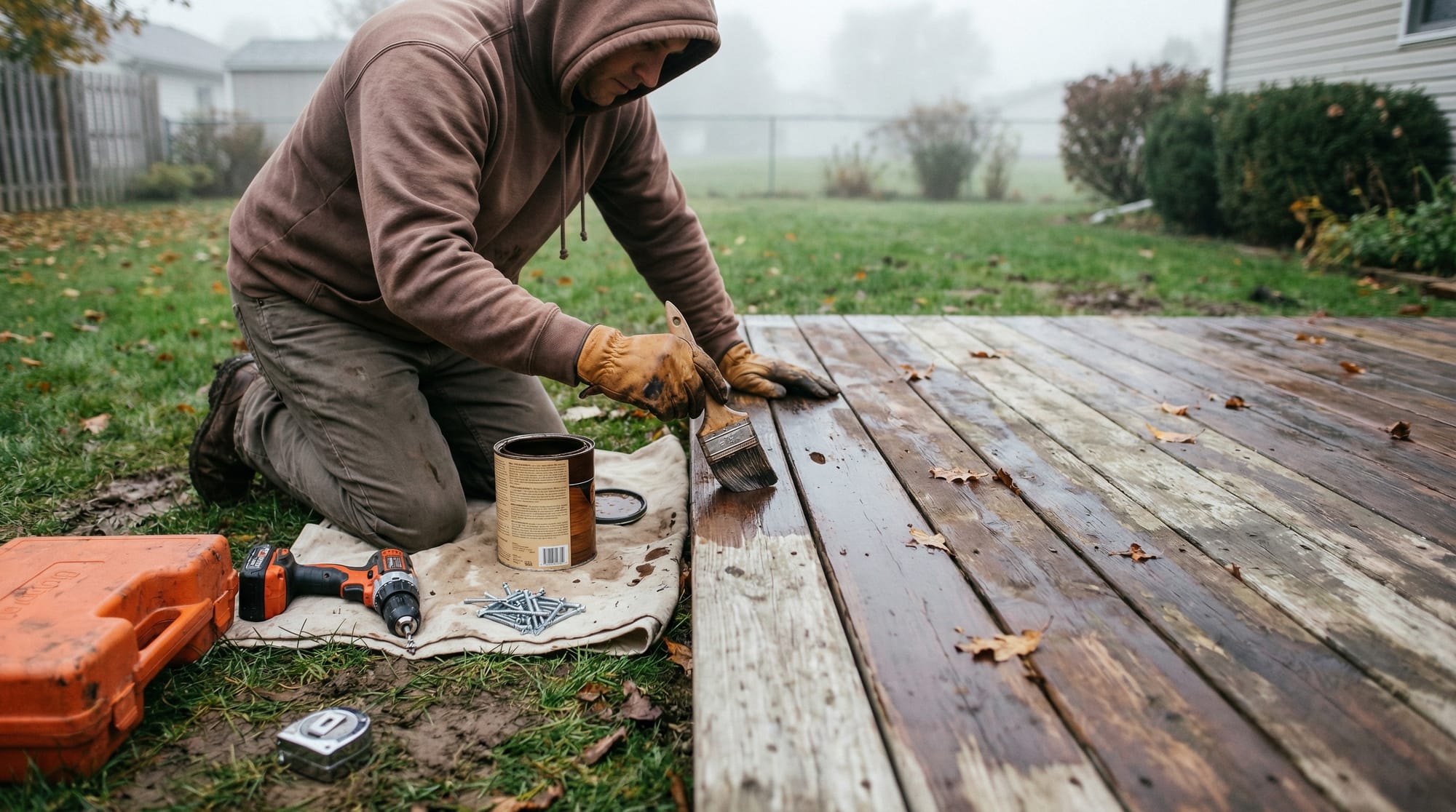
KEY FEATURES
- Beaverton-specific seasonal intent: Targets homeowners deciding whether exterior painting is still practical as fall rain increases.
- Verified local landing-page connection: Links naturally to Lightmen's live Portland Metro painting-contractor landing page, which specifically includes Beaverton.
- Rain versus surface-moisture distinction: Explains why “it's not raining” is not the same as “the siding is ready.”
- Drying-window explanation: Shows homeowners why fall workdays can start later and end earlier without implying that the crew is moving slowly.
- Elevation-based planning: Explains why shade, vegetation, sun and exposure can make different sides of the same Beaverton house dry at different rates.
- Condition-first CTA: Moves uncertain homeowners toward ECR evaluation rather than automatically selling a repaint.
Fall house painting in Beaverton creates a question we hear throughout the Portland metro:
Can you still paint outside when the rainy season starts?
The answer is:
Sometimes.
That answer is less satisfying than a simple yes or no, but it is much more useful.
Exterior painting does not fail because the calendar says October.
It runs into trouble when painters ignore:
- Wet siding
- Rain forecasts
- Dew
- Surface temperature
- Cooler evenings
- Slower drying
- Shorter daylight
- Product requirements
That distinction matters in Beaverton because fall weather changes quickly.
A sunny afternoon does not automatically mean siding that was soaked yesterday is ready for paint.
A dry morning does not guarantee the coating has enough weather window before evening moisture arrives.
And a five-day painting schedule written in July may become a seven- or nine-calendar-day project in fall simply because the crew has fewer usable application hours.
National Weather Service Portland climate normals illustrate the seasonal shift well. Normal rainfall at the downtown Portland reference location rises from about 1.58 inches in September to 3.96 inches in October and 6.58 inches in November.
For Beaverton homeowners, that means fall exterior painting becomes less about what month is it? and more about:
What are the actual surface and weather conditions today?
Lightmen's Portland Metro painting contractor page, which specifically includes Beaverton, reflects the same regional reality: exterior work here needs preparation and coating systems suited to Portland-area moisture rather than a generic painting schedule built for a drier climate.Here's what changes when fall rain enters the equation.
THINGS TO KNOW
- Fall exterior painting in Beaverton is possible when the actual surface, forecast and coating requirements support it.
- National Weather Service Portland normals show a clear seasonal precipitation increase from September into October and November, making exterior scheduling progressively less predictable.
- Exterior siding needs to be dry enough for the coating system; the absence of active rain alone does not establish readiness.
- Sherwin-Williams recommends avoiding exterior painting immediately after rain and emphasizes that wood and masonry can retain substantial moisture after soaking weather.
- Morning dew can delay fall application even after a dry night.
- Cooler conditions can slow drying and reduce the usable daily painting window.
- Different elevations of the same home can dry at different rates.
- Prep can often continue during some marginal weather periods even when finish-coat application should wait.
- Exterior schedule estimates should allow for weather delays without using weather as an excuse for poor communication.
- When the available weather window is no longer reasonable, scheduling the repaint for a better season is preferable to forcing the coating application.
Can You Paint a House Exterior in Beaverton During Fall?
Yes, when conditions support it.
Fall does not create an automatic stop date for exterior painting.
September can offer very good exterior-painting conditions.
Early October can still produce useful dry stretches.
Later fall becomes progressively harder because painters have to work around more frequent:
- Rain
- Morning moisture
- Cool temperatures
- Short days
- Shaded surfaces that dry slowly
Lightmen's exterior painting service takes the same condition-based approach: the surface needs to be clean, dry and suitable for the coating being applied.
The key is not forcing the project just because it is on the calendar.
Why Does Fall Rain Matter Before the Paint Even Comes Out?
Because exterior coatings need a suitable surface.
Sherwin-Williams' exterior preparation guidance says exterior surfaces should be clean, solid and dry and advises against painting immediately after rain or when rain is predicted.
That sounds straightforward.
But siding doesn't dry equally.
A house can look dry from the driveway while moisture remains in:
- Wood
- Deep siding joints
- Trim
- Horizontal ledges
- Shaded elevations
That is why a professional painter needs to evaluate the actual surface rather than simply look up and confirm that water is no longer falling from the sky.
How Long Should You Wait to Paint After Rain?
There is no universal number of hours that applies to every house.
Sherwin-Williams notes that the wait depends on how wet the surface became and that wood or masonry can absorb more moisture than materials such as aluminum or vinyl. Its guidance suggests waiting at least a day after a heavy rain while emphasizing that the surface must actually be dry before painting.
That's the important part.
Not:
Twenty-four hours passed.
But:
Is the surface ready?
A lightly damp smooth surface after a passing shower and saturated cedar after prolonged rain are completely different conditions.
Why Can Cedar Siding Take Longer to Dry?
Wood absorbs moisture.
Cedar can be an excellent exterior siding material, but weathered or exposed areas can take time to release moisture after rain.
That is especially important where the coating has already failed.
If peeling paint has exposed raw wood, those sections may take longer to become suitable for primer and finish coating than neighboring painted surfaces.
This is one reason Lightmen's Exterior Condition Report can be useful when a homeowner is unsure whether the house simply needs repainting or whether moisture exposure, bare wood and localized coating failure need to be addressed first.
Fall scheduling should follow the slowest important surfaces.
Not the driest wall on the house.
Do All Four Sides of a Beaverton House Dry at the Same Speed?
Usually not.
This is one of the most important things homeowners can understand about fall exterior painting.
Different elevations receive different amounts of:
- Sun
- Shade
- Wind
- Tree cover
- Roof runoff
- Weather exposure
One side may be ready while another remains damp.
A shaded elevation surrounded by mature landscaping can behave very differently from a wall receiving afternoon sun.
The entire house does not receive one universal drying signal.
That means the painter may sometimes change the day's work based on elevation.
Maybe the south or west side is ready.
The heavily shaded side isn't.
That is not inconsistency.
That is adapting the production plan to the house.
Why Does Morning Dew Matter?
Because rain isn't the only moisture exterior painters have to manage.
Cool fall nights can produce condensation and dew.
A surface may have been dry when the crew left yesterday and be damp again first thing the next morning.
Sherwin-Williams specifically warns that late-season painting becomes more complicated when evening temperatures fall and dew reaches coatings before they have cured sufficiently.
So the usable painting day can shrink from both directions.You may have to:
Start later
because morning surfaces are damp.
And:
Stop earlier
because the coating needs time before evening moisture and temperature changes.
That is one reason a fall exterior project can consume more calendar days without representing more actual painting labor.
Why Do Fall Painting Crews Sometimes Start Later in the Morning?
They may be waiting for:
- Dew to evaporate
- Surface temperature to rise
- Damp siding to dry
- Fog to lift
A crew arriving at 7:00 AM does not mean paint needs to hit the wall at 7:03.
There may still be plenty of productive work available:
- Setup
- Masking
- Scraping
- Sanding
- Repairs
- Protection
Then coating application can begin once conditions are suitable.
The smartest fall schedule separates:
work we can safely do
from:
coating application that needs the right weather window.
Exterior house painting in Beaverton can continue during fall when surfaces are dry, temperatures meet the coating manufacturer's requirements and enough suitable drying time remains before rain, dew or colder weather. Fall projects often require longer drying periods, shorter application days and more flexible scheduling than summer painting.
Why Might Painters Stop Earlier in Fall?
Because the coating still needs time after it is applied.
Imagine the air temperature is fine at 3:30 PM.
That does not automatically make 3:30 a good time to start an entire elevation.
The contractor also needs to think about:
- Evening temperature
- Dew
- Humidity
- Remaining daylight
- Product requirements
Sherwin-Williams notes that cooler conditions can slow drying, while exterior fall application can be affected when temperatures fall overnight or dew reaches paint that has not had enough time to develop properly.
The clock matters because the weather continues after the painter leaves.
Does High Humidity Slow Exterior Paint Drying?
It can.
Paint dries partly through the movement of water or solvents out of the coating.
When environmental conditions slow that process, recoat and drying times can change.
The exact behavior depends on:
- Product
- Temperature
- Humidity
- Surface
- Film thickness
This is why the coating's technical requirements matter more than a rule someone remembers from painting a garage ten years ago.
The product manufacturer gets a vote.
So does the weather.
Can You Paint if It Is Not Raining Right Now?
Maybe.
This question causes a lot of confusion.
Homeowner:
“It isn't raining.”
Painter:
“We're not painting that wall yet.”
Both statements can be correct.
The wall may still be:
- Damp
- Too cool
- Holding moisture
- Facing another rain window too soon
Exterior painting decisions should be based on application conditions, not merely the absence of active rain.
As Lightmen explains in its broader guide to how rainy weather affects exterior paint in Portland, the Pacific Northwest creates repeated wet/dry cycles that have to be considered when preparing and coating exterior surfaces.
Can You Prep a House While the Weather Is Marginal?
Often, yes.
This is how a professional crew can continue making progress through an imperfect fall forecast.
Depending on the specific conditions and task, the crew may be able to work on:
- Scraping
- Selected sanding
- Caulk removal
- Masking
- Protection
- Repairs
- Setup
But even prep needs judgment.
For example, you don't want to create a situation where wet substrate is aggressively enclosed or where prep steps require a dry surface that you do not have.
Fall production becomes a daily sequence of:
What can productively happen today?
instead of:
The schedule says paint, therefore we paint.
Why Is Fall Prep So Important in Beaverton?
Because fall often exposes what summer can hide.
Once moisture returns, homeowners may start noticing:
- Peeling
- Failed caulk
- Dark organic growth
- Soft trim
- Water staining
- Bare wood
That doesn't mean every fall exterior requires extraordinary restoration.
It means the house should be inspected before somebody simply covers the symptoms.
Lightmen's paint-failure resources are useful when peeling or repeated failure suggests the issue may be more complicated than ordinary coating age.
Paint is protective.It is not plumbing.
A leaking gutter does not become less leaky because the fascia received two beautiful coats.
Should a House Be Washed Before Fall Exterior Painting?
Often, washing or another appropriate cleaning method is part of exterior preparation.
The objective is to remove contaminants such as:
- Dirt
- Mildew
- Organic residue
- Chalky material
But cleaning adds water.
Which means it also adds drying time.
This becomes particularly important in fall.
In July, washed siding may dry relatively quickly under warm, dry conditions.
In October, cool shaded surfaces may take longer.
So washing should be scheduled as part of the weather plan.
Not simply squeezed into whatever day comes before painting.
Should You Pressure Wash Immediately Before Painting?
Not if the surface hasn't had enough time to dry.
That would defeat the purpose.
Cleaning is intended to help create a suitable surface.
Painting moisture into absorbent siding works against that goal.
The correct drying interval depends on:
- Material
- Weather
- Sun exposure
- Temperature
- Existing coating condition
Again, this is why a fixed calendar can become misleading.
The house has to become ready.
What Happens if You Paint Damp Siding?
You increase the chance of coating problems.
Too much moisture in the substrate can interfere with adhesion, and Sherwin-Williams specifically warns that coating wet wood or masonry after rain can contribute to peeling.
Potential issues can include:
- Poor adhesion
- Peeling
- Blistering
- Uneven appearance
- Premature failure
Painting sooner is not valuable if it means repainting sooner too.
A weather delay is irritating.
A failed coating is considerably more irritating.
Does Fall Change Primer Timing?
It can.
Bare areas and repairs may need primer.
But primer is still a coating.
It has its own:
- Temperature limits
- Drying requirements
- Recoat timing
You cannot assume:It's only primer, so weather doesn't matter yet.
It matters.
Primer needs a suitable substrate and enough appropriate time before the next coating stage.
This is especially important when prep exposes bare wood late in the season.
What if Prep Exposes More Bare Wood Than Expected?
That can change the project.
Suppose the estimate assumed:
- Limited peeling
- Spot scraping
- Selected primer
Then preparation reveals substantially more failed coating and exposed substrate.
Now the contractor may need:
- Additional scraping
- More sanding
- More primer
- Additional drying time
This is exactly the type of condition that should be communicated before the project simply keeps expanding.
A good painting estimate should establish how unexpected repair and prep conditions are handled. Lightmen's guide to what a professional painting project estimate should include explains why prep, primer, repairs, products and change procedures should be clear before work begins.
Can You Paint in Cooler Fall Temperatures?
Often, depending on the coating.
Modern exterior products have different acceptable application ranges.That is why a universal statement such as:
Never paint below 50°F
is too broad for every product.
Some coatings are designed for lower-temperature application.
Others are not.
Sherwin-Williams notes that painters should follow the specific product's requirements and that certain exterior products are formulated for application at lower temperatures than traditional coatings.
The important thing is not finding the lowest number printed on a data sheet.
It is having enough suitable conditions for the complete coating process.
Is the Minimum Application Temperature the Same as Ideal Conditions?
No.
This is a useful distinction.
A product may technically permit application at a lower temperature.
That does not mean:
- Drying will be fastest
- Dew is irrelevant
- Rain is irrelevant
- Surface moisture is irrelevant
Think of the minimum as a boundary.
Not a guarantee that every day above that number is equally good.
In fall, the contractor has to look at the entire weather window.
Why Is the Forecast After Painting Important?
Because the coating doesn't become invincible the moment the roller leaves the wall.
Exterior coatings need appropriate time to dry and develop.
That means painters care about:
- Today's weather
- Tonight's weather
- Upcoming rain
- Temperature drop
- Dew
A three-hour dry period in the middle of an otherwise wet weather pattern is not automatically a useful painting window.
This can be one of the biggest differences between professional fall scheduling and simply chasing breaks between showers.
Can a Painter Work Between Rain Showers?
Sometimes.
But “between showers” is not the actual standard.
The real questions are:
- Is the substrate dry?
- Are temperature conditions acceptable?
- Is the product appropriate?
- Is there enough drying time afterward?
- Is additional rain expected too soon?
If those align, work may be possible.
If they don't, staring intensely at the weather radar does not change paint chemistry.
Why Are Fall Exterior Schedules Less Predictable?
Because the crew controls labor.
They do not control precipitation.
Lightmen's current project terms explicitly recognize that exterior schedules can change because of:
- Rain
- Moisture
- Temperature
- Drying conditions
- Surface condition
- Manufacturer requirements.
A professional fall proposal should therefore provide a realistic production expectation without promising a completion date that requires Oregon to cooperate perfectly.
Oregon has not signed that contract.
Does a Weather Delay Mean the Painter Is Behind?
Not necessarily.
There is a difference between:
Production delay
and:
calendar delay.
If the crew has three days of painting work remaining but rain eliminates two application days, the project may move two calendar days without the crew actually performing below expectations.
A good contractor should communicate that distinction.
Useful updates might say:
“Prep is complete. The west elevation is dry and ready. The north elevation still needs additional drying, and rain is expected tomorrow afternoon, so we're adjusting coating work accordingly.”
That is much more useful than:“Weather.”
Should Your Painter Give Daily Weather Updates?
Not necessarily a meteorological briefing.
But if weather affects the schedule, homeowners should know:
- What changed
- Why
- What work can continue
- What happens next
Lightmen's painting project status-update guide specifically includes exterior weather delays and drying conditions among the things worth communicating during a project.
You shouldn't need to wonder whether the crew disappeared.
A quick explanation usually solves that.
Why Does Shade Matter So Much in Fall?
Shade reduces solar warming.That can mean surfaces stay:
- Cooler
- Damp longer
- More favorable to organic growth
A shaded Beaverton elevation surrounded by trees may therefore behave differently from an exposed elevation even on the same house.
This can influence:
- Washing
- Mildew treatment
- Drying
- Application timing
That is another reason location-specific exterior painting matters.
The contractor should evaluate the actual property.
Not the average house in an estimating program.
What About Moss and Mildew?
Western Oregon's moisture makes organic growth an important exterior-maintenance issue.
Paint should not simply be applied over contamination.
The surface needs appropriate cleaning and preparation.
If one side of your Beaverton house repeatedly develops organic growth, that may also tell you something about:
- Shade
- Vegetation
- Moisture retention
- Exposure
The problem may need ongoing maintenance even after repainting.
Do Gutters and Roof Runoff Affect Exterior Painting?
They can.
Look for areas where water consistently hits or runs across:
- Fascia
- Trim
- Siding
- Window components
If there is an active drainage problem, address that rather than relying on paint to absorb the consequences indefinitely.
A coating protects a properly functioning assembly.
It does not redesign water drainage.
What About Failed Caulk Before the Rainy Season?
Selected failed sealant joints may need attention as part of exterior preparation.
But caulk is not a universal repair material.
The painter should distinguish between:
- Appropriate joints to reseal
- Open construction details
- Failed substrate
- Gaps caused by larger movement
If fall inspection reveals many failed joints, add those to the prep conversation before the final coating system is installed.
How Does Fall Affect Exterior Paint Drying Time?
Generally, cooler and more humid conditions can slow drying compared with warmer, drier conditions.
The exact timing depends on the product.
This can affect:
- Recoat timing
- Daily production
- When masking can come off
- How late the crew can apply paint
The important point is not assigning one universal drying time.
It's following the product under the actual conditions.
IN OUR EXPERIENCE
Fall exterior painting gets misunderstood because homeowners understandably look at the sky.
We have to look at the house.
The driveway may be dry.
The sun may be out.
The west side may feel perfect.
Meanwhile the shaded north elevation is still holding yesterday's moisture.
That's the part that matters.
I'd rather explain why we're moving to another elevation, continuing prep or waiting for a surface to dry than put paint somewhere just because the calendar says we're supposed to be painting that day.
A weather delay can be frustrating.
Painting the house twice because the first coating system failed is considerably more frustrating.
Why Can't Painters Just Add More Crew Members to Catch Up?
Sometimes they can.
Sometimes that doesn't help.
If the limitation is:
We have 600 labor hours to perform
more labor may shorten the project.
If the limitation is:
The siding is wet
twenty extra painters provide a highly efficient way to stand around wet siding.
Weather limits application capacity differently from labor capacity.
That is why fall scheduling needs buffer.
Should Fall Exterior Painting Cost More?
Not automatically.
But the calendar efficiency can change.
Potential fall complications include:
- Additional mobilization
- Weather delays
- Shorter coating windows
- More moisture-related prep
Whether those materially change price depends on:
- Contractor
- Scope
- Property
- Timing
Homeowners should not assume fall painting is automatically cheaper because painters may be less busy.
Nor should they assume it is automatically more expensive.
Define the project.
Then price the project.
Is Fall a Good Time to Get an Exterior Painting Estimate Even if Painting Waits Until Spring?
Absolutely.
In fact, fall can be very useful for assessing condition.
You may notice:
- Peeling
- Bare wood
- Failed caulk
- Mildew
- Soft trim
- Water staining
That information helps determine whether the house can comfortably wait for the next dry season or whether repairs and maintenance should happen sooner.
An Exterior Condition Report from Lightmen Painting can help homeowners who need to understand which exterior conditions are cosmetic, which deserve maintenance and which may justify planning a larger repaint.
You do not have to wait until the first sunny week of spring to begin thinking about the house.
When Should You Stop Trying to Squeeze in a Fall Repaint?
When the weather window stops being reasonable.
There is a point where:
- Rain frequency
- Surface moisture
- Temperature
- Short daylight
make exterior production too unpredictable for the project.
That point is not necessarily the same date every year.
It can also vary by house.
A sunny, exposed home may provide usable conditions after a shaded cedar house has effectively reached the end of its practical season.
The correct decision is sometimes:
Let's schedule this for the next suitable exterior window.
That is better than forcing a coating system onto a house because everybody wants the project crossed off a calendar.
Can Interior Painting Continue if the Exterior Gets Weathered Out?
Yes.
This can be a useful seasonal option.
If a homeowner has both interior and exterior work planned, fall may create an opportunity to shift attention indoors when exterior conditions stop cooperating.
Lightmen's interior painting service can continue through the wetter season because interior conditions are much more controllable than exposed siding.
That does not mean every exterior delay automatically becomes an interior project.
But fall and winter are natural seasons for:
- Bedrooms
- Living areas
- Ceilings
- Trim
- Doors
- Whole-interior repaints
The rain does not get to vote quite as loudly inside.
Should You Paint the Exterior or Wait Until Spring?
Ask three questions.
What condition is the coating in?
If the exterior is largely sound, waiting may be easy.
Are important substrates exposed?
Bare wood and active failure deserve more attention.
Do we have a suitable weather window?
If yes, a fall project may still make sense.If not, plan instead of forcing it.
The house's condition should lead the decision.
What if Only One Side of the House Is Failing?
A targeted repair or phased approach may sometimes make sense.
Different elevations can age at different rates because of:
- Sun
- Shade
- Wind-driven rain
- Landscaping
- Roof runoff
Lightmen's guide to one-time, phased and maintenance painting discusses this exact logic: the coating and substrate condition should determine priority rather than treating every elevation as equally urgent.
There are tradeoffs.
A newly painted elevation may not perfectly match older paint.
It may also begin a different maintenance cycle.
But sometimes protecting the failing surface is more important than making every side age identically.
Should Beaverton Homeowners Schedule Exterior Painting Earlier in the Year?
Usually, if you know the project is coming.
Late spring through summer offers more predictable dry-weather opportunities across the Portland metro.
Lightmen's current guide to the best time to paint a house in Portland identifies late spring through early fall as the most dependable exterior-painting period, while acknowledging that real scheduling should still follow the actual weather and coating conditions.
That doesn't make fall impossible.
It makes scheduling more weather-sensitive.
Is October Too Late to Paint a Beaverton House?
Not automatically.October can still provide workable periods.
But October is also when the regional rainfall pattern changes meaningfully.
National Weather Service normals for Portland show normal precipitation rising from about 1.58 inches in September to 3.96 inches in October. November then rises to about 6.58 inches.
That does not mean every October day is wet.
It means the probability of lengthy, simple dry-weather scheduling declines as the season progresses.
October projects need flexibility.
Is November Too Late?
Exterior painting becomes much more difficult to schedule consistently.
Again, specific coatings and weather windows matter.
But by November, Portland-area climate normals indicate substantially more precipitation than September or October.
That makes:
- Washing
- Drying
- Prep
- Application
- Recoat windows
harder to coordinate.
A small targeted exterior task may be different from a complete house repaint.
Project scale matters.
What Should Be in a Fall Exterior Painting Estimate?
Look for clarity around:
- Surfaces included
- Washing or cleaning
- Scraping
- Sanding
- Repairs
- Caulking
- Primer
- Paint products
- Coat expectations
- Weather assumptions
- Schedule
- Change orders
- Warranty
Fall conditions make the schedule less exact.They should not make the scope less exact.
Should the Contractor Promise an Exact Completion Date?
They can provide a target.
Be careful with guarantees that ignore weather.
Lightmen's terms expressly recognize weather, moisture, drying conditions and manufacturer requirements as factors that can affect exterior schedules.
A useful schedule might say:
“We expect approximately five production days, subject to suitable exterior conditions.”
That separates:
Amount of work
from:
number of calendar days required to obtain suitable work periods.
That's a more realistic way to describe fall exterior painting.
How Should You Compare Two Beaverton Exterior-Painting Bids?
Do not compare price alone.Compare:
- Prep
- Repair assumptions
- Primer
- Product
- Coat expectations
- Weather plan
- Protection
- Warranty
One contractor might be pricing:
Wash, light scrape, one coat.
Another may be pricing:
Wash, detailed failing-coating removal, spot primer and two finish coats.
Those are not competing prices yet.
They're competing scopes.
Normalize the work first.
What Are the Biggest Fall Exterior-Painting Red Flags?
“We paint in any weather.”
That is not the confidence statement it may sound like.
No concern about surface moisture
Exterior coatings need suitable substrates.
Painting immediately after heavy rain
Especially concerning on absorbent materials.
No product-specific temperature discussion
Different products have different requirements.
Schedule ignores shorter days
Fall provides fewer reliable application hours.
Paint over active peeling
Loose coating needs attention first.
No explanation for weather delays
The homeowner should know what changed.
What Are the Green Flags?
Look for a contractor who:
- Checks the surface
- Monitors weather
- Adjusts work by elevation
- Allows drying time
- Uses appropriate products
- Explains delays
- Continues useful prep when possible
- Does not force application conditions
You are not hiring someone to defeat the rain.
You are hiring someone to work intelligently around it.
What Should Beaverton Homeowners Expect From Lightmen Painting?
Lightmen Painting serves Beaverton as part of its broader Portland Metro service area, which is confirmed on the company's Portland painting contractor location page.
For exterior projects, the process begins by looking at:
- Siding
- Trim
- Existing coatings
- Peeling
- Bare wood
- Caulk
- Moisture-related conditions
Then the project is built around the preparation and coating system the house actually needs.
In fall, weather becomes another part of that system.
Sometimes that means:
- Starting later
- Stopping earlier
- Shifting elevations
- Continuing prep
- Adding calendar days
- Rescheduling coating application
That's not the weather ruining the painting process.That is the painting process in western Oregon.The contractor should respect the product, the surface and the weather enough to know when the house is ready.If you're unsure whether your Beaverton exterior still has a workable fall painting window, start with the condition of the house rather than the calendar.
Don't Schedule the Calendar Before You Check the House
For a Beaverton fall exterior project, start by asking:
- Is the siding dry?
- Is anything peeling?
- Is bare wood exposed?
- Are shaded elevations staying damp?
- Is caulk failing?
- Is mildew present?
- What does the forecast look like?
- What does the selected coating require?
- Is there enough drying time after application?
Then build the schedule.
If the house is ready and the weather provides a suitable window, fall painting may still make sense.
If the exterior condition is uncertain, Lightmen's Exterior Condition Report can help identify what is actually happening before you commit to a complete repaint.
Do You Have Questions? Give Us A Call!
If you’re in the Portland, OR metro area and you want:
a clean plan before repainting, or
help diagnosing exterior paint failures, or
a crew that resolves issues like adults or
You Just Have Questions…
Here’s the easiest path:
Call: 503-389-5758
-
People Also Ask:
Can you paint a house in Beaverton during October?
Yes, exterior painting can still be possible in October when the siding is dry, temperatures fall within the selected coating's requirements and there is enough suitable weather afterward for drying. Scheduling becomes less predictable as fall precipitation increases.
How long should siding dry after rain before painting?
There is no universal waiting period for every surface. Sherwin-Williams recommends at least a day after heavy rain as a general minimum while emphasizing that the actual wood or masonry surface must be dry before coating.
Can painters paint if it rained yesterday?
Sometimes. The decision depends on the amount of rain, siding material, exposure, temperature and whether the surface has actually dried sufficiently.
Does exterior paint take longer to dry in fall?
It can. Cooler temperatures and higher humidity can slow coating drying compared with warmer, drier conditions. Painters should follow the specific product requirements under actual site conditions.
Why do exterior painters start later in fall?
Morning dew, cooler surfaces and lingering moisture can require painters to wait before applying exterior coatings even when other preparation or setup work can begin earlier.
Can painters work on one side of a house while another side is wet?
Potentially. Different elevations can have different moisture and exposure conditions, so a professional crew may sequence the project around the surfaces that are ready.
Is November too late to paint a house in Beaverton?
Large exterior repaints become harder to schedule reliably as rainfall increases, but there is no universal calendar cutoff. The actual coating, temperature, moisture, project size and weather window determine whether work is practical.
Should I wait until spring if my house needs exterior paint?
That depends on coating condition. A house with sound existing paint may be able to wait, while exposed wood, peeling areas or other active failures deserve closer evaluation before deciding.
-
Definitions
- House painting: Professional or DIY preparation and coating of a home's interior or exterior surfaces.
- Exterior house painting: Preparation, priming where needed and finish painting of exterior siding, trim and other defined surfaces.
- Surface moisture: Water contained on or within the material being prepared or painted.
- Substrate: The underlying material receiving the coating, such as cedar, fiber cement, masonry, metal or previously painted wood.
- Drying window: The period of suitable weather available for a coating to dry after application.
- Recoat window: The product-specific interval required before applying another coat.
- Morning dew: Condensation that can form on exterior surfaces during cool overnight and morning conditions.
- Relative humidity: The amount of water vapor in the air relative to what the air can hold at its temperature.
- Surface preparation: Washing, cleaning, scraping, sanding, repairing, caulking and priming performed before finish painting.
- Spot priming: Applying primer only to selected bare, repaired or problem areas.
- Bare wood: Wood that no longer has a protective paint or stain coating covering it.
- Paint adhesion: How effectively a coating bonds to the surface underneath it.
- Paint failure: Peeling, blistering, cracking, flaking or another premature loss of coating performance.
- Mildew: Fungal growth that can appear on damp exterior surfaces and should be appropriately addressed before painting.
- Chalking: A powdery residue produced as some coatings weather and deteriorate.
- Weather window: A period when precipitation, temperature, moisture and other conditions allow exterior work to proceed appropriately.
- Production day: A day on which planned project work can be completed; it is different from a calendar day when weather interruptions are possible.
- Exterior Condition Report: Lightmen Painting's condition-assessment resource for understanding exterior coating condition and maintenance or repaint priorities.
- Phased painting: Dividing painting work into separate logical areas or project periods.
- Workmanship warranty: Written coverage defining qualifying contractor workmanship responsibilities after project completion.
Serving Portland Homeowners Since 2019
Lightmen Painting works with homeowners across the greater Portland metro area — from first-time consultations to full exterior repaints. Whether you need a second opinion on a contractor's quote, a diagnosis for peeling paint, or a crew that shows up on time and communicates clearly, we're the team Portland homeowners call.
We serve: Portland, Tigard, Lake Oswego, Tualatin, West Linn, Milwaukie, Sherwood, Happy Valley, Oregon City, Beaverton, Hillsboro, and Gresham.
House painting in Beaverton during fall requires careful planning around rain, surface moisture, cooler temperatures, shorter daylight hours and morning dew. Exterior siding must be sufficiently dry before coating, and wood or masonry may retain moisture after rain even when the weather appears dry. Beaverton exterior painters may need to start coating later in the morning, stop earlier in the afternoon, change elevations or add calendar days so primer and finish paint have suitable drying conditions. Homeowners should evaluate siding condition, peeling paint, exposed wood, failed caulk, mildew and moisture-related problems before scheduling a late-season exterior repaint. Fall exterior painting can still be successful when the contractor follows the coating manufacturer's requirements and adjusts production to actual weather and surface conditions.