Interior Commercial Painting: Vacant Spaces vs. Occupied Buildings
KEY FEATURES
- Direct vacant-versus-occupied comparison: Gives the article one clear job instead of duplicating the broader occupied-space or commercial-service pages.
- Cost explanation without arbitrary numbers: Explains why occupied work can cost more through production restrictions rather than inventing percentage premiums.
- Partial-occupancy strategy: Recognizes that many real commercial buildings contain both vacant and occupied zones.
- Tenant-transition opportunity: Highlights the operational advantage of scheduling larger repaints before move-in or during turnover.
- Daily-reset distinction: Shows why cleanup and reopening requirements can materially change occupied-project labor.
- Ventilation and occupant awareness: Uses current OSHA and EPA guidance without turning the article into a safety manual. OSHA
Two commercial interiors have exactly the same wall area.
Same paint.
Same colors.
Same number of offices.
One is completely vacant.
The other contains 42 employees, desks, computers, meetings, customers, deliveries and one conference room that apparently cannot be unavailable for more than eleven consecutive minutes.
Those are not the same painting project.
That distinction matters because interior commercial painting is influenced by far more than the square footage of the walls.
Occupancy changes:
- Access
- Protection
- Crew movement
- Work hours
- Furniture
- Ventilation
- Daily cleanup
- Communication
- Production speed
- Project phasing
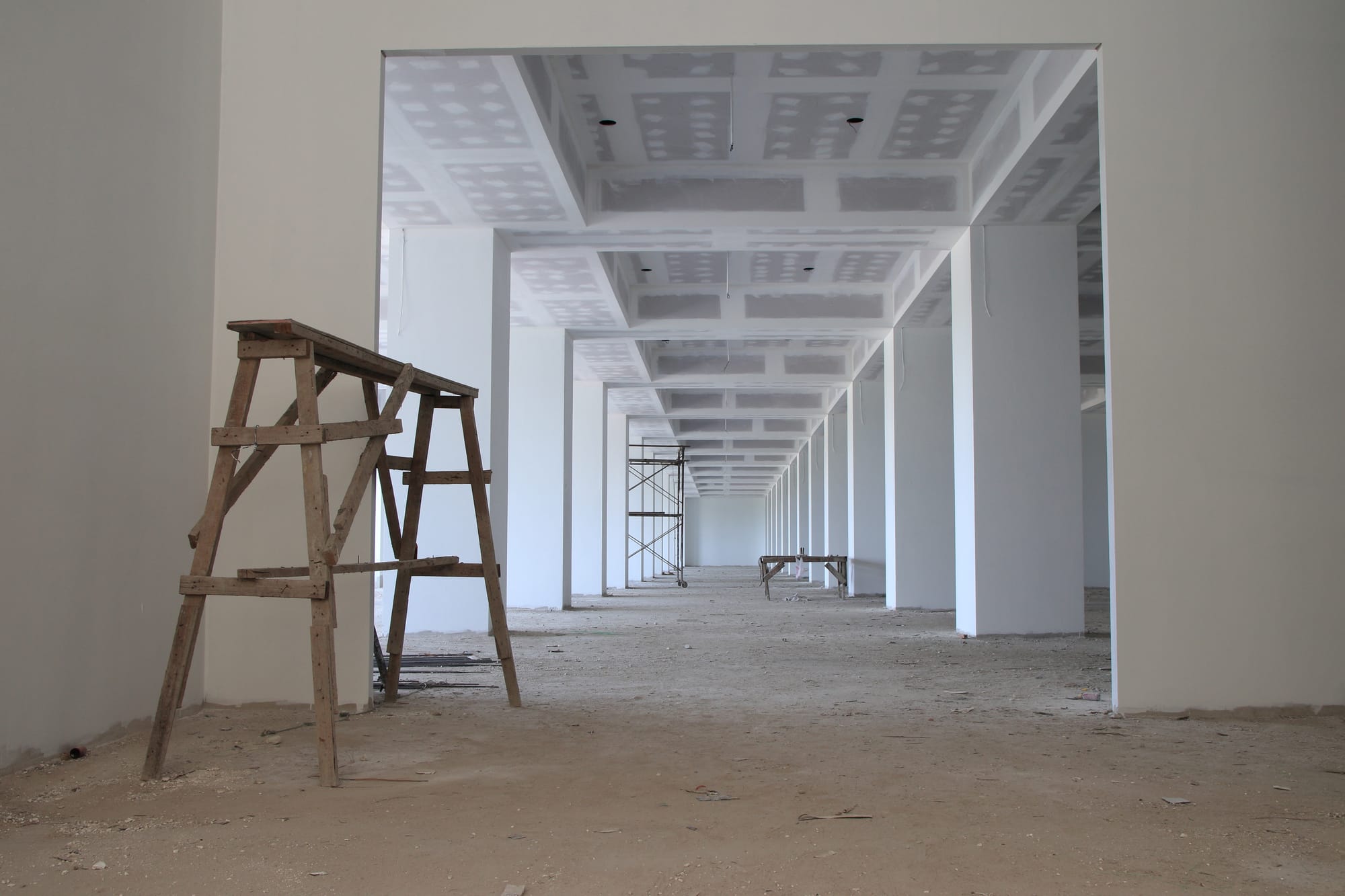
A vacant space can often be opened up and worked through systematically.
An occupied property has to be painted around the people and operations already using it.
Lightmen's commercial painting services in Portland are planned around these kinds of project conditions because a clean commercial repaint has to account for both the surfaces and the building around them.
So which is easier?
Usually the vacant one.
But there is a lot more to the comparison than that.
THINGS TO KNOW
- Vacant commercial spaces are generally more efficient to paint because crews have greater access and fewer operational interruptions.
- Occupied buildings may require smaller phases, more property protection, restricted working hours and additional daily cleanup.
- Vacancy does not eliminate preparation, protection, repairs or trade coordination.
- Partially occupied properties should often be planned zone by zone instead of being classified entirely as occupied or vacant.
- Night and weekend painting can reduce occupant disruption but may create additional access, security and cleanup requirements.
- OSHA recommends isolating painting and renovation activity from occupied areas where feasible and providing adequate ventilation during and after work. OSHA
- Commercial painting bids should explicitly state their assumptions about occupancy and working hours.
- Vacant tenant-turnover periods can be particularly useful windows for larger interior repaint projects.
- Occupied projects benefit from progressive closeout so completed zones can return to normal use before the entire project is finished.
- The actual paint quality standard should not be reduced simply because the building remains occupied.
What Does “Vacant Commercial Space” Actually Mean?
A vacant space generally means the area being painted is not actively occupied by:
- Employees
- Customers
- Residents
- Tenants
- Normal business operations
Examples might include:
- Empty office suite
- Vacant retail storefront
- Commercial space between tenants
- Empty apartment unit
- Newly completed tenant-improvement space
- Property being prepared for lease or sale
That doesn't necessarily mean the space contains nothing.
There may still be:
- Furniture
- Construction materials
- Flooring work
- Other trades
- Fixtures
- Equipment
Vacant means the painting crew has significantly more control over the work environment.
That can create major production advantages.
What Counts as an Occupied Commercial Building?
An occupied commercial property continues functioning while the painting project is underway.
That might be:
- Active office
- Open retail store
- Multifamily common area
- Leasing office
- Restaurant
- Professional office
- Warehouse office
- Operating business suite
The painter now shares the space with people who have their own priorities.
Employees need desks.
Customers need entrances.
Residents need hallways.
Management needs access.
Suddenly the painting schedule is not simply:
Start at one end and continue until everything is painted.
The building gets a vote.
Why Are Vacant Commercial Interiors Usually Easier to Paint?
Access.
That is the big one.
A vacant interior often allows the crew to:
- Move freely
- Open multiple work areas
- Protect large sections at once
- Stage equipment efficiently
- Leave appropriate work zones set up
- Work during normal hours
- Maintain a consistent production sequence
Furniture movement may also be reduced.
There are fewer conversations about:
“Can we get into Conference Room B from 1:00 to 2:15?”
Production tends to become more linear.
Prep.
Prime.
Paint.
Move forward.
Does Vacant Commercial Painting Usually Cost Less?
It can.Not because commercial paint becomes cheaper when everyone goes home.
The efficiency can improve.
Current Lightmen commercial guidance identifies occupied versus vacant space, work hours, furniture movement, masking, protection, project phasing and access difficulty as factors that can affect commercial painting cost.
A vacant project may reduce:
- Repeated setup
- Daily teardown
- Furniture protection
- Access delays
- Phasing
- Off-hours premiums
- Operational coordination
That can translate into fewer labor hours.
But vacant does not automatically mean cheap.
A vacant property may still have:
- Extensive wall repairs
- Difficult ceilings
- Significant color changes
- Damaged surfaces
- Complicated trim
- Large square footage
Vacancy improves logistics.
It does not repair drywall by itself.
Why Can Occupied Commercial Painting Cost More?
Because the crew may spend more time managing the environment.
An occupied project can require:
- Smaller work zones
- Repeated masking
- Furniture movement
- Equipment protection
- Night or weekend scheduling
- Daily cleanup
- Daily reset
- Security coordination
- More communication
- Additional mobilization
Imagine two identical hallways.
In the vacant building, painters may prepare and paint the entire area continuously.
In the occupied property, they may need to:
- Close one section.
- Move or protect belongings.
- Paint it.
- Clean it.
- Reopen it.
- Repeat the process tomorrow.
Same wall area.
More logistics.
That is where much of the price difference can come from.
Vacant commercial interiors are generally easier to paint because crews have greater access and fewer operational restrictions. Occupied buildings may require smaller work zones, furniture and equipment protection, restricted hours, daily cleanup, ventilation planning and additional communication, which can increase labor and project complexity.
Why Is Production Usually Faster in an Empty Space?
Painters can establish a rhythm.
Commercial production works well when the crew can move through related work systematically.
For example:
- Repair all rooms
- Sand all repairs
- Prime necessary areas
- Paint ceilings
- Paint walls
- Complete trim
In an occupied property, that sequence may be broken into ten smaller versions.Instead of:
Paint fifteen offices
the sequence becomes:
Paint three offices, return them to staff, move furniture in four more, wait for a meeting to end, then come back tomorrow.
That does not mean the occupied project is poorly managed.
It means the property is still functioning.
Does a Vacant Space Mean Painters Can Work Everywhere at Once?
Not necessarily.
Opening the whole project can improve efficiency.
It can also create chaos.
A good vacant-space plan should still establish:
- Work sequence
- Material staging
- Protection
- Prep areas
- Completed areas
If flooring installers, electricians or other contractors are also onsite, trade coordination still matters.
Vacant does not mean unorganized.
It simply gives the project more flexibility.
Why Are Vacant Tenant Spaces Ideal for Large Interior Repaints?
Because there is often a window between occupants.
That makes vacant tenant turnover one of the cleaner opportunities for substantial commercial interior painting.
The painter may be able to address:
- Walls
- Ceilings
- Doors
- Frames
- Trim
- Repairs
- Color changes
without working around desks and employees.
For owners preparing property for lease, Lightmen's commercial real-estate painting resources specifically include pre-lease, tenant-improvement and vacant-space repainting needs.
If substantial painting is already needed, the vacancy period can be valuable.
Once the new tenant occupies the building, the same project becomes more complicated.
Should Painting Happen Before Flooring?
Sometimes.
Sometimes after.
It depends on the project.
If new flooring is being installed, the painting sequence should be coordinated with:
- Wall repairs
- Baseboards
- Flooring removal
- Flooring installation
- Final touch-ups
Painting before final flooring can reduce concerns about protecting the new surface during major production.
But trim, baseboards or final touch-ups may depend on flooring completion.
The correct sequence should be decided with the other trades.
There is no universal rule that works for every tenant improvement.
Other Trades Still Matter in Vacant Spaces
A commercial space can be completely empty of tenants and still be extremely occupied by contractors.
You may have:
- Electricians
- Drywall crews
- Flooring installers
- Cabinet installers
- HVAC technicians
- Carpenters
- IT contractors
Now the painting contractor's problem changes from:
How do we work around employees?
to:
How do we avoid painting something another trade is going to cut open tomorrow?
Lightmen's commercial project planning process emphasizes sequencing and defining project conditions before production because trade coordination can affect both schedule and rework.
Empty does not necessarily mean available.
Occupied Painting Starts With Business Continuity
An occupied interior repaint should start by identifying what cannot stop.
That might include:
- Main entrance
- Reception
- Restrooms
- Checkout
- Leasing office
- Critical offices
- Corridors
- Shipping
- Employee access
Then ask:
How do we paint around those things?
Lightmen's recent guide to planning commercial interior painting around operations goes deeper into operational zones, work hours, furniture, communication and reopening.
The central idea is simple:
The painting project should adapt to the operation as much as reasonably possible.
Not demand that the entire operation disappear.
Occupied Projects Usually Need Smaller Work Zones
This is one of the biggest practical differences.
Instead of opening an entire floor, the contractor might work through:
- Office groups
- Corridor sections
- Departments
- Individual floors
- Retail zones
- Multifamily common areas
Smaller zones reduce disruption.
They also reduce production efficiency compared with having unrestricted access.
The challenge is choosing zones large enough to make the painting productive but small enough for the property to absorb.
Painting one wall every Wednesday for seventeen weeks would certainly minimize disruption.
It would also be an unusually creative use of mobilization.
When Should Occupied Painting Happen After Hours?
When normal-hours painting would create too much interference.
Night or weekend work may make sense in:
- Retail
- Reception
- High-traffic offices
- Customer service areas
- Shared common spaces
OSHA's indoor-air-quality guidance recommends isolating painting and renovation areas from occupied portions where feasible and notes that evenings or weekends can be useful for reducing occupant exposure. It also recommends adequate ventilation during and after painting work.
But after-hours production needs to be planned.
You may now have to coordinate:
- Access
- Keys
- Alarms
- Security
- HVAC
- Lighting
- Lockup
- Morning reopening
The building may be less occupied.
The project is not automatically simpler.
Does Occupied Commercial Painting Have to Happen at Night?
No.
There is no universal night-painting rule.
A large office may have enough available rooms to allow daytime production.
A multifamily corridor may have to be accessible regardless of the hour.
A retail store may have a weekly closed day.
A property with hybrid office schedules may have very low occupancy on Fridays.
Use the actual operation.
Don't make nighttime work a ritual.
The best schedule is the one that creates the best balance between:
- Productivity
- Cost
- Occupant disruption
- Access
Protection Is Different in Vacant and Occupied Spaces
Both require protection.
The amount and type may differ significantly.
A vacant office might require protection for:
- Flooring
- Fixtures
- Finished surfaces
An occupied office might additionally involve:
- Desks
- Electronics
- Furniture
- Files
- Office equipment
- Personal belongings
A retail environment may add:
- Inventory
- Shelving
- Displays
- Checkout equipment
The painter should not assume the customer is responsible for making all of that disappear.
Responsibilities need to be discussed before pricing.
Furniture Can Be a Major Occupancy Cost Driver
A vacant room has walls.
An occupied room has walls hidden behind things.
Desks.
Cabinets.
Shelving.
Tables.
Chairs.
Computer equipment.
File cabinets.
The project needs to establish:
- What the property moves
- What the painter moves
- What stays in place
- What gets protected
- When everything goes back
Repeated furniture movement can add real labor.
It should not be discovered halfway through the project.
Daily Cleanup Matters Much More in Occupied Properties
A vacant commercial suite may be able to remain an organized work zone overnight.
An active business may need the area returned to normal every evening.
That can mean:
- Removing debris
- Consolidating paint
- Moving equipment
- Reopening walkways
- Removing selected protection
- Resetting furniture
- Cleaning floors
All of that takes time.
If a project requires complete daily reset, put it in the scope.
Otherwise the property may expect:
Ready for customers at 8:00
while the contractor priced:
We'll pick everything up Friday.
Both expectations can make sense.
They just cannot both be true simultaneously.
Ventilation Matters More When People Remain in the Building
Interior coatings and preparation can affect indoor air quality.
EPA recommends increased ventilation when using products that emit volatile organic compounds and following product-label precautions. US EPA
OSHA also recommends isolating renovation or painting areas from occupied portions where feasible and providing adequate ventilation during and after work. OSHA
This does not mean every occupied project requires some elaborate mechanical ventilation system.
It means ventilation needs to be considered intentionally.
Questions may include:
- Is HVAC shared?
- Can the work zone be isolated?
- Are there sensitive occupants?
- When does the space reopen?
- What do the coating instructions require?
Vacant spaces give you much more flexibility.
Occupied spaces require more attention to how the work affects other people.
Low-Odor Coatings Can Help, but They Do Not Solve Everything
Product selection can reduce disruption.
Low-odor or lower-emitting products may be useful in:
- Offices
- Retail
- Multifamily common areas
- Professional spaces
But product selection still needs to account for:
- Durability
- Cleanability
- Substrate
- Sheen
- Performance
A low-odor coating that performs poorly on the surface isn't a particularly elegant solution.
The useful combination is:
Suitable coating + good schedule + appropriate ventilation.
Vacant Projects May Allow More Product Flexibility
Without active occupants, the contractor may have more freedom around:
- Application timing
- Drying
- Work-zone closure
- Ventilation
- Cure period
That can matter for certain products or areas.
The coating should still match the substrate and use.
Vacancy does not create an excuse to use the wrong paint.
It simply provides more operating flexibility.
Drying Time Matters Differently in Occupied Spaces
In a vacant suite, a freshly painted room can stay unused.
An active business may need the same room back tomorrow morning.
That means the project plan needs to distinguish:
- Dry to touch
- Recoat time
- Return to service
- Full cure
Those are not necessarily the same thing.
Doors, trim and other high-contact surfaces can be particularly important.
A wall that feels dry may tolerate normal use sooner than a freshly coated door that will immediately be touched 300 times.
The coating manufacturer's requirements should control the technical timing.
Color Decisions Become More Expensive When the Property Is Occupied
Color changes happen.
But late color changes on an occupied project can disrupt:
- Material ordering
- Phasing
- Work zones
- Reopening
Vacant spaces usually provide more flexibility.
Occupied properties benefit from finalizing:
- Colors
- Accent walls
- Sheens
- Brand requirements
before that zone becomes active.
The painters should not be standing in a closed retail section while six people debate whether the gray is slightly too emotionally blue.
Make those decisions early.
Repairs Are Easier to Manage in Vacant Spaces
Wall repair can involve:
- Cutting
- Patching
- Sanding
- Dust
- Primer
All much easier when the room is empty.
In occupied spaces, repair work may need:
- More isolation
- Additional protection
- Alternate work hours
- More cleanup
This can make two projects with identical paint scope perform very differently.
The difference is not the gallon count.
It is the environment around the repair.
What Happens When Hidden Damage Is Found?
The process should be the same whether the property is vacant or occupied.
Document it.
Explain it.
Price it where necessary.
Approve it.
Then continue.
The schedule impact, however, can be very different.
A vacant project may simply add a day.
An occupied project may now affect:
- Tenant notice
- Conference-room booking
- Reopening
- Department schedule
That is another reason clear change-order communication matters more when people are already depending on the space.
Security Is Usually More Complicated in Occupied Buildings
Vacant properties still require secure access.
Occupied buildings can add:
- Employees
- Restricted offices
- Private files
- Tenant spaces
- Customer information
- Sensitive equipment
The painting plan may need to establish:
- Approved work areas
- Keys
- Escorts
- Access times
- Locked areas
Do not assume the paint crew can simply wander wherever the wall continues.
Commercial access needs boundaries.
Retail Has One of the Biggest Vacant-vs.-Occupied Differences
A vacant retail shell can often be painted very efficiently.
There are no:
- Customers
- Merchandise
- Displays
- Checkout stations
The painters may be able to open large sections of the project.
Once the store is operating, the project changes.
Now the contractor needs to work around:
- Store hours
- Inventory
- Customer pathways
- Fixtures
- Daily reset
Same square footage.
Very different production model.
Office Repainting Changes Dramatically Once Employees Move In
A vacant office suite can often be completed floor-wide.
An active office may require:
- Department phasing
- Furniture movement
- Hybrid-work scheduling
- Conference-room coordination
- IT protection
- Daily cleanup
If you're signing a new lease and already know the suite needs repainting, completing substantial painting before move-in can be operationally valuable.
Not always possible.But worth considering.
Multifamily Common Areas Are Rarely Truly Vacant
This is an important distinction.
A leasing office can sometimes close.
A vacant apartment unit can obviously be empty.But:
- Hallways
- Stairwells
- Lobbies
remain circulation areas.
For those projects, the contractor needs an occupied-space approach even if no one permanently “works” there.
Resident access has to remain practical.
Lightmen's commercial service specifically identifies multifamily and common-area work as coordination-heavy because residents, access and property-management communication influence the painting plan.
Vacant Apartment Units Are a Different Painting Workstream
Unit turns are one of the best examples of vacancy creating production efficiency.
Between residents, the painting crew may be able to:
- Repair walls
- Repaint complete rooms
- Address ceilings
- Paint doors or trim
without moving around personal belongings.
The bigger constraint becomes the turnover deadline.
Now the painters may be coordinating with:
- Maintenance
- Cleaners
- Flooring
- Leasing
So vacancy trades occupant complexity for schedule complexity.
Construction always finds something.
Warehouse Offices Can Be Vacant While the Warehouse Is Active
Commercial occupancy is not always all or nothing.
A project may contain:
- Vacant office wing
- Active warehouse
- Occupied shipping office
- Empty conference area
Treat each zone according to reality.
The vacant office may be painted during the day.
The shipping office might need weekend work.
The broader warehouse operation may continue normally.
This is one reason site-specific commercial planning usually beats generic “occupied versus vacant” labels.
Many buildings are both.
Partial Occupancy Should Be Planned Zone by Zone
A partially occupied property can offer the best opportunity for strategic phasing.
Prioritize vacant zones first.
That can accomplish several things:
- Immediate production
- Fewer interruptions
- Early project progress
- Completed spaces available for temporary relocation
Then the business may shift people into completed areas while painters move into the next zone.
That can be much more efficient than attacking the busiest space first simply because it appears first on the floor plan.
What Should Be Painted First in a Vacant Building?
Usually the sequence should follow:
- Repair needs
- Trade dependencies
- Coating system
- Access
- Production efficiency
If ceiling, walls and trim are all included, the contractor may establish an efficient surface sequence across large areas.
The exact method depends on:
- Scope
- Products
- Other trades
The advantage is freedom.
The painter can organize the work around production instead of occupancy.
What Should Be Painted First in an Occupied Building?
Often:
The area that creates the best combination of access and low disruption.
That might mean:
- Vacant offices
- Low-use conference rooms
- Back-of-house area
- Unoccupied floor
Then move toward more sensitive spaces.
There is value in starting with an easier zone.
It gives both the contractor and property team a chance to test:
- Communication
- Protection
- Daily reset
- Drying assumptions
before hitting the busiest part of the building.
Does Occupancy Change the Paint Quality?
It shouldn't.
The finish standard should remain tied to the agreed scope.
What changes is the process required to achieve it.
Occupied work may require more careful:
- Sequencing
- Protection
- Setup
- Cleanup
The property should not be expected to accept poorer workmanship simply because employees are present.
Similarly, the contractor should not be expected to perform the same project at the same productivity while being given half the access.
Those are scope issues.
Does Vacant Space Mean Less Protection?
Sometimes.
Not no protection.
Floors, fixtures and completed surfaces still matter.
The main reduction is often the amount of:
- Furniture
- Equipment
- Personal belongings
- Occupant pathways
A vacant commercial interior can still contain brand-new flooring worth considerably more than the painting contract.
Protect it.
“Building was empty” is a weak explanation for paint on the floor.
How Should Daily Communication Differ?
A vacant project may need simpler updates:
- Completed areas
- Schedule
- Other-trade issues
- Change orders
An occupied project may also need:
- Tomorrow's work zone
- Access restrictions
- Furniture requirements
- Areas reopening
- Decisions needed
Lightmen's commercial project planning guidance emphasizes ongoing communication and progressive quality control through production rather than leaving project status unclear until the end.
Occupied buildings need more people to know what happens next.
Quality Control Can Be Easier in a Vacant Property
Completed spaces can remain accessible for review without interrupting occupants.
The project manager can inspect:
- Preparation
- Coverage
- Cut lines
- Doors
- Trim
- Repairs
and correct issues before final handoff.
Occupied properties benefit from the same progressive quality control.
But completed zones may need to return to use quickly.
That makes catching problems before reopening the zone particularly important.
Closeout Is Different Too
Vacant-property closeout may align with:
- Tenant turnover
- Lease commencement
- Construction completion
- Listing
- Owner handoff
Occupied-property closeout may be more phased.
Each zone can effectively have a mini-closeout:
- Work complete
- Touch-ups complete
- Protection removed
- Area cleaned
- Area reopened
Then the entire project receives final closeout.
That prevents the business from waiting until the last day to regain spaces that were painted three weeks earlier.
Which Is Better: Vacant or Occupied Painting?
From a painting-production standpoint?
Vacant.
More access is generally helpful.
From a business standpoint, however, closing an entire property just for painting may make absolutely no sense.
The better question is:
Can we capture any vacant-space advantages without unnecessarily interrupting operations?
Possibilities include:
- Paint before tenant move-in
- Paint after employee relocation
- Use weekends
- Use vacant offices first
- Coordinate with remodels
- Paint between lease periods
Sometimes timing is the biggest efficiency tool available.
Should You Delay Painting Until the Space Is Vacant?
Not automatically.If the property needs painting now, waiting years for hypothetical vacancy is not much of a strategy.
But if you know:
- Tenant is moving out in 30 days
- Office is relocating next month
- Remodel starts soon
then coordinating painting with that transition may create significant efficiency.
Plan around the property timeline.
What if the Commercial Property Cannot Shut Down at All?
Then assume occupied-space production from the beginning.
Build around:
- Critical pathways
- Work zones
- Off-hours access
- Daily reset
- Communication
- Ventilation
- Equipment protection
Lightmen's dedicated guide to repainting occupied commercial spaces in Portland goes deeper into managing employees, customers, tenants and active work environments without turning the property into an unnecessary circus.
It can be done.
It just needs to be priced and planned as the project it actually is.
What if the Building Can Be Vacant for Only Part of the Project?
Use that time strategically.
Do the most disruptive work during vacancy where possible.
That might include:
- Larger repairs
- Heavy prep
- Large open areas
- Significant color changes
Then reserve simpler phases for occupied conditions.
A three-day vacancy window can still be extremely valuable if the contractor knows it exists ahead of time.
Don't mention it on Day 2.
How Should Commercial Painting Bids Identify Occupancy?
Clearly.
The estimate should state whether the pricing assumes:
- Vacant property
- Occupied property
- Partial occupancy
- Normal business hours
- After-hours work
- Specific phased access
This is critical when comparing contractors.
A low bid based on unrestricted vacant access is not directly comparable with a proposal designed around an operating business.
Lightmen's commercial scheduling guidance identifies occupancy, work hours, access, protection and phasing as major pricing variables for exactly this reason.
IN OUR EXPERIENCE
Vacant and occupied commercial painting can look identical on the final day.
That's exactly the point.
What changes is everything required to get there.
In a vacant office, we can often organize around the painting.
In an occupied office, the painting has to organize around everybody else.
The walls do not care whether accounting needs Conference Room A at two o'clock.
The project schedule does.
That is why occupancy should be discussed before the price is finalized.
Otherwise one side may be pricing an empty building while the other side is expecting painters to quietly weave through normal business operations without anybody noticing.
Possible?
Sometimes.
Something I'd build an estimate around without discussing it first?
No.
Why Can Two Bids for the Same Building Be So Different?
Because they may contain completely different operational assumptions.
Contractor A assumes:
- Empty building
- Daytime work
- Furniture removed
- Full access
Contractor B assumes:
- Active business
- Evening work
- Furniture protection
- Daily cleanup
- Four phases
Of course B costs more.
They are not pricing the same production environment.
Before deciding someone is overpriced, normalize the assumptions.
What Should a Vacant-Space Painting Estimate Include?
You should still understand:
- Areas included
- Preparation
- Repairs
- Primer
- Coating system
- Protection
- Access
- Other trades
- Schedule
- Cleanup
- Final walkthrough
- Warranty
Vacancy simplifies logistics.
It does not eliminate the need for a real scope.
What Should an Occupied-Space Estimate Add?
In addition to the painting scope, clarify:
- Work zones
- Occupant access
- Business hours
- After-hours work
- Furniture responsibility
- Equipment protection
- Daily reset
- Ventilation
- Security
- Communication
- Reopening
Those items should not live entirely in somebody's head.
They affect the project.
What Are the Biggest Vacant-Space Mistakes?
Assuming empty means nothing needs protection
Finished floors still exist.
Ignoring other trades
They can damage the completed paint or block production.
Delaying color decisions because “we have time”
Vacancy windows tend to disappear quickly.
Painting before upstream work is actually finished
Excellent way to create paid touch-up work.
Using vacancy as an excuse to open everything at once
The project still needs organization.
What Are the Biggest Occupied-Building Mistakes?
Pricing it like a vacant space
The access assumptions are different.
Opening too many work zones
Now everybody is disrupted.
Not defining furniture responsibility
Hello, conference table.
No daily cleanup standard
Employees discover the jobsite every morning.
No communication about tomorrow
Nobody clears the next room.
No ventilation plan
Paint odor introduces itself to everyone else.
No reopening standard
The room is painted. Can people use it?
Someone should know.
What Questions Should You Ask Before Choosing Between Vacant and Occupied Scheduling?
Ask:
- Can the property be vacant at any point?
- Is a tenant or employee move already planned?
- Which spaces must remain active?
- Can work happen at night or on weekends?
- What furniture remains?
- Are other trades working?
- How much daily cleanup is required?
- Does the property have security restrictions?
- How should ventilation be handled?
- Is there a hard reopening or move-in deadline?
- Can larger repairs happen during vacancy?
- Would partial vacancy allow better phasing?
The answers usually make the correct production model much clearer.
What Should Portland Commercial Clients Expect From Lightmen Painting?
Lightmen currently provides commercial interior painting for offices, retail spaces, multifamily properties, common areas, tenant improvements and other defined commercial interiors in the Portland metro. The current commercial service specifically treats occupied-space requirements, protection, work hours and project phasing as part of defining the work.
For vacant projects, the goal is to take advantage of the access:
- Organize efficiently
- Complete prep
- Maintain production
- Coordinate with other trades
- Finish before the space returns to use
For occupied projects, the goal changes:
- Control work zones
- Protect operations
- Communicate
- Reset active areas
- Return completed spaces to the property
The painting standard remains professional in both cases.
The logistics are different.If you are planning a Portland-area commercial interior repaint, start by telling us whether the space is:
- Vacant
- Occupied
- Partially occupied
- About to turn over
That single piece of information can change the entire production plan.
You can review Lightmen's commercial painting services or request a commercial painting estimate for a scope built around the actual property conditions.
Tell Your Painter Whether the Building Will Be Empty Before They Price It
It sounds obvious.It changes a lot.
Before requesting a commercial interior estimate, identify whether the property will be:
- Vacant
- Fully occupied
- Partially occupied
- Turning over between tenants
- Vacant only during certain hours
Then clarify:
- Work hours
- Furniture
- Equipment
- Other trades
- Daily cleanup
- Critical areas
- Move-in or reopening deadline
That gives the contractor a much better chance of pricing the project you're actually expecting.
Lightmen Painting supports both vacant and occupied commercial interior projects throughout the Portland metro. You can review our commercial painting services, learn more about planning occupied commercial repaints, or request a project-specific commercial estimate.
Do You Have Questions? Give Us A Call!
If you’re in the Portland, OR metro area and you want:
a clean plan before repainting, or
help diagnosing exterior paint failures, or
a crew that resolves issues like adults or
You Just Have Questions…
Here’s the easiest path:
Call: 503-389-5758
-
People Also Ask:
Is it cheaper to paint a vacant commercial space?
It often can be more efficient because painters may have better access, fewer furniture and occupant restrictions, fewer phases and less daily reset. Actual cost still depends on preparation, repairs, coatings, size and access.
Can a commercial building stay occupied during interior painting?
Often, yes. Occupied commercial painting can be divided into work zones and scheduled during lower-impact periods, evenings or weekends when appropriate.
Why does occupied commercial painting cost more?
Occupied work may require additional furniture protection, smaller phases, restricted work hours, repeated setup, daily cleanup, communication and operational coordination.
Should commercial interior painting happen before a new tenant moves in?
When substantial painting is already needed, the vacancy period can provide better access and production efficiency. The painting schedule still needs to coordinate with other tenant-improvement trades.
Can employees work while an office is being painted?
Often they can remain in other portions of the property while controlled work zones are painted. Access, ventilation, product requirements and the building's operation should be considered when building the schedule.
Is after-hours painting better for occupied buildings?
It can reduce disruption in some businesses, but after-hours work may require additional planning for security, HVAC, access, cleanup and building reopening.
Does a vacant building still need floor and fixture protection?
Yes. Vacancy reduces occupant-related protection but does not eliminate the need to protect flooring, fixtures, completed surfaces and other property.
What should a commercial painting estimate say about occupancy?
The proposal should make clear whether pricing assumes a vacant, occupied or partially occupied property and identify important work-hour, phasing, access, protection and daily-cleanup assumptions.
-
Definitions
- Interior commercial painting: Professional painting of walls, ceilings, doors, trim and other defined interior surfaces in commercial or managed properties.
- Vacant commercial space: A commercial area that is not actively occupied by normal tenants, employees, residents or customers during the painting project.
- Occupied commercial building: A commercial property that continues normal or partial operation while painting is underway.
- Partial occupancy: A condition where some portions of a commercial property remain active while others are vacant.
- Occupied-space painting: Painting planned and performed while people continue using all or part of the property.
- Tenant turnover: The period between one tenant leaving and another occupying a commercial or residential unit.
- Work zone: A defined area temporarily controlled for painting or preparation.
- Project phasing: Dividing a larger project into planned work areas or time periods.
- After-hours painting: Painting performed outside the property's normal operating period.
- Daily reset: Cleanup, organization and reopening work performed so occupied areas can return to normal use between production periods.
- Surface preparation: Cleaning, patching, sanding, caulking, priming and other work performed before finish coating.
- Coating system: The combination of preparation, primer and finish coatings selected for a surface.
- Mobilization: The labor and logistics involved in bringing crews, materials and equipment into position to perform work.
- Business continuity: Maintaining necessary business or property functions while project work continues.
- Trade coordination: Scheduling and communication between contractors working on the same property.
- Return to service: The point when a painted area or surface can resume its intended use according to applicable project and product requirements.
- Work-hour restriction: A limitation on when painting activity can occur.
- Change order: A documented modification to the original project scope, price or schedule.
- Progressive closeout: Reviewing and returning completed project zones to use before the entire project is finished.
- Project closeout: Final corrections, cleanup, documentation and acceptance of completed work.
Serving Portland Homeowners Since 2019
Lightmen Painting works with homeowners across the greater Portland metro area — from first-time consultations to full exterior repaints. Whether you need a second opinion on a contractor's quote, a diagnosis for peeling paint, or a crew that shows up on time and communicates clearly, we're the team Portland homeowners call.
We serve: Portland, Tigard, Lake Oswego, Tualatin, West Linn, Milwaukie, Sherwood, Happy Valley, Oregon City, Beaverton, Hillsboro, and Gresham.
Interior commercial painting changes significantly depending on whether the property is vacant or occupied. Vacant commercial spaces often allow painters to work more efficiently because crews have greater access, fewer furniture restrictions and less repeated setup or daily cleanup. Occupied commercial buildings may require phased work zones, after-hours scheduling, equipment protection, ventilation planning, daily reset and additional communication with employees, tenants, residents or customers. Portland commercial property owners should make occupancy assumptions explicit when comparing painting estimates because a bid based on unrestricted vacant access is not equivalent to a proposal designed around an operating property.