Painting Older Oregon City Homes in Wet Weather: Wood, Moisture and Proper Prep
KEY FEATURES
- Strong Oregon City differentiation: Uses Oregon City's documented stock of historic and late-19th/early-20th-century housing rather than treating the city as a generic Portland suburb.
- Older wood emphasis: Covers multi-layer coatings, wood movement, window trim, porches, end grain and old repairs.Lead-safe depth: Gives pre-1978 homes appropriate attention using current Oregon Health Authority and CCB guidance.
- Wet-weather integration: Explains why older exposed wood can change the required drying and prep sequence.
- Preservation awareness: Recognizes that some Oregon City properties may have local historic-review considerations without claiming every old house is formally historic.
- Condition-first conversion: Leads uncertain homeowners toward ECR rather than automatically recommending a full repaint.
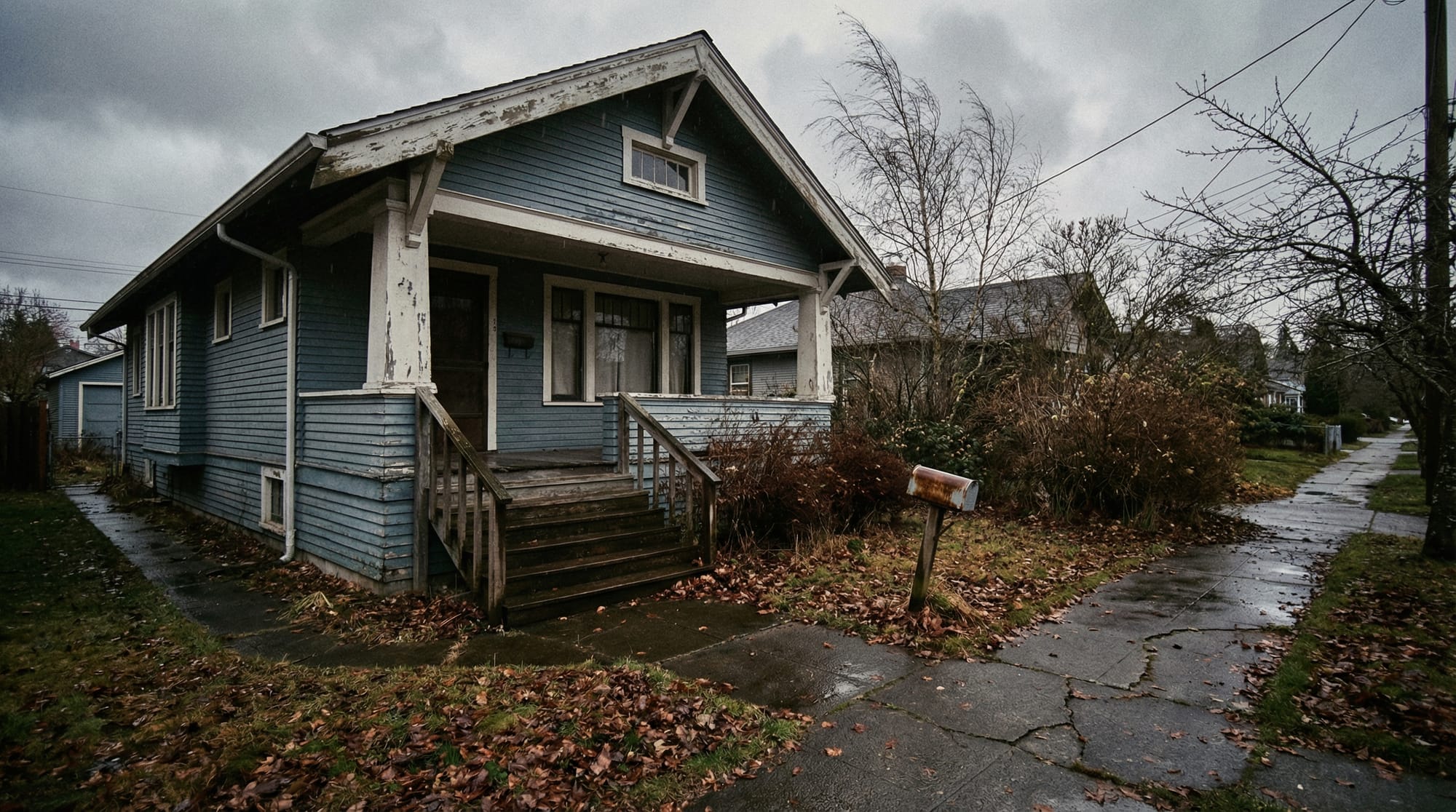
Painting an older Oregon City home can be one of the most satisfying exterior projects we do.
It can also be considerably more complicated than:
Wash it Friday.
Paint it Monday.
Oregon City has a substantial collection of historic and older houses. The City's historic-resource program includes the McLoughlin Conservation District, Canemah Historic District, downtown historic resources and locally designated landmarks. Residential development in the McLoughlin area goes back to the 1850s, with many surviving buildings from the late 1800s and early 1900s. Oregon City
Those houses can bring beautiful things:
- Wood lap siding
- Detailed trim
- Original windows
- Decorative brackets
- Porch columns
- Wood shingles
- Wide casings
- Architectural details newer homes rarely have
They can also bring:
- Multiple generations of paint
- Weathered wood
- Old repairs
- Moisture exposure
- Failed glazing or caulk
- Peeling layers
- Possible lead-based paint
Then western Oregon adds rain.
That combination means proper preparation matters enormously.
Lightmen Painting's exterior painting service, which specifically includes Oregon City in its service area, starts with the condition of the siding, trim, previous coatings, exposed wood, mildew and problem areas rather than assuming every exterior receives the same prep package.
That matters even more on an older house.
The goal should not be to make an old home behave like a new home.
The goal is to understand what is already there and build the painting system around it.
THINGS TO KNOW
- Oregon City has two major historic residential resource areas—the McLoughlin Conservation District and Canemah Historic District—plus designated landmarks elsewhere.
- McLoughlin residential development began in the 1850s and continued through the late 19th and early 20th centuries.
- Older homes can contain many generations of paint, repairs and wood surfaces that require more careful preparation than newer construction.
- Wood and masonry can retain moisture after heavy rain even when surfaces appear dry.
- Exterior surfaces should be clean, sound and dry before coating.
- Renovation, repair and painting work disturbing applicable pre-1978 painted surfaces can trigger Oregon-administered lead-safe requirements.
- Lead-safe renovation is different from formal lead abatement.
- Locally designated Oregon City historic properties may have review requirements for certain exterior alterations; ordinary maintenance can be treated differently.
- Painting over deteriorated wood does not replace necessary wood repair.
- Wet winter months can still be productive for inspection, scope development, lead-safe planning and scheduling a future exterior repaint.
Oregon City's Older Homes Deserve a Different Painting Conversation
An older house can contain layers of decisions made by many people over many decades.
Someone painted it.
Someone repainted it.
Someone patched a window.
Someone replaced three pieces of siding.
Someone caulked something that probably shouldn't have been caulked.
Someone else painted over all of it.
Now it belongs to you.
Congratulations.
You have inherited architectural history and several previous homeowners' opinions about surface preparation.
That does not mean older homes are a problem.It means the painter should inspect before prescribing.
Lightmen's existing guide to painting historic and older homes addresses this directly: older-home painting often requires more careful investigation of existing coatings, wood condition, moisture, repairs and historical details than a straightforward newer-home repaint.
What Makes an Oregon City Home “Older”?
For painting purposes, I care less about a particular architectural label than I do about what the age means for the surfaces.
An older home may have:
- Original wood siding
- Multiple paint layers
- Wood windows
- Original trim
- Porch details
- Previous patch repairs
- Coating systems from different eras
Oregon City's historic inventory includes wood-sided homes dating well into the 19th century. For example, City records document historic properties with wood siding from the 1870s, 1880s and 1890s.
Your home does not need to be officially historic for age to affect the painting scope.
A 1935 house can still present very different prep questions from a 2005 house.
Start With the Existing Paint Layers
Older homes often have many coats.
That matters because the new paint is not attaching directly to the house.
It may be attaching to:
new paint → old paint → older paint → primer → even older coating → wood
If one weak layer fails, everything above it can come along for the ride.
This is why simply applying premium paint does not guarantee a premium result.
The new coating can only perform as well as the surface supporting it.
Does Every Old Paint Layer Need to Be Removed?
No.
That would be an enormous and often unnecessary undertaking.
The goal is usually to identify:
- Loose coating
- Unstable edges
- Failed layers
- Bare substrate
- Unsound repairs
and prepare them appropriately for the specified system.
How much paint needs removal depends on the actual condition.
A stable older coating can sometimes remain part of the system.
Actively peeling paint cannot be wished into stability by putting another layer on top.
Painting an older Oregon City home requires inspecting existing paint layers, wood condition, moisture, previous repairs and possible lead-based paint before preparation begins. Exterior wood should be dry and sound before coating, deteriorated material should be repaired, and work disturbing applicable pre-1978 painted surfaces must follow relevant Oregon lead-safe renovation requirements.
Why Does Wet Weather Make Old Paint Layers More Important?
Moisture finds weaknesses.
If an older coating system already has:
- Cracks
- Open edges
- Failed joints
- Bare wood
repeated rain can expose those weaknesses.
Wood underneath can absorb moisture.
Then movement in the substrate can put additional stress on old, brittle paint layers.
You may notice peeling becoming more obvious during or after the wet season.
The rain may not have created every underlying problem.
Sometimes it simply reveals what was already failing.
Wood Siding Needs to Be Treated Like Wood
This sounds obvious.It often isn't.
Wood is not an inert sheet behind the paint.
It interacts with moisture.
It expands and contracts.It can weather when exposed.
That means old wood siding needs a painting system that respects:
- Moisture
- Grain condition
- Previous coatings
- Existing damage
- Siding design
The goal is not to bury the wood under as much material as possible.
The goal is to create a sound, compatible protective coating.
Why Does Moisture Matter So Much Before Painting Old Wood?
Because excess moisture can interfere with coating adhesion.
Sherwin-Williams' exterior preparation guidance calls for a surface that is clean, solid and dry and advises against painting immediately after rain or during foggy conditions. Sherwin-Williams
On older wood, that drying question can become particularly important.
A sound, previously painted board may shed water reasonably well.
A board with:
- Peeling paint
- Open grain
- Bare sections
- Cracks
may absorb more.
So the house can look generally dry while exposed wood still needs additional time.
How Long Should Old Wood Dry After Rain?
There is no universal countdown.
Manufacturer guidance says the answer depends on how wet the material became. Wood and masonry can absorb considerably more moisture from heavy rain than less-absorbent materials, and the actual substrate needs to be dry before coating.
That means:
“It hasn't rained since yesterday.”
is information.It is not necessarily approval to paint.
Older exposed wood may need a more careful assessment.
Moisture Testing Can Be Useful on Older Homes
When wood condition is questionable, moisture measurement can help.
A painter may use a moisture meter to supplement:
- Visual inspection
- Recent weather
- Surface condition
- Exposure
This can be especially useful where you have:
- Bare wood
- Heavy shade
- Repeated peeling
- Wood repairs
- Prolonged rainfall
The coating manufacturer's requirements still control.
A meter is not permission to ignore everything else.
It simply gives us better information.
And better information is usually cheaper than painting the house twice.
One Side of an Oregon City House May Dry Much Slower
Older neighborhoods frequently have:
- Mature trees
- Close neighboring homes
- Hillside conditions
- Different rooflines
- Deep porches
All of those can affect drying.
One elevation may receive direct sun.
Another may barely see it.
A covered porch may stay protected from direct rain but remain cool and humid.
That means an exterior crew may need to sequence around the house instead of assuming every wall becomes paintable simultaneously.
What About Covered Porches?
Historic and older Oregon City homes often have beautiful porches.
Covered does not automatically mean dry.
Porch components can still experience:
- Humidity
- Condensation
- Wind-driven rain
- Splash
- Slow drying
Look carefully at:
- Porch columns
- Railings
- Skirting
- Steps
- Decorative trim
- Porch ceilings
Horizontal and lower surfaces often deserve particular attention.
They receive very different exposure from vertical siding under the same roof.
Why Do Bottom Edges and End Grain Matter?
Water tends to find the inconvenient parts.
Wood edges and end grain can absorb moisture differently than the broad face of a board.
Older trim may show deterioration first at:
- Bottom edges
- Corners
- Sills
- Lower column areas
- Fascia joints
That is why a real exterior inspection should involve more than standing 30 feet away and admiring the siding color.
Get close enough to see what the wood is doing.
Check Old Window Trim Carefully
Older wood windows and casings can involve:
- Multiple paint layers
- Sills
- Glazing
- Joints
- Decorative trim
Those details create more places where paint can fail.
Look for:
- Peeling
- Cracking
- Open joints
- Soft wood
- Water staining
The painter's job is to determine what belongs inside the painting scope and what points toward a separate repair.
Paint Cannot Repair Rotten Wood
This deserves its own section because every painter eventually encounters the request:
“Can you just seal it really well?”
Sometimes wood needs paint.
Sometimes wood needs carpentry.
If it is:
- Soft
- Crumbling
- Structurally deteriorated
the coating is no longer the main issue.
Paint can protect sound wood.
It cannot reconstruct wood fibers because everyone would prefer not to call a carpenter.
Find the Moisture Source Before Repainting the Failure
If one area keeps peeling, investigate.
Look for:
- Gutter overflow
- Roof-edge leaks
- Failed flashing
- Window problems
- Irrigation
- Dense vegetation
- Other repeated wetting
Lightmen's paint-failure resources are useful when the same area repeatedly fails because the correct question becomes:
Why does paint keep failing here?
Another coat is not a diagnosis.
Older Homes Can Have Complicated Caulking
Caulk can be extremely useful at appropriate joints.
It is not universal waterproofing paste.Older wood siding and trim were assembled in ways that may depend on:
- Drainage
- Movement
- Airflow
So the objective is not to locate every visible line and seal it.
The painter should understand which joints should be sealed and which should not.
Over-caulking can create a different problem by trapping moisture.
Old Repairs Need Inspection Too
Historic and older homes often contain repairs from different periods.
You may find:
- Newer siding beside original siding
- Wood filler
- Epoxy repairs
- Replacement trim
- Patches
- Different primers
These materials may weather differently.
If one repair repeatedly becomes visible through the finish, the issue may not be the paint color.
The substrate underneath may behave differently.
Why Gentle Prep Can Matter on Older Wood
More aggressive is not automatically better.
You want to remove:
- Loose coating
- Contamination
- Failed material
without unnecessarily damaging sound historic wood.
That may mean careful:
- Scraping
- Sanding
- Cleaning
rather than attacking every surface as though the goal is to erase evidence that the house existed before 2026.
Prep should create a suitable coating surface.
Not redesign the architecture.
Pressure Washing an Older Home Requires Judgment
Pressure washers are useful tools.
They are not a competition.
Older siding, trim and detailed surfaces may need more controlled cleaning.
Too much pressure can:
- Damage wood
- Force water into joints
- Raise grain
- Increase drying time
The goal is:
Clean the house.
Not:
Make nearby dirt fear us personally.
Cleaning method should follow the actual substrate.
Washing Also Adds Water
This becomes particularly important in wet weather.
The house may already be dealing with seasonal moisture.
Then cleaning introduces more.
That is fine when planned correctly.
But the drying period has to be built into production.
Cleaning on Monday does not automatically guarantee painting on Tuesday.
Check the substrate.
What About Mildew and Organic Growth?
Older shaded homes can develop:
- Mildew
- Moss
- Organic staining
especially where vegetation limits sunlight and airflow.
These conditions should be addressed before painting.
New coating should not simply encapsulate contamination and hope for the best.
If growth returns repeatedly to the same elevation, also look at why that area stays damp.
Bare Wood Needs Appropriate Primer
When prep exposes bare wood, the primer becomes part of the repair system.
The correct choice depends on:
- Wood species
- Existing paint
- Staining
- Finish coating
Older cedar and other woods can present stain-bleed issues.
Primer is not just white paint we put underneath the expensive paint.It has a job.
Old Cedar Can Have Tannin Problems
Cedar contains natural tannins.
Moisture can activate them and cause brown or yellow discoloration to migrate through some coating systems.
That is one reason an older cedar home can need more thoughtful primer selection than a generic wall repaint.If staining is appearing through the coating, understand whether you're looking at:
- Tannins
- Water stains
- Something else
before adding another finish coat.
The Biggest Older-Home Issue: Lead-Safe Preparation
This is where painting an older Oregon City home becomes materially different.
Paint in homes built before 1978 can contain lead.
And exterior preparation frequently involves exactly the activities that can disturb old coating:
- Scraping
- Sanding
- Repair
- Window work
Oregon administers the federal Renovation, Repair and Painting requirements. Oregon Health Authority states that renovation, repair and painting work disturbing painted surfaces in pre-1978 homes can require trained and certified lead-safe firms and workers.
This is not a technicality.
Lead dust and chips can be hazardous.
Does Every Pre-1978 Home Definitely Have Lead Paint?
No.Age indicates risk.It does not prove that every painted surface contains lead.
Oregon Health Authority notes that older housing is more likely to contain lead-based paint, with homes built before 1950 particularly likely to have substantial amounts, while lead continued to be used in residential paint until federal restrictions took effect in 1978. Oregon
So if you're painting a 1905 Oregon City home, lead-safe planning should be part of the project conversation before somebody starts enthusiastically sanding the porch.
What Is the RRP Rule?
RRP stands for Renovation, Repair and Painting.
The rule is intended to reduce hazards created when renovation activities disturb lead-based paint in pre-1978 housing and certain child-occupied facilities.
Oregon Health Authority identifies painting preparation—including scraping and sanding—as work that can fall within the rule when applicable.
For homeowners, the practical takeaway is simple:
Ask how lead-safe requirements apply before prep starts.
Not after paint chips are all over the flowerbeds.
Lead-Safe Work Is Not the Same as Lead Abatement
These terms get confused.
Lead-safe renovation means performing covered work using required practices intended to control lead-contaminated dust and debris.
Lead abatement is specialized work performed specifically to permanently eliminate lead hazards and carries different licensing requirements.
A normal house painter should not casually describe every pre-1978 repaint as “lead abatement.”
That is a different service.
Why Wet Weather Makes Lead-Safe Planning More Complicated
Containment and cleanup already require planning.
Then add:
- Rain
- Wind
- Mud
- Wet ground
- Exterior access
Now the contractor has to control disturbed paint while also managing weather.
That is another reason an older-home exterior repaint should not be forced into a marginal weather window.
The project may need much more than a couple of dry hours.
Historic Status Can Add Another Layer
Some Oregon City houses are locally designated historic properties.
If yours is, exterior alterations can be subject to local preservation review.
Oregon City's guidance says locally designated properties may require review for exterior alterations, while ordinary maintenance that leaves the appearance unchanged may be treated differently. The City also says previously painted surfaces can generally be repainted without the ordinance controlling the specific paint color. Oregon City
If you're dealing with:
- Material replacement
- Significant visible alteration
- Historic windows
- Architectural details
it is worth checking the property's status before making changes.
Painting and preservation can overlap.
Does Historic Status Mean You Can't Change Paint Color?
Not necessarily.
Oregon City's Historic Property Owner's Guide says its ordinance does not control the color used on previously painted surfaces, although the Planning Department can assist with historically appropriate color selection.
That gives homeowners flexibility.
You can respect the architecture without being legally sentenced to the color somebody chose in 1894.
Why Repair Can Be Better Than Replacement on Historic Details
Older homes often contain details that are difficult to reproduce:
- Window casings
- Porch columns
- Brackets
- Decorative trim
When sound material can be preserved appropriately, repair may retain more architectural character than wholesale replacement.
That is not a painting decision alone.
But the painter is often the person who discovers deterioration during preparation.
A good crew should communicate what it finds rather than sanding aggressively and hoping the trim survives.
Wet-Weather Prep Should Begin With Inspection
Before cleaning or scraping, identify:
- Peeling locations
- Bare wood
- Soft wood
- Caulk failure
- Water staining
- Organic growth
- Previous repairs
- Possible lead-age coatings
Then decide the sequence.
This reduces the chance of discovering halfway through prep that the project has changed substantially.
Do Not Open More Wood Than the Weather Can Handle
This is especially important in fall and winter.
Heavy scraping can expose more bare wood.
If a large rain system is approaching, opening an entire elevation without a realistic plan for:
- Drying
- Repair
- Primer
- Protection
may not make sense.Preparation should be coordinated with the weather window.
The goal is not to win a scraping contest.
The goal is to move the coating system forward responsibly.
What Can Be Done During Marginal Weather?
Depending on the exact conditions, crews may still make progress with:
- Inspection
- Property protection
- Selected repairs
- Masking
- Controlled prep
- Material planning
But some prep also requires dry material.
Wet-weather production should be flexible.
There is a big difference between adapting the schedule and pretending weather doesn't matter.
Why Does Recoat Time Matter?
Primer and finish coatings need specified time before another coat.
Cool temperatures and higher humidity can slow drying.
That affects:
- Primer-to-paint timing
- First coat to second coat
- Daily production
A two-coat system that fits comfortably into summer days may require more calendar time during shoulder-season conditions.
That does not mean the project became larger.
The drying windows became smaller.
Morning Dew Matters on Old Wood Too
Older exposed or heavily weathered wood can take time to recover from overnight moisture.
A surface that was dry yesterday afternoon may be damp this morning.
So coating work may start later.
Then evening temperatures and dew can force application to stop earlier.
That creates a short middle-of-the-day coating window.
Fall painting is less about winning against the weather and more about using those windows intelligently.
When Is It Too Wet to Continue?
When the conditions no longer support the next stage correctly.
That can mean:
- Wood remains damp
- Fog keeps surfaces wet
- Rain is imminent
- Temperatures fall outside requirements
- There is insufficient drying time afterward
Manufacturer guidance specifically advises against painting immediately after rain or during fog and emphasizes dry exterior surfaces.
A professional delay can protect the result.
Why “We Paint Year-Round” Needs Context
A company may absolutely perform exterior work during portions of the year.
Modern coating technology has expanded usable conditions.
But:
We paint year-round
should not mean:
We paint wet wood because December exists every year.
Ask:
- What product?
- What surface temperature?
- What moisture condition?
- What rain window?
- What drying time?
Specific answers matter.
What If Only the Trim Is Failing?
That may support a maintenance project rather than a whole-house repaint.Maybe:
- Window trim is peeling
- Fascia has localized failure
- Porch columns need attention
while the body siding remains sound.
This is where an Exterior Condition Report can be useful.
The question becomes:
How much of this exterior actually needs work?
That is better than assuming every defect deserves 100% repaint coverage.
What If One Elevation Is Worse?
Older houses frequently weather unevenly.
One side may be:
- Sunnier
- More exposed
- More shaded
- Closer to vegetation
A phased approach can sometimes make sense.
Lightmen's guide to one-time, phased and maintenance painting explains how condition can justify prioritizing one area rather than automatically repainting every elevation.
The tradeoff is appearance and future maintenance timing.
Protecting the vulnerable wood may still be the right priority.
When Does the Whole Exterior Need Repainting?
A broader repaint becomes more logical when you see:
- Widespread peeling
- Multiple failing elevations
- Extensive chalking
- Many exposed areas
- Broad coating deterioration
- Repairs throughout the exterior
The house is telling you that localized maintenance is no longer enough.
At that point, the project needs a complete scope.
What Does a Good Older-Home Estimate Need to Explain?
At minimum, understand:
- Which surfaces are included
- Cleaning method
- Prep level
- Wood repairs
- Caulking
- Primer
- Finish products
- Coat expectations
- Lead-safe requirements where applicable
- Weather assumptions
- Change orders
- Cleanup
- Warranty
Older homes are especially vulnerable to vague language such as:
“Prep as needed.”
Needed how?
Scraping how much?
Who handles rotten wood?
What happens if significantly more failed coating appears?The estimate should make those questions manageable.
Lead-Safe Prep Can Affect Price
It requires additional controls and work practices.That can involve more attention to:
- Containment
- Debris
- Cleanup
- Worker procedures
So two estimates on a pre-1978 home may not be comparable if one contractor has accounted for applicable lead-safe requirements and another has simply priced ordinary scraping.Cheap preparation can become very expensive if it is the wrong preparation.
Verify Contractor Requirements Before Award
For Oregon work on applicable pre-1978 properties, homeowners should verify the contractor's licensing and lead-safe qualifications where required.
Oregon CCB states that contractors doing covered renovation work on pre-1978 housing need the appropriate Lead-Based Paint Renovation licensing and training. Oregon
This is particularly relevant for exterior repainting because scraping and sanding are common preparation methods.
Do Not Confuse Lead-Safe Painting With a Lead Inspection
A painting contractor following RRP requirements is not automatically performing a formal lead inspection or risk assessment.
Those are different services.
If you need formal testing, inspection or abatement, specialized requirements apply.
Again:
Right trade.
Right scope.
Older houses become much easier to manage when everyone stops pretending every building-related service is the same thing.
Winter Can Still Be a Good Planning Season
Suppose your Oregon City home clearly needs a repaint.
But the wet season has already arrived.
You can still use winter to:
- Inspect
- Determine historic status
- Discuss lead-safe requirements
- Identify carpentry
- Evaluate moisture problems
- Build the scope
- Choose colors
- Compare estimates
- Schedule production
Then the crew can start when exterior conditions become more dependable.
That is productive time.
IN OUR EXPERIENCE
Older homes tell you very quickly whether you approached them with enough humility.
The surface might look like:
some peeling paint.
Then preparation starts and you discover:
- Six coating layers
- Two previous repairs
- Bare cedar
- One soft trim board
- A window that has apparently been collecting water since the Clinton administration
That isn't a reason to avoid older homes.It's a reason to inspect them properly.
What I don't want is a crew deciding on the prep system before the house gets a chance to tell us what it needs.
On an older Oregon City home, the preparation is not the annoying thing we do before the real work starts.
The preparation is a huge part of the real work.
Interior Painting Can Continue While the Exterior Waits
Older Oregon City interiors can have their own character:
- Plaster
- Old trim
- Built-ins
- Wood doors
- Previous repair layers
If exterior weather is poor, the interior painting project can often move forward under controlled conditions while the exterior is being planned.
Pre-1978 lead-safe considerations can also apply when interior painted surfaces are disturbed, so age still matters indoors. Oregon
Should You Wait Until Spring to Inspect?
No.Wet weather can actually help reveal exterior patterns.
You may notice:
- One board staying dark
- One window repeatedly staining
- One gutter area peeling
- One porch section staying damp
Those observations are valuable.
You do not need to immediately coat the house to learn from winter.
When Should Another Contractor Come Before the Painter?
When the underlying condition is not a paint problem.
Possibilities include:
- Significant rot
- Roof leak
- Gutter failure
- Structural damage
- Major siding repair
Lightmen's paint-failure resources help separate visible coating symptoms from conditions that may require another repair first.
Paint should be the protective finish.
Not the thing we use to hide unresolved construction problems.
What Are the Biggest Older-Home Painting Red Flags?
Aggressive sanding without discussing the home's age
Pre-1978 coatings need lead-safe consideration.
Painting wet wood
Dry substrate matters.
Power washing fragile siding at maximum pressure
Cleaning and demolition should remain different activities.
Painting over active peeling
The new layer inherits the failure.
Caulking every seam
Old siding assemblies still need to function correctly.
Painting rotten trim
Carpentry first.
Ignoring repeated moisture patterns
Find the cause.
No plan for unexpectedly heavy prep
Older homes love surprises.
They have had a long time to prepare them.
What Are the Green Flags?
Look for an Oregon City painter who:
- Asks the age of the home
- Inspects the existing coating
- Recognizes wood condition
- Discusses moisture
- Understands old siding
- Plans cleaning carefully
- Identifies lead-safe requirements
- Distinguishes repair from painting
- Uses primer purposefully
- Adjusts work for wet weather
- Explains discoveries during prep
Older-home painting is often less about speed and more about good decisions in the correct order.
What Should Oregon City Homeowners Expect From Lightmen Painting?
Lightmen Painting serves Oregon City through our verified Portland Metro exterior painting service area.
For older homes, we start by understanding what's already there:
- Existing coatings
- Wood siding
- Trim
- Peeling
- Bare wood
- Caulk
- Moisture exposure
- Previous repairs
Our existing historic and older-home painting guide goes further into why older homes require a different prep mindset.
If your house was built before 1978, applicable lead-safe requirements also need to become part of the conversation before painted surfaces are disturbed.
And if you're not yet sure whether the exterior needs:
- Maintenance
- Repair
- Paint-failure diagnosis
- Full repaint
start with an Exterior Condition Report.
If you already know the house needs repainting, request a project-specific estimate.
Older homes deserve patience.
The best result usually comes from doing less guessing and more inspecting before the first scraper ever touches the siding.
Older Homes Reward Better Investigation
Before repainting an older Oregon City exterior, ask:
- How old is the house?
- Is the siding original wood?
- How many coating layers are present?
- Where is paint peeling?
- Is bare wood exposed?
- Is any wood soft?
- Does one area repeatedly stay wet?
- Are gutters or windows contributing moisture?
- Was the home built before 1978?
- Do lead-safe requirements apply?
- Is the property locally designated historic?
- Does the whole exterior need painting—or only part of it?
Then build the project.
Do You Have Questions? Give Us A Call!
If you’re in the Portland, OR metro area and you want:
a clean plan before repainting, or
help diagnosing exterior paint failures, or
a crew that resolves issues like adults or
You Just Have Questions…
Here’s the easiest path:
Call: 503-389-5758
-
People Also Ask:
Is painting an older Oregon City home different from painting a newer house?
Often, yes. Older homes may contain original wood siding, multiple paint layers, older repairs, detailed trim and pre-1978 coatings that require additional evaluation and lead-safe work practices where applicable.
Can you paint old wood siding after rain?
Only after the wood is sufficiently dry for the specified coating system. Exposed or weathered wood may retain more moisture than intact painted surfaces and may need additional drying time.
Do Oregon painters need lead certification for old houses?
Oregon administers federal RRP requirements for renovation, repair and painting work that disturbs painted surfaces in applicable pre-1978 housing. Contractors performing covered work must meet relevant training, certification and licensing requirements. Oregon
Does a house built before 1978 definitely contain lead paint?
No. Age increases the likelihood but does not prove every surface contains lead. Oregon Health Authority notes that older homes—especially those built before 1950—are more likely to contain substantial lead-based paint.
Should all old paint be stripped before repainting?
Not necessarily. Stable existing coatings may remain, while loose, peeling or otherwise unsound material needs appropriate preparation. The exact scope depends on condition and applicable lead-safe requirements.
Can rotten wood simply be sealed and painted?
No. Paint can protect sound wood but is not a substitute for repairing significantly deteriorated material or correcting the moisture source that caused it.
Can I change the paint color on a historic Oregon City house?
Oregon City's homeowner guidance says its historic-preservation ordinance does not control the color used on previously painted surfaces, although other exterior alterations to locally designated properties may require review. Oregon City
Is winter a good time to plan painting for an older home?
Yes. Winter can be useful for inspecting paint failure, identifying repairs, reviewing lead-safe requirements, checking historic-property status, selecting colors and developing a scope for a future dry-weather repaint.
-
Definitions
- Older-home painting: Painting work on aging residential buildings where previous coatings, original materials and earlier repairs can affect preparation.
- Historic home: A building recognized for architectural, cultural or historic significance; formal designation is separate from simply being old.
- Historic district: A geographically defined area containing historic resources subject to applicable preservation rules.
- Wood siding: Exterior cladding made from wood, including lap siding, drop siding, shingles and other profiles.
- Substrate: The underlying material to which the coating is applied.
- Surface moisture: Water present on or within the material being painted.
- Moisture meter: A tool used to help evaluate moisture levels in materials such as wood.
- Paint adhesion: The bond between a coating and the substrate or previous paint layer beneath it.
- Peeling paint: Coating that is separating from the substrate or from another coating layer.
- Alligatoring: A cracked pattern in an aging coating that resembles reptile skin and can occur in multi-layer paint systems.
- Bare wood: Wood no longer covered by an intact protective coating.
- Weathered wood: Wood whose exposed surface has been altered by moisture, sunlight and environmental exposure.
- End grain: The exposed end of wood fibers, which can absorb moisture differently from the broad face of a board.
- Tannin bleed: Brown or yellow discoloration caused by natural compounds in some woods migrating through the coating.
- Spot priming: Applying primer to selected bare, repaired or problem areas rather than the complete exterior.
- Lead-based paint: Paint containing lead above applicable regulatory thresholds, historically used in many older buildings.
- RRP Rule: Renovation, Repair and Painting regulations governing lead-safe work practices on applicable pre-1978 housing and child-occupied facilities.
- Lead-safe work practices: Required procedures intended to limit the creation and spread of lead-contaminated dust and debris during covered renovation work.
- Lead abatement: Specialized work undertaken specifically to permanently eliminate lead-based paint hazards; it is different from ordinary lead-safe renovation.
- Exterior Condition Report: Lightmen Painting's exterior assessment resource for determining visible coating condition, maintenance needs and repaint priorities.
Serving Portland Homeowners Since 2019
Lightmen Painting works with homeowners across the greater Portland metro area — from first-time consultations to full exterior repaints. Whether you need a second opinion on a contractor's quote, a diagnosis for peeling paint, or a crew that shows up on time and communicates clearly, we're the team Portland homeowners call.
We serve: Portland, Tigard, Lake Oswego, Tualatin, West Linn, Milwaukie, Sherwood, Happy Valley, Oregon City, Beaverton, Hillsboro, and Gresham.
Painting older Oregon City homes requires additional attention to wood siding, historic trim, multiple paint layers, moisture, previous repairs and possible lead-based paint. Oregon City contains documented residential buildings dating from the 1800s and early 1900s, including homes within the McLoughlin Conservation District and Canemah Historic District. Before repainting old exterior wood in wet Oregon weather, siding and trim should be inspected for peeling, bare wood, moisture, soft or deteriorated material, failed caulk, water staining and previous coating failure. Homes built before 1978 may also require lead-safe renovation practices when painting preparation disturbs existing coatings. Proper older-home painting begins with understanding the substrate, correcting active moisture problems, safely preparing existing paint and allowing wood to dry before primer and finish coatings are applied.