Property Paint Assessments: How to Catch Problems Before the Fall Rain
KEY FEATURES
- Seasonal Problem Detection - Helps homeowners find small paint and moisture problems before Portland’s extended wet season.
- Condition-Based Decisions - Separates cosmetic wear from maintenance, paint failure and repair needs.
- Natural ECR Conversion - Homeowners who find confusing or widespread problems have a clear next step without being pushed directly into a full repaint.
September is a good time to walk around your house and actually look at the paint. Not admire the color. Look at the paint. Check the bottom edges of the siding. Look under the gutters. Check trim around windows and doors. Look at the shaded side nobody pays attention to. Find the fascia board that has been peeling a little more every summer. A property paint assessment in Portland can catch small exterior problems while the weather still gives you some room to deal with them. That matters here. Portland homes spend a lot of the year dealing with rain, damp siding, shade, moss, mildew and repeated wet-dry cycles. Lightmen’s current exterior painting guidance specifically identifies moisture, failed caulk, peeling paint, mildew and exposed wood as common conditions that can shorten coating life in our climate. The goal of a fall paint assessment isn’t automatically to decide: “We need to paint the house.” A better goal is: “What needs attention before another wet season?” Sometimes the answer is a full repaint. Sometimes it is a handful of maintenance items. Sometimes another repair needs to happen before anybody opens a paint can. And sometimes everything is fine. That is exactly what you want to know.
THINGS TO KNOW
- Bare wood deserves more attention than simple fading.
- Recurring failure around gutters, windows or one specific elevation may point to a moisture or drainage problem rather than a whole-house paint problem.
- Portland homes often weather unevenly because sun, shade, landscaping and rain exposure differ by elevation.
- A property paint assessment does not automatically mean the exterior needs a full repaint.
- Catching deterioration earlier can reduce the preparation and repair work needed later.
What Is a Property Paint Assessment?
A property paint assessment is a condition-focused look at the exterior painted surfaces of your home. The more formal version of that idea is our Exterior Condition Report, or ECR.
The assessment should look at the current condition of areas such as: Siding Trim Fascia Soffits Garage doors Exterior doors Porch components Railings Painted masonry Painted metal Caulking Previous repair areas
The point is to understand whether those surfaces are still protected. You are looking for evidence that helps answer:
Is the paint still adhering?
Is wood becoming exposed?
Are joints opening?
Is moisture showing up?
Is mildew returning?
Are small failures spreading?
Does repainting need to enter the budget?
Could maintenance buy more time?
That is different from looking at the house and deciding the color feels dated. A paint assessment is about condition first.
Why Do a Paint Assessment Before Portland’s Fall Rain?
Because exterior problems are easier to understand and often easier to address before everything stays wet. Lightmen’s Portland rain guide notes that the region’s wetter period is concentrated through the fall, winter and spring, with moisture, mildew, moss and repeated wet-dry cycles putting pressure on exterior coatings. Late summer and early fall give homeowners a useful inspection window. The siding has had time to dry.
Exterior defects are easier to see. You still have a chance to deal with certain maintenance items before the long damp stretch. Think of it like checking the roof before the storm instead of standing in the kitchen with a bucket later. Only with fewer buckets. Hopefully.
What Problems Should You Look for Before Fall?
You don’t need to know everything about paint. You need to recognize the conditions worth another look. Start with these.
IN OUR EXPERIENCE
In our experience, fall is when a lot of exterior problems stop being hypothetical. You can see the peeling board. You can see the open caulk. You know which wall stays green every winter. The mistake is assuming you either need to repaint everything or do nothing. There is a lot of room between those choices. A small area may need maintenance. A moisture source may need repair. The paint may still have several useful years left. Or the house may be telling you the repaint needs to enter next year’s budget. The useful part is catching the answer before another wet season makes the decision for you.
Is Any Bare Wood Showing?
This is one of the higher-priority findings. Look closely at: Fascia Window trim Door trim Siding edges Porch posts Garage trim Bottom edges of wood components If the paint has failed enough to expose bare wood, the protective coating is gone in that area. Portland moisture now has a more direct path to the substrate.
That doesn’t automatically mean the entire house needs to be repainted tomorrow. It does mean the exposed area deserves attention. Lightmen’s current exterior service guidance specifically lists exposed wood among the signs homeowners should consider when evaluating repainting needs.
Is Paint Starting to Peel?
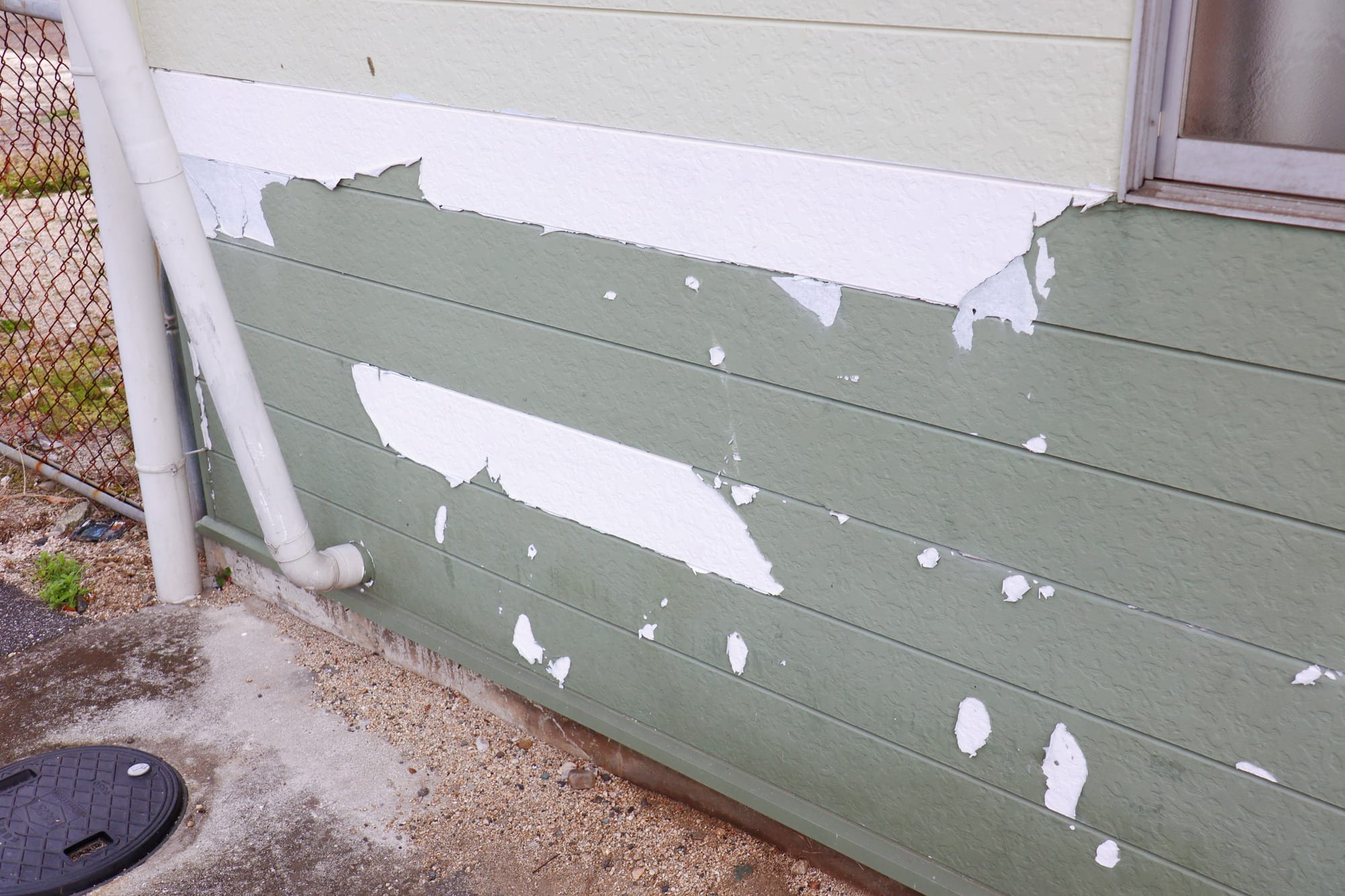
Peeling is paint separating from the surface beneath it. The important part is the pattern. One small spot underneath a gutter may point to a localized issue. Peeling across one entire elevation means something different. Widespread failure throughout the exterior means something different again. Ask: Where is it peeling? How much? Is the wood underneath exposed? Is there a moisture source nearby? Is the failure growing? Is the paint peeling from wood or from an older paint layer? Do not just knock off the loose piece and pretend you solved it. That is exterior maintenance by denial.
Is the Paint Bubbling or Blistering?
Bubbles or blisters can indicate that the coating has separated from what is underneath. Possible contributors can include: Moisture Heat Previous application over damp surfaces Poor adhesion Existing coating failure Blisters deserve more attention than simple fading. If they keep appearing in the same area, there may be an underlying condition that needs to be addressed before repainting. The Lightmen Paint Failure Diagnosis Hub is the better next step when the problem appears to be a recurring coating failure rather than normal aging.
Is Exterior Caulking Cracked or Pulling Away?
Caulking is easy to ignore because nobody buys a house based on beautiful caulk joints. It still matters. Look at appropriate joints around: Windows Doors Trim Siding transitions Selected exterior penetrations You may see: Cracking Separation Shrinkage Missing sections That does not mean you should grab a tube of caulk and fill every opening on the exterior. Some gaps are intentional. Some assemblies need drainage. The useful thing is identifying what changed. If a joint that used to be sealed has opened substantially, it deserves evaluation.
Is Mildew Coming Back?
Mildew is common around shaded Portland homes. Pay special attention to: North-facing siding Walls near trees Areas behind dense landscaping Lower siding Protected areas with limited airflow Lightmen’s current exterior guidance identifies shade, moisture and mildew as recurring Portland-specific exterior concerns. A little surface mildew does not automatically mean your paint is failing. Repeated growth can still tell you something important about how that part of the house dries. That affects cleaning, maintenance and eventually repaint preparation.
Is Moss or Organic Growth Holding Moisture Against the House?
Moss is great in forests. Less charming when it is building a condominium on your siding. Look around: Heavily shaded walls Lower siding Areas near shrubs North-facing elevations Spots underneath tree cover Organic growth can hold moisture against surfaces longer. That can accelerate deterioration when coatings are already weak. Trim landscaping back where practical and make sure siding can dry.
Is There Water Staining Around Trim or Siding?
Water staining deserves attention because the paint may be showing you a problem that has nothing to do with paint. Look near: Gutters Downspouts Rooflines Window corners Door openings Deck connections Sprinklers Hose bibs Possible causes might involve: Drainage Roof runoff Flashing Irrigation Failed joints Do not automatically seal and paint over recurring staining. Figure out where the water is coming from first. Paint is protective. It is not plumbing.
Is the Trim Soft?
If wood feels soft, deteriorated or visibly damaged, that crosses from paint maintenance toward repair. Paint won’t rebuild bad wood. It will make bad wood a different color. If a property paint assessment identifies deteriorated trim, the proper sequence may be: Determine why the wood failed. Complete the needed repair. Prepare the replacement or repaired surface. Prime appropriately. Paint. That order matters.
Is Your Paint Chalking?
Run your hand across older siding. If a powdery residue comes off, you may be seeing chalking. Exterior coatings weather over time. Some chalking is normal. Heavy chalking can affect: Cleaning requirements Prep Adhesion Repaint timing A new coat applied over a dirty, unstable, heavily chalked surface may not have the foundation it needs. That is why preparation matters so much.
Has One Side of the House Aged Faster Than the Others?
This is very common. Portland homes don’t weather evenly. One elevation may get: More sun More shade More wind-driven rain More landscaping contact More roof runoff The north wall may grow mildew. The south wall may fade. The west side may get hammered by weather. The protected east side may still look great. That is why age alone is a weak repaint rule. “How long ago was this painted?” is useful. “What condition is each part of the exterior in?” is much better.
Fall Exterior Paint Priority Guide
| What You Find | Priority | Typical Next Step |
| Mild fading | Low | Monitor |
| Stable older paint | Low | Recheck periodically |
| Light mildew | Moderate | Clean and monitor |
| Cracked caulk | Moderate | Evaluate/repair |
| Small isolated peeling | Moderate | Prep/repair |
| Heavy chalking | Moderate | Start repaint planning |
| Bare wood | Higher | Protect and repair |
| Recurring blistering | Higher | Diagnose cause |
| Water staining | Higher | Find moisture source |
| Soft or rotten trim | Higher | Repair before painting |
| Widespread peeling | Higher | Develop repaint scope |
This is a planning guide, not a diagnosis of every house. The useful question is: What gets worse if I leave it through the wet season? Start there.
Does Every Fall Paint Problem Mean You Need to Paint the Whole House?
No. One of the biggest mistakes homeowners make is jumping from: “I found two peeling boards” to: “I guess I need a $10,000 repaint.” Maybe. Maybe not. Sometimes localized maintenance makes more sense. Examples can include: Spot preparation Spot priming Selected trim painting Caulk repair Cleaning Small repairs If the surrounding paint is still healthy, those items may buy additional service life. On the other hand, if small failures are appearing everywhere, repeated spot work can become a clue that the overall coating is reaching the end of its useful cycle. A property paint assessment helps tell the difference.
Can I Wait Until Spring?
Sometimes. This is exactly the kind of question an ECR can help answer. You may be able to wait if: Coating remains well adhered No bare wood is exposed Defects are mostly cosmetic Caulking is generally stable There are no concerning moisture patterns Waiting becomes less comfortable when you see: Bare wood Spreading peeling Failed joints Recurring blistering Soft material Water staining Active rust There is no prize for repainting too early. There is also no prize for giving exposed wood an entire Portland winter to think about its life choices.
What Should You Check Around Gutters Before Fall?
Gutters deserve their own section because water goes where water wants. Check: Fascia behind gutters Downspout connections Corners Overflow staining Peeling below roof edges Soft wood Discoloration If paint keeps failing under a gutter, fix the water problem before repeatedly repainting the evidence. A fresh coat will not negotiate with a leaking gutter.
What Should You Check Around Windows and Doors?
Inspect: Trim edges Bottom corners Caulk joints Sill areas Peeling Soft wood Staining Window and door trim often shows exterior problems early because there are more joints and transitions. If everything around one window is failing while nearby siding looks good, investigate the window area rather than assuming the whole paint system is bad.
What About Cedar Siding Before Fall?
Cedar deserves a little extra respect. Portland-area cedar can experience: Moisture cycling Tannin staining Checking Peeling Exposed grain Previous coating issues Check areas with: Heavy shade Exposed end grain Older repairs South or west exposure Failed paint edges If cedar is exposed, do not treat it like fiber-cement siding. Different substrates need different prep and primer decisions. Lightmen’s current exterior service page specifically notes that cedar often requires extra attention because tannins, moisture and previous coatings can affect the finished system.
Does Faded Paint Need Immediate Attention?
Usually not for fading alone. Fading is often an appearance issue before it becomes a protective one. Ask whether the paint is also: Chalking Cracking Peeling Exposing substrate Losing adhesion If the coating is still well bonded, you may have more scheduling flexibility. That is useful because it lets you plan color changes and repaint timing instead of reacting to an emergency.
What About Dark Stains or Discoloration?
Do not assume every dark spot is mildew. It may be: Dirt Organic growth Water staining Tannin bleed Rust Another surface contaminant Cleaning methods and repaint preparation depend on what the condition actually is. A property paint assessment should help identify what deserves closer attention.
Why Does Catching Problems Before Fall Potentially Save Money?
Because preparation tends to grow with deterioration. Compare two versions of the same trim board.
Version 1
Paint is beginning to peel. Small area of bare wood. Wood is still sound. Likely needs: Scraping Sanding Primer Paint
Version 2
That area gets ignored through repeated wet weather. Now the wood has deteriorated. The project may need: Carpentry Replacement material Additional prep Primer Paint The paint project just gained another trade. That is the idea behind preventive maintenance. Catch the easy problem while it is still the easy problem.
How Does a Fall Paint Assessment Affect Exterior Painting Cost?
Condition has a major effect on exterior painting cost. Lightmen’s current Portland cost guidance identifies preparation, peeling paint, exposed wood, failed caulking, access and repairs among the factors that can push the price upward. A stable home may require: Washing Minor prep Spot primer Caulk Finish coats A deteriorated home may require: Heavy scraping Sanding Extensive spot primer Repairs More labor Additional mobilization Same house. Very different project. That is one reason to catch deterioration early. For a more complete price discussion, read Lightmen Painting’s Exterior House Painting Cost Portland guide.
What Is an Exterior Condition Report?
An ECR is the professional next step when your fall walkthrough raises more questions than answers. An Exterior Condition Report looks more closely at the visible condition of your painted exterior. It can help identify: Stable areas Failing areas Exposed substrate Maintenance needs Possible repair concerns Repaint timing Lightmen’s current exterior page already directs Portland homeowners toward an ECR when they want a condition-first approach rather than jumping immediately into a repaint. You can book an Exterior Condition Report here.
When Should I Book an ECR Instead of an Estimate?
Start with an ECR when: You are not sure whether the whole house needs painting Paint is failing only in certain areas You see recurring peeling You see bubbling You are worried about moisture You have exposed wood You are planning ahead You recently purchased the home You want to understand maintenance priorities Move directly toward an estimate when: You already want the full exterior repainted The coating is clearly at the end of its useful life You already know the scope You are ready to schedule Both paths are valid. The ECR is for the question before the project.
Should I Do a Paint Assessment Before Selling My Home?
It can be smart. Before listing, homeowners tend to think about: Curb appeal Inspection comments Buyer concerns Maintenance appearance Listing photography A full repaint can be a great improvement. It can also be unnecessary if the current coating is stable and only a few areas need attention. A paint assessment can help you decide whether your money is better spent on: Full repaint Trim Local maintenance Repairs Cleaning Nothing right now That is a better resale decision than repainting because somebody told you “fresh paint always helps.”
Should I Check Paint After the First Fall Storm Too?
Yes. That can be useful. A pre-rain inspection shows the starting condition. After a significant stretch of wet weather, you may notice things that were less obvious while the house was dry: New staining Slow-drying areas Overflow Recurring mildew Damp trim New peeling You do not need to obsess over the house every time a cloud appears. Just pay attention to changes.
What Can Homeowners Safely Inspect Themselves?
You can do a lot from the ground. Use: Phone camera Binoculars Notepad Flashlight Painter’s tape for temporary markers FrogTape Multi-Surface Painter’s Tape can be useful for temporarily marking areas you want to show your painter when the existing surface is suitable for tape. Affiliate disclosure: Lightmen Painting may earn a commission from qualifying purchases through affiliate links at no additional cost to you. Stay off roofs. Do not lean ladders into questionable areas just to inspect paint. If a problem is high or difficult to access, photograph what you can and let somebody with appropriate equipment get closer. Falling off the house is an unnecessarily aggressive maintenance strategy.
Step-by-Step Fall Property Paint Assessment
Step 1: Start at the Street
Look at the whole house. Notice: Fading Color variation Obvious peeling Growth Areas that look different Do not make decisions yet. Just observe.
Step 2: Walk Each Elevation Separately
Treat north, south, east and west as different surfaces. They often are, functionally.
Step 3: Inspect Trim
Look around: Windows Doors Fascia Soffits Garage openings Trim often exposes deterioration early.
Step 4: Check the Bottom Edges
Look at lower siding and trim where water may linger or splash.
Step 5: Check Gutters and Downspouts
Look for staining and recurring coating failure.
Step 6: Check Shaded Areas
Look for mildew, moss and slower-drying surfaces.
Step 7: Photograph Problems
Take one wide photo and one closer photo.
Step 8: Rank the Problem
Ask: Cosmetic? Maintenance? Repair? Paint failure? Full repaint?
Step 9: Recheck After Rain
See whether anything changes.
Step 10: Get Professional Help Where Needed
If you are unsure, book an ECR rather than guessing.
What Are the Biggest Fall Exterior Maintenance Mistakes?
Waiting Until Spring to Look
Spring is fine for planning. Fall gives you earlier warning.
Painting Over Damp Surfaces
A dry-looking surface isn’t always a ready surface.
Sealing Every Gap
Not every joint should be caulked. Understand the assembly.
Ignoring Water Sources
Fix leaks and drainage issues before repainting the symptom.
Ignoring Bare Wood
Bare wood deserves more urgency than faded color.
Assuming Old Paint Automatically Needs Replacement
Condition matters more than birthday.
Assuming Newer Paint Cannot Fail
Poor prep can shorten the life of even expensive coatings.
What Should a Portland Homeowner Prioritize Before the Rain?
If you only remember five things, remember these:
Bare wood
Active peeling
Failed caulking where it belongs
Water staining or recurring moisture
Soft or damaged wood
Those can affect the protective side of the exterior. Fading and color dissatisfaction matter too. They just usually do not deserve the same urgency.
How Does Lightmen Painting Approach Exterior Condition?
Our Portland exterior painting service starts by looking at the actual condition of the home. That includes: Siding Trim Caulking Existing paint Exposed wood Mildew Failure areas That condition determines what comes next. Sometimes that is a repaint. Sometimes it is paint-failure diagnosis. Sometimes an ECR makes more sense first. That is exactly why we like condition-based planning. The house gets a vote.
Schedule a Property Paint Assessment Before the Wet Season
If your exterior has small problems now, this is a good time to find out whether they are actually small. Walk the house. Take photos. Look at the siding, trim and caulk. Pay attention to bare wood and moisture clues. Then decide whether you need: Monitoring Maintenance Repair Paint-failure diagnosis Exterior repainting If you are not sure, start with an Exterior Condition Report.
Lightmen Painting
Oregon CCB# 228370
Do You Have Questions? Give Us A Call!
If you’re in the Portland, OR metro area and you want:
a clean plan before repainting, or
help diagnosing exterior paint failures, or
a crew that resolves issues like adults or
You Just Have Questions…
Here’s the easiest path
Call: 503-389-5758
-
People Also Ask:
Should I inspect my exterior paint before fall in Portland?
Yes. Late summer and early fall can be useful times to inspect exterior paint because surfaces are often easier to evaluate before extended wet weather returns. Look for peeling, bare wood, failed caulk, mildew and water staining.
What exterior paint problems should be fixed before winter?
Bare wood, active peeling, failed protective joints, recurring moisture issues and deteriorated wood deserve particular attention because continued wet exposure can worsen the underlying condition.
Does peeling paint mean I need to repaint my entire house?
No. Peeling may be localized. An exterior condition assessment can help determine whether spot maintenance, repair, paint-failure diagnosis or a full repaint makes sense.
What is an ECR?
ECR stands for Exterior Condition Report. It is a painting-focused review of the visible condition of exterior coatings, siding, trim, caulking and problem areas.
Can Portland rain cause exterior paint to peel?
Moisture can contribute to coating failure, particularly where water gets behind paint, surfaces stay damp or previous preparation was inadequate. Peeling can have several causes, so recurring failure should be evaluated rather than simply painted over.
Should I repaint before fall if my house is only faded?
Not necessarily. Fading can be mostly cosmetic when the coating remains well adhered. Other signs such as peeling, cracking, chalking, bare wood and failed caulking provide more information about repaint urgency.
-
Resources:
- Exterior Paint Condition Report (How it works)
- Exterior Painting Services
- Paint Project Cost Calculator
- Painting ROI Calculator (optional add)
Definitions
- Property paint assessment: A condition-focused review of painted surfaces to identify maintenance, failure and repaint needs.
- Exterior Condition Report (ECR): A painting-focused assessment of visible exterior coating and surface conditions.
- Exterior paint inspection: Review of siding, trim, paint, caulking and related visible conditions.
- Paint failure: Loss of coating performance through peeling, cracking, blistering, flaking or poor adhesion.
- Peeling paint: Paint that has separated from the underlying surface or coating layer.
- Blistering: Raised bubbles or pockets in a coating caused by separation underneath.
- Bare wood: Exterior wood no longer covered by a protective paint or coating.
- Chalking: Powdery residue created as an exterior coating weathers.
- Failed caulking: Caulk that has cracked, shrunk or separated from the joint it was intended to seal.
- Mildew: Fungal surface growth commonly associated with damp or shaded conditions.
- Moss: Organic growth that can hold moisture against exterior surfaces.
- Water staining: Visible discoloration that may indicate repeated water exposure.
- Substrate: The material beneath the paint, such as wood, cedar, fiber cement, stucco or metal.
- Cedar siding: Natural wood siding common on Portland-area homes that can require specialized prep and primer decisions.
- Fascia: Exterior trim board typically located along the edge of a roof.
- Soffit: The underside of an exterior roof overhang.
- Spot priming: Applying primer only to bare or repaired portions of a surface.
- Surface preparation: Cleaning, scraping, sanding, caulking, repairing and priming performed before painting.
- Paint adhesion: How securely a coating bonds to the surface beneath it.
- Exterior repaint cycle: The period between major exterior painting projects.
- Maintenance painting: Smaller painting work used to maintain protection before a full repaint is necessary.
- Moisture damage: Deterioration caused or accelerated by repeated water exposure.
- Exterior painting estimate: A proposed price and scope for repainting a home’s exterior.
- Preventive maintenance: Work performed before a small condition develops into a larger repair.
Serving Portland Homeowners Since 2019
Lightmen Painting works with homeowners across the greater Portland metro area — from first-time consultations to full exterior repaints. Whether you need a second opinion on a contractor's quote, a diagnosis for peeling paint, or a crew that shows up on time and communicates clearly, we're the team Portland homeowners call.
We serve: Portland, Tigard, Lake Oswego, Tualatin, West Linn, Milwaukie, Sherwood, Happy Valley, Oregon City, Beaverton, Hillsboro, and Gresham.
A property paint assessment in Portland can help homeowners catch peeling paint, failed caulking, bare wood, mildew, water staining, bubbling and other exterior problems before the wetter fall and winter season. Portland exterior paint is exposed to rain, shade, moss, mildew and repeated moisture cycles, making late summer and early fall a useful time to inspect siding, trim, fascia, soffits and other painted surfaces. An exterior paint assessment does not automatically mean a homeowner needs a full repaint. Stable coatings may only need monitoring, while localized paint failure may need maintenance, spot preparation or repair. Homes with exposed wood, active peeling, recurring moisture problems or damaged trim may need faster attention. Lightmen Painting’s Exterior Condition Report can help Portland homeowners understand exterior condition and decide whether maintenance, repair, paint-failure diagnosis or full exterior painting is the right next step.