The Ultimate Guide to Sherwin-Williams A-100 Exterior Latex Paint
Key Features
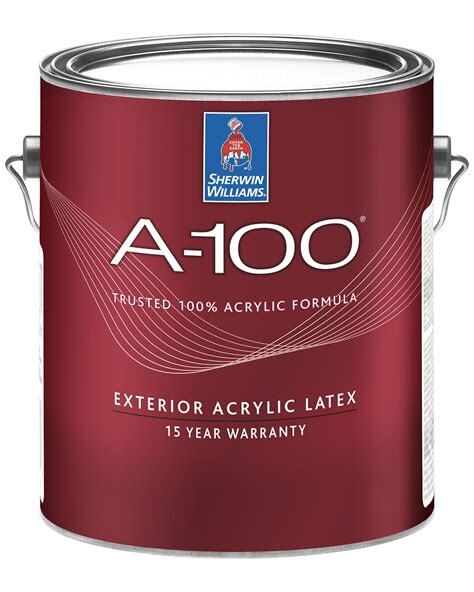
- 100% Acrylic Exterior Latex Formula: A-100 is a 100% acrylic exterior latex paint designed for dependable exterior performance at a value-focused price point.
- Good Value for Routine Exterior Repaints: A-100 is not Sherwin-Williams’ highest-end exterior paint, but it can be a practical choice for routine color changes, rental properties, budget-conscious repaints, and homes with stable siding.
- Suitable for Multiple Exterior Surfaces: Sherwin-Williams data sheets list A-100 for properly prepared aluminum, vinyl, wood siding, clapboard, shakes, shingles, plywood, masonry, and metal.
- Available in Multiple Sheens: A-100 is available in flat, low sheen, satin, and gloss finishes, giving homeowners options for siding, trim, and exterior details.
- Cooler-Weather Application Range: A current A-100 data sheet lists application down to 35°F for certain conditions, which can help extend the painting season compared with products requiring warmer conditions.
- Prep Still Decides the Outcome: A-100 can perform well when the surface is clean, dry, stable, repaired, primed where needed, and painted under the right weather conditions.
- Best Fit Depends on Expectations: A-100 may be a smart value choice, but Portland homes with serious moisture exposure, cedar siding issues, major paint failure, or high-end longevity expectations may justify upgrading to a more premium exterior system.
Sherwin-Williams A-100 Exterior Latex Paint is a 100% acrylic exterior paint made for homeowners and professionals who want reliable exterior performance without jumping to the highest-priced product tier.Sherwin-Williams positions A-100 as a value-focused exterior paint with dependable coverage and performance. Their current product page describes it as a 100% acrylic latex paint formula that covers well and lasts while keeping budget in mind.
That makes A-100 worth considering for:
- Routine exterior repaints
- Rental properties
- Budget-conscious homeowners
- Stable siding in decent condition
- Simple color refreshes
- Lower-risk exterior surfaces
- Projects where value matters
- Homes not requiring the highest-end coating system
But the big question is not “Is A-100 good?”
The better question is:
Is A-100 the right paint for this specific home, surface, exposure, and budget?
That is where the real answer lives.
Things to Know
- A-100 is a 100% acrylic exterior latex paint positioned as a value-focused Sherwin-Williams exterior product.
- It is not Sherwin-Williams’ top-tier exterior paint, but it can be a practical choice for the right project.
- A-100 may make sense for routine repaints, rental properties, detached garages, stable siding, and budget-conscious exterior work.
- Portland homes with major moisture exposure, cedar siding issues, or paint failure may need a stronger coating system or more prep.
- A-100 can be used on multiple properly prepared exterior surfaces, including wood, masonry, vinyl, aluminum, and metal.
- The product is available in multiple sheens, including flat, low sheen, satin, and gloss.
- Lower-temperature application may be possible under specific product guidance, but the surface still needs to be dry and suitable for painting.
- Primer may still be needed on bare wood, stains, rust, chalky siding, raw masonry, or failed coatings.
- In Portland, prep and weather timing are often more important than the paint brand alone.
- A-100 should be chosen as part of a coating system, not as a shortcut.
What Is Sherwin-Williams A-100 Exterior Latex Paint?
A-100 is an exterior acrylic latex paint designed for outdoor architectural surfaces.
Sherwin-Williams data sheets describe A-100 Exterior Latex as a quality exterior finish recommended for properly prepared aluminum, vinyl, wood siding, clapboard, shakes, shingles, plywood, masonry, and metal. In plain English, that means A-100 can be used on many common exterior materials when the surface is properly prepared.That “properly prepared” part is doing a lot of work.
A-100 is not a magic coating. It still needs:
- Clean siding
- Dry surfaces
- Loose paint removed
- Peeling areas scraped
- Rough edges sanded
- Bare wood primed
- Failed caulk repaired
- Mildew cleaned
- Rotten material addressed
- Correct weather timing
- Proper film thickness
If those steps are skipped, even a good exterior paint can fail early.
This is why Lightmen Painting focuses on a prep-first painting process, especially on Portland exteriors where moisture and old coatings can expose weak prep fast.
Is A-100 a Premium Paint?
A-100 is a quality exterior paint, but it is not Sherwin-Williams’ top-tier exterior product.
That matters.A-100 is often a value-oriented option. It can be a good product, but homeowners should not expect it to perform exactly like Sherwin-Williams’ more premium exterior lines, such as Duration, Emerald Exterior, or Emerald Rain Refresh.That does not make A-100 bad.
It just means the product should match the project.A-100 may make sense when:
- The siding is in good condition.
- The home is maintained regularly.
- The color change is not extreme.
- The exposure is moderate.
- The homeowner wants value.
- The project does not require the longest possible coating lifespan.
- The surface has been properly prepared and primed where needed.
A higher-end paint may make more sense when:
- The home has heavy sun exposure.
- The home has significant moisture exposure.
- The siding is cedar or older wood.
- The project is a high-end exterior repaint.
- The homeowner wants maximum longevity.
- The home has a history of paint failure.
- Darker colors or demanding colors are being used.
- Maintenance access is difficult.
- The exterior is exposed to heavy rain, shade, moss, or tree cover.
In Portland, this distinction matters because our climate is not gentle. Rain, shade, mildew, and seasonal moisture love testing paint jobs like tiny building inspectors with no clipboard.
Why A-100 Can Be a Smart Value Choice
A-100’s biggest strength is value.
Sherwin-Williams describes A-100 as offering trusted performance at a great value, with a 100% acrylic formula and multiple finish options.
That can make it a smart choice for certain projects, especially when the goal is a clean, solid exterior refresh without paying for a premium coating that may not be necessary.
A-100 can be useful for:
- Routine repaint cycles
- Rental homes
- Simple siding refreshes
- Detached garages
- Outbuildings
- Budget-conscious repaints
- Stable exterior surfaces
- Property owners managing multiple buildings
- Homes where maintenance is already consistent
For example, a rental property with stable siding, simple colors, and a practical budget may not need Emerald Rain Refresh. A-100 may be enough if the prep is done properly.
But a cedar-sided Portland home with peeling paint, heavy shade, and moisture issues? That might be a different conversation.This is where product choice should come after inspection, not before it.
A-100 and Portland Weather
Portland exterior paint has a harder job than exterior paint in dry climates.
Our homes deal with:
- Long rainy seasons
- Damp siding
- Shaded elevations
- Moss and mildew pressure
- Tree cover
- UV exposure in summer
- Wood movement
- Failed caulk
- Older paint layers
- Temperature swings
- Moisture trapped around trim and siding
A-100 can work in Portland, but it needs the right project conditions.
The surface should be clean, dry, stable, and properly repaired before painting. Any peeling, bubbling, cracking, or exposed wood should be evaluated before choosing a product.
If your exterior paint is already failing, start with Lightmen Painting’s paint failure inspection resources. A product upgrade alone may not solve the problem if the real issue is moisture, poor previous prep, incompatible coatings, or wood damage.
Painting over paint failure without diagnosis is not maintenance. It is cosmetic denial with a roller.
Best Surfaces for A-100 Exterior Paint
Sherwin-Williams lists A-100 for several properly prepared exterior surfaces, including aluminum, vinyl, wood siding, clapboard, shakes, shingles, plywood, masonry, and metal. That gives it broad usefulness, but surface condition still matters.
Wood Siding
A-100 can be used on properly prepared wood siding.
Prep may include:
- Washing
- Scraping
- Sanding
- Spot priming bare wood
- Caulking appropriate joints
- Repairing damaged areas
- Applying the correct number of coats
Bare wood should usually be primed before finish paint. Paint-and-primer-in-one language does not mean primer is never needed.
Cedar Siding
Cedar is common in Portland, but it can be demanding.
Cedar can absorb moisture, bleed tannins, move with weather, and fail if exposed wood is not handled correctly.
A-100 may be appropriate in some cedar situations, but cedar often deserves careful inspection and primer decisions. If the cedar has exposed wood, tannin staining, peeling, or moisture problems, primer and prep become more important than the finish paint brand.
Masonry
A-100 can be used on masonry when the surface is properly prepared and the correct primer is used where needed.
Masonry may need:
- Cleaning
- Efflorescence removal
- Crack repair
- Masonry primer
- Moisture evaluation
- Proper dry conditions
Metal
A-100 may be used on properly prepared metal, but bare metal usually needs the correct metal primer first.
Rust, oxidation, and slick surfaces should be addressed before coating.
Vinyl and Aluminum Siding
A-100 is listed for vinyl and aluminum siding, but color choice matters on vinyl. Darker colors can increase heat absorption and may create warping risk if not selected correctly.
For vinyl siding, check manufacturer guidance and product limitations before choosing a darker color.
Application Conditions for A-100
A current Sherwin-Williams A-100 data sheet lists application down to 35°F for certain surface and air temperature conditions, with coverage around 350–400 square feet per gallon at the listed wet/dry film thickness. That lower-temperature range can be helpful in the Pacific Northwest, where exterior painting windows are not always perfect.
But this does not mean “paint whenever.”
You still need to consider:
- Surface temperature
- Air temperature
- Humidity
- Dew point
- Rain forecast
- Surface moisture
- Sun exposure
- Wind
- Dry time
- Recoat time
- Product data sheet instructions
The surface must be dry and ready.
In Portland, a wall can look dry and still be holding moisture, especially on shaded sides of the home or wood siding that has absorbed water.
Painting in the wrong conditions can cause adhesion problems, surfactant leaching, slow cure, or early failure.
The weather gets a vote. In Portland, it votes loudly.
Dry Time and Recoat Time
The A-100 data sheet indexed in current search results lists drying time at 50% relative humidity with touch dry around 2 hours, and recoat timing dependent on temperature range. Under warmer conditions, recoat can be listed around 4 hours, but product version, sheen, weather, temperature, humidity, film thickness, and substrate all matter. So the safest rule is:
Check the current product label and technical data sheet for the exact A-100 product being used.
Dry to the touch does not mean fully cured.This matters especially on:
- Trim
- Doors
- Porch details
- High-contact surfaces
- Shaded walls
- Moisture-prone siding
- Second-coat timing
- Areas where dew may settle overnight
Rushing recoat time can compromise the finish.
Paint does not care that the schedule is inconvenient. Annoying, but true.
A-100 vs. Sherwin-Williams Duration or Emerald
A-100 is a good value exterior paint, but it is not the same as Duration or Emerald.
A simple way to think about it:
A-100
Best for:
- Value-focused repaints
- Routine color changes
- Stable siding
- Budget-conscious projects
- Rental properties
- Lower-risk exterior surfaces
Duration Exterior
Best for:
- Higher durability expectations
- Better moisture/weather resistance needs
- More demanding residential exteriors
- Homeowners wanting an upgrade from value-tier paint
Emerald Exterior
Best for:
- Premium exterior repaints
- High-end homes
- Strong appearance and performance expectations
- More demanding exposure
- Longer-term finish goals
Emerald Rain Refresh
Best for:
- High-visibility exteriors
- Dirt pickup concerns
- Homes near trees or road dust
- Homeowners interested in self-cleaning exterior technology
A-100 has its place. So do the premium lines.
The mistake is pretending one product is right for every house.That is paint-store fairy tale stuff.
For a Portland exterior repaint, the better move is to choose the paint after reviewing siding condition, exposure, color, budget, and maintenance goals.
When A-100 Makes Sense for Portland Homes
A-100 may be a good fit when:
- The existing paint is mostly sound.
- The siding is not severely weathered.
- The home receives routine maintenance.
- The budget matters.
- The project is a straightforward repaint.
- The homeowner does not need top-tier longevity.
- The surfaces are properly cleaned and primed where needed.
- The home has moderate exposure rather than severe moisture problems.
Good project examples might include:
- A basic color refresh
- A rental home repaint
- A detached garage
- A stable fiber cement exterior
- Properly prepared wood siding
- A simple trim/siding repaint
- A property owner maintaining multiple buildings
For rental homes, apartments, or managed properties, A-100 may also be considered as part of a practical repaint strategy. For larger rental or apartment work, Lightmen Painting’s multifamily painting services can help balance cost, durability, scheduling, and long-term maintenance.
When You May Want a Higher-End Paint
A-100 may not be the best choice when:
- The home has severe paint failure.
- Cedar siding is exposed or heavily weathered.
- The house is shaded and moisture-heavy.
- The homeowner wants maximum longevity.
- The project is a high-end exterior repaint.
- The color is dark or demanding.
- Maintenance access is difficult.
- The home has repeated mildew problems.
- There is significant peeling, bubbling, or cracking.
- The exterior needs a more advanced coating system.
In those cases, you may want to compare A-100 with higher-end exterior products.
This is especially true for Portland-area homes where moisture issues, sun exposure, and siding age are already working against the paint job.
If the home has visible coating failure, Lightmen Painting may recommend starting with an Exterior Condition Report before choosing the final paint system.
In My Opinion
In my opinion, Sherwin-Williams A-100 is a good paint when it is used for the right reason.It is not the product I would automatically reach for on every high-end Portland exterior, heavily weathered cedar home, or moisture-heavy repaint with major failure issues. That is where homeowners may be better served by comparing higher-end exterior systems.But for routine repaints, rental properties, stable siding, and budget-conscious projects, A-100 can be a smart value choice.The mistake is treating A-100 like a premium fix-all.It is not.It is a solid exterior paint that needs solid prep. Clean the surface, scrape the loose paint, sand rough edges, prime bare areas, fix failed caulk, watch the weather, and apply it correctly.Do that, and A-100 can make sense.Skip that, and you are not saving money. You are just financing future peeling.
Surface Preparation for A-100
Prep is what makes A-100 work.
Before applying A-100, exterior surfaces may need:
- Washing
- Mildew removal
- Dirt removal
- Scraping loose paint
- Sanding rough edges
- Feather sanding failed paint
- Spot priming bare wood
- Caulking failed joints
- Repairing damaged trim
- Replacing rotten material
- Masking windows and fixtures
- Checking surface moisture
- Choosing the correct primer
Sherwin-Williams data sheets include detailed surface preparation guidance, including removing mildew before painting and allowing the surface to dry. That matters in Portland.
If mildew is painted over, it can come back. If bare wood is not primed, paint can fail. If peeling paint is left behind, the new coating is only attached to the old failing coating.
That is how you get a fresh paint job that starts peeling like it has somewhere better to be.
Primer and A-100: Do You Still Need Primer?
Sometimes, yes.
Even if a paint product has good adhesion, primer may still be needed.
Primer may be necessary on:
- Bare wood
- Exposed cedar
- Stains
- Tannin bleed
- Rust
- Chalky surfaces
- Raw masonry
- Patched surfaces
- Scraped peeling areas
- Glossy or hard-to-bond surfaces
- Significant color changes
- Previously failed coatings
A-100 is a finish paint. It is not a universal solution for every substrate problem.
Spot priming is often needed before exterior repainting. Full priming may be needed when the entire surface is porous, chalky, stained, or unstable.
For peeling or exposed areas, the primer decision matters as much as the topcoat.
Best Practices for Applying A-100
A-100 can be applied by brush, roller, or spray depending on the surface and project.
Brushing
Best for:
- Trim
- Edges
- Small details
- Cut-ins
- Touch-ups
- Areas needing control
Use a high-quality synthetic brush designed for latex paint.
Rolling
Best for:
- Siding sections
- Masonry
- Larger flat areas
- Areas needing film build
Use a roller nap that matches the surface texture.
Spraying
Best for:
- Large siding areas
- Textured surfaces
- Efficient exterior coverage
- Bigger projects with proper masking
Spraying requires proper masking, pressure control, tip selection, overlap, and sometimes backrolling depending on the surface.
Spraying is not “better” by default. It is faster when done correctly and messier than a toddler with yogurt when done badly.
A-100 for Rental Properties and Budget-Conscious Projects
A-100 can be a practical option for property owners trying to balance appearance, protection, and cost.
It may work well for:
- Rental homes
- Duplexes
- Small multifamily buildings
- Detached garages
- Outbuildings
- Maintenance repaints
- Lower-risk siding
- Routine repaint schedules
For property owners, the question is often not just “What lasts longest?” It is:
What paint system gives the right balance of cost, appearance, durability, and maintenance timing?
A-100 can fit that conversation.
But if the building has major exposure, peeling paint, moisture damage, or difficult access, going cheaper on paint may not save money long term.
For property managers and rental owners, Lightmen Painting’s property manager painting services can help evaluate whether A-100 or a higher-end product makes more sense.
Planning an exterior repaint in Portland, Beaverton, Lake Oswego, Tigard, Tualatin, Happy Valley, or the surrounding metro area? Lightmen Painting can help you decide whether Sherwin-Williams A-100 is the right value choice or whether your home needs a higher-end exterior coating system. You can request a painting estimate or call 503-389-5758.
A-100 for Portland’s Rainy Climate
A-100 can work in rainy climates when applied correctly, but homeowners should be realistic.The paint matters, but the system matters more.
For Portland homes, that system includes:
- Cleaning siding thoroughly
- Removing mildew
- Scraping loose paint
- Sanding failed areas
- Priming bare wood
- Repairing failed caulk
- Choosing the right weather window
- Applying proper film thickness
- Using the right sheen
- Maintaining the exterior over time
If the home is heavily shaded, surrounded by trees, has cedar siding, or has repeated mildew issues, it may be worth considering a more premium exterior paint or a more aggressive prep plan.
For long-term maintenance after painting, Lightmen Painting’s Lightmen Care Club can help homeowners stay ahead of exterior failure before it turns into expensive siding damage.
Common Mistakes Homeowners Make With A-100
Assuming Value Paint Means Cheap Paint
A-100 is value-focused, but that does not mean it is junk.
It can be a solid product when used correctly.
The issue is using it where the project really needs a higher-performance coating system.
Skipping Primer
Bare wood, stained areas, rust, raw masonry, and peeling spots may still need primer.
Skipping primer is one of the fastest ways to shorten the life of an exterior paint job.
Painting Over Mildew
Mildew should be cleaned before painting.
Paint over mildew is just mildew in witness protection. It is coming back.
Painting Too Soon After Rain
Siding must be dry enough before painting.
In Portland, shaded walls can hold moisture longer than expected.
Ignoring Caulk Failure
Fresh paint over failed caulk does not fix the joint.
Water can still get behind the coating system.
Choosing the Wrong Sheen
Flat, low sheen, satin, and gloss all behave differently.
Sheen affects appearance, cleanability, highlight/reflection, and how flaws show.
Comparing Paints Without Comparing Prep
A cheaper paint with excellent prep may outperform premium paint over bad prep.
That sentence hurts feelings, but it is true.
How Long Does A-100 Last?
The honest answer: it depends.
The old draft claimed A-100 can last up to 10 years when applied and maintained correctly. That may be possible in some conditions, but exterior paint lifespan depends heavily on:
- Prep quality
- Siding type
- Sun exposure
- Shade
- Moisture
- Color choice
- Film thickness
- Primer use
- Previous coating condition
- Maintenance
- Weather during application
A-100 is designed as a dependable exterior paint, but it should not be sold as a guaranteed 10-year solution for every Portland home.
A well-prepped, moderate-exposure surface may perform well for years.
A shaded, moisture-heavy, peeling cedar exterior may fail much sooner if the underlying issues are not addressed.
The can matters. The house matters more.
People Also Ask
Is Sherwin-Williams A-100 good exterior paint?
Yes, A-100 can be a good exterior paint for the right project. It is a 100% acrylic exterior latex paint positioned as a dependable value product. It works best on properly prepared surfaces where the home does not require Sherwin-Williams’ highest-end exterior coating system.
Is A-100 better than Duration or Emerald?
No, A-100 is generally not considered higher-end than Duration or Emerald. A-100 is more value-focused, while Duration and Emerald are typically used when homeowners want more premium performance, durability, or exterior protection.
Can A-100 be used on wood siding?
Yes, Sherwin-Williams data sheets list A-100 for properly prepared wood siding, clapboard, shakes, shingles, and plywood. Bare wood or exposed areas may still need primer before painting.
Is A-100 good for Portland homes?
A-100 can be good for some Portland homes, especially stable exteriors and budget-conscious repaint projects. Homes with heavy moisture exposure, peeling paint, cedar siding issues, or high-end longevity expectations may need a more advanced coating system.
Does Sherwin-Williams A-100 need primer?
Sometimes, yes. Primer may still be needed on bare wood, raw masonry, rust, stains, chalky surfaces, scraped areas, or surfaces with adhesion concerns. The right primer depends on the surface and condition.
What temperature can A-100 be applied in?
A current A-100 data sheet lists application down to 35°F for certain air and surface temperature conditions, but homeowners and painters should follow the current label and technical data sheet for the exact product, sheen, and conditions.
How long does A-100 exterior paint last?
A-100 lifespan depends on prep, siding type, exposure, weather, color, primer, film thickness, and maintenance. It can perform well on properly prepared surfaces, but it should not be treated as a guaranteed lifespan product for every home.
Definitions
- Sherwin-Williams A-100 Exterior Latex Paint: A 100% acrylic exterior latex paint from Sherwin-Williams designed for dependable exterior performance at a value-focused price point.
- Exterior Latex Paint: A water-based exterior paint designed for outdoor surfaces and weather exposure.
- 100% Acrylic Paint: A paint made with acrylic resin, commonly valued for exterior flexibility, adhesion, and durability.
- Durability: The ability of paint to resist wear, weather, fading, peeling, cracking, and general breakdown over time.
- Adhesion: How well paint bonds to the surface underneath it.
- Weather Resistance: A coating’s ability to withstand rain, wind, UV exposure, temperature changes, and exterior conditions.
- Color Retention: The ability of paint to hold its color over time without excessive fading.
- UV Resistance: A coating’s ability to resist damage and fading caused by ultraviolet sunlight.
- Mildew Resistance: A coating’s ability to resist mildew growth on the paint film surface.
- VOC: Volatile Organic Compounds, chemicals that can evaporate from coatings and affect air quality.
- Surface Preparation: The cleaning, scraping, sanding, priming, caulking, and repair work completed before painting.
- Primer: A preparatory coating used before paint to improve adhesion, seal surfaces, block stains, or create a better base.
- Spot Priming: Applying primer only to specific problem areas, such as bare wood, stains, scraped siding, or repaired spots.
- Topcoat: The final coat of paint applied over prepared and primed surfaces.
- Film Thickness: The thickness of the dried paint layer, which affects durability, coverage, and protection.
- Sheen: The level of shine in a paint finish, such as flat, low sheen, satin, or gloss.
- Cedar Siding: Wood siding common in Portland-area homes that can absorb moisture and may require careful prep and primer.
- Paint Failure: When paint peels, bubbles, cracks, flakes, fades prematurely, or loses adhesion.
- Chalking: A powdery residue on old paint caused by weathering and coating breakdown.
- Exterior Condition Report: An inspection-style review of exterior paint condition, failure risks, siding concerns, and repaint planning needs.
If you are planning an exterior repaint in the Portland metro area and wondering whether Sherwin-Williams A-100 is the right paint, Lightmen Painting can help you make that decision before money gets wasted on the wrong coating system.
A-100 can be a smart value choice for the right home, but Portland exteriors need more than a paint label. They need proper prep, primer decisions, moisture review, weather timing, and a realistic maintenance plan.
Lightmen Painting can help with exterior painting, paint failure review, cedar siding prep, exterior condition reports, maintenance planning, cabinet refinishing, interior painting, and full repaint projects.
You can request an estimate from Lightmen Painting, schedule through the Lightmen Painting calendar, or call 503-389-5758.
CCB# 228370.
Lightmen Painting serves Portland, Tigard, Lake Oswego, Tualatin, West Linn, Milwaukie, Sherwood, Happy Valley, Oregon City, Beaverton, Hillsboro, Gresham, and nearby Portland metro communities.