Can You Paint a House in Hillsboro During Fall? Rain, Temperature and Drying Windows
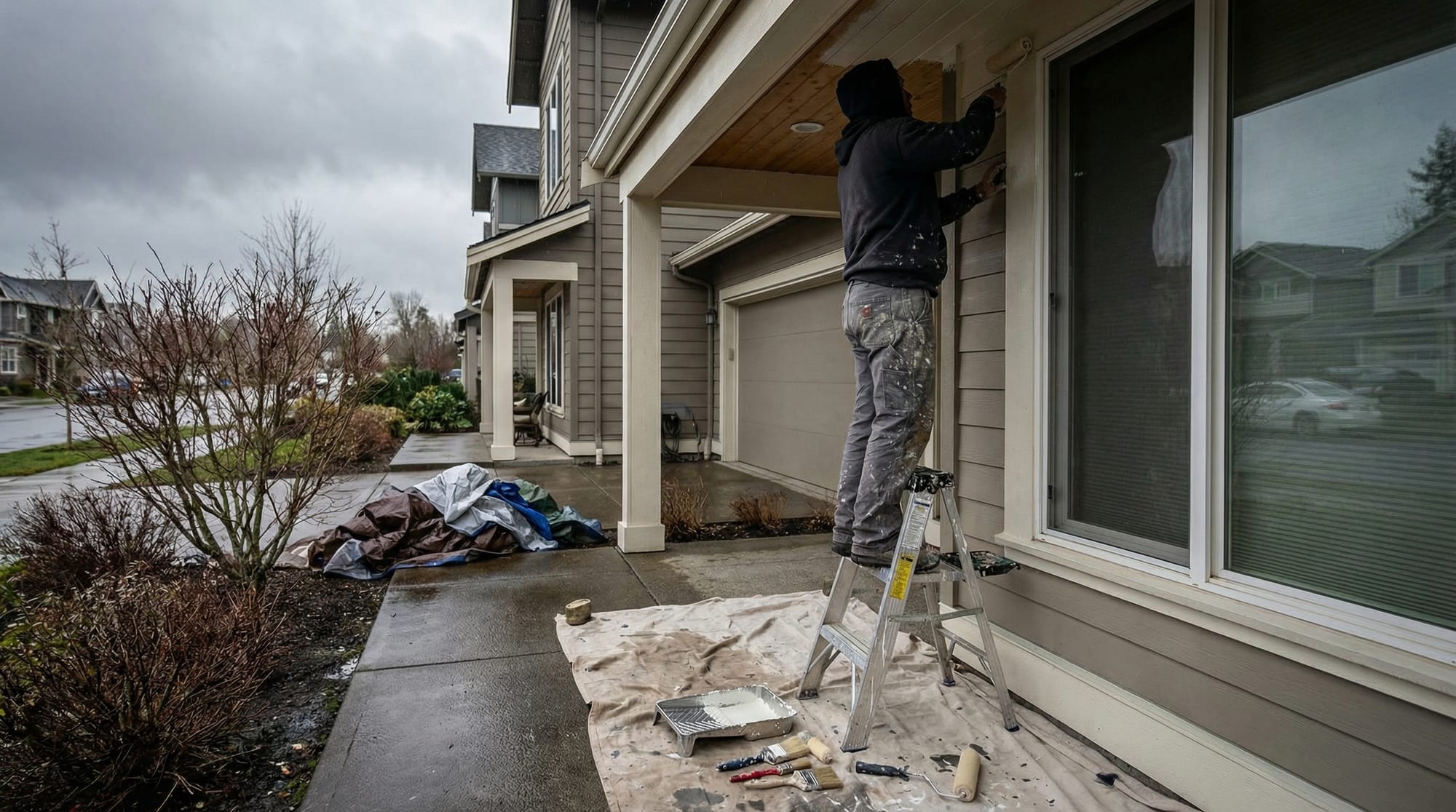
Yes.But fall exterior painting in Hillsboro becomes increasingly dependent on weather windows rather than calendar dates.That distinction matters.A homeowner might look outside on an October afternoon and see:
- Sunshine
- 61 degrees
- No rain
and reasonably ask:Why aren't we painting?The painter may be looking at something different:
- The siding is still damp from yesterday
- Overnight temperatures are dropping
- Dew is expected tonight
- Rain arrives tomorrow morning
- The coating needs more drying time than today's window provides
Both people are looking at the same weather.They're evaluating different parts of it.That is why fall house painting in Hillsboro is not simply about finding hours when rain is not actively falling.You need enough time for:Surface drying → paint application → initial drying → recoat where applicable → protection from the next moisture eventHillsboro's climate makes that increasingly challenging as fall progresses. National Weather Service normals at Portland-Hillsboro Airport show average temperatures dropping substantially from September through November, while NOAA-based climate normals show precipitation increasing from about 1.38 inches in September to 3.37 inches in October and 5.44 inches in November. National Weather ServiceThat does not make fall painting impossible.It makes timing more important.Lightmen Painting serves the broader west-side Portland Metro, and homeowners researching local service can also start from our Portland-area painting contractor page before reviewing the more specific exterior painting process.Here is what actually determines whether a Hillsboro house can still be painted in fall.
The Calendar Does Not Decide Whether Your House Can Be Painted
There is no magic date when exterior painting suddenly becomes impossible.October 1 does not shut the paint season off.Neither does November 1.The real decision depends on:
- Surface moisture
- Air temperature
- Surface temperature
- Product temperature
- Rain forecast
- Dew
- Humidity
- Daylight
- Coating requirements
- House exposure
A warm, dry stretch in October can provide excellent painting conditions.A wet week in September may not.The date helps predict conditions.It does not replace them.
Hillsboro's Fall Temperature Drop Matters
Hillsboro's seasonal temperature change is significant.The 1991–2020 normals at Portland-Hillsboro Airport show:
- September average high: about 76.4°F
- September average low: about 47.5°F
- October average high: about 63.7°F
- October average low: about 40.9°F
- November average high: about 52.6°F
- November average low: about 36.5°F National Weather Service
Those are monthly averages, not daily forecasts.But they show exactly why late-season painting becomes more complicated.The daytime temperature may still look reasonable.The overnight temperature becomes much more important.
Why Does the Overnight Temperature Matter?
Because paint does not stop drying when the crew drives away.Fresh exterior coating continues developing after application.Sherwin-Williams warns that fall painting can become problematic when daytime temperatures are acceptable but nighttime temperatures fall substantially lower. Dew can also settle onto coatings before they have developed enough resistance. Sherwin-WilliamsSo the question is not simply:Is it warm enough at 2:00 PM?It is:Will the coating have suitable conditions during the hours after application?That is a much better way to think about late-season painting.
Can Exterior Paint Be Applied Below 50 Degrees?
Sometimes.Older rules of thumb often treated 50°F as a universal cutoff.Modern exterior coatings vary.Sherwin-Williams notes that some exterior products are specifically formulated for application when air, surface and product temperatures are as low as 35°F. But it also emphasizes that stable conditions during the early drying period still matter. Sherwin-WilliamsThat means:35°F capability does not mean every 36°F fall day is automatically a good painting day.The product label establishes a technical boundary.Professional judgment still has to consider:
- Moisture
- Dew
- Forecast
- Drying time
- Surface temperature
The lowest allowable application temperature is not necessarily the best operating temperature.
Surface Temperature Matters Too
This gets overlooked.The weather app may say 48°F.That does not guarantee every wall of the house is 48°F.Surfaces can behave differently based on:
- Sun exposure
- Shade
- Wind
- Material
- Recent overnight conditions
A shaded north-facing wall may stay colder and damper longer than a sunny south-facing elevation.So exterior painting decisions need to consider the actual surface.Not just the number displayed on someone's phone.
Hillsboro Fall Rain Changes the Available Window
Rain creates two different scheduling problems.Before painting: the substrate may need time to dry.After painting: the coating needs enough suitable weather to begin drying properly.Those are separate issues.A six-hour break between rain showers may look promising.But if the siding spends four hours drying first, you may not actually have six productive painting hours.You may have two.And those two hours may not provide enough time before evening conditions change.That is why weather-window planning matters more than simply finding a dry icon on the forecast.
What Is a Painting Weather Window?
A weather window is the useful period in which conditions support the complete coating step.For exterior painting, that means considering:
- Surface readiness
- Application
- Initial drying
- Upcoming weather
A good weather window is not:It won't rain between noon and three.It is something closer to:The siding is dry, temperatures are suitable, the product can be applied correctly, and we have enough favorable conditions after application.That is a completely different standard.
How Long After Rain Can You Paint?
It depends on the surface.Sherwin-Williams recommends waiting at least a day after a heavy rain as a general minimum while stressing that the actual surface must be dry. Wood and masonry can retain substantially more moisture than materials such as aluminum or vinyl. Sherwin-WilliamsA fixed waiting period can therefore be misleading.Consider:Vinyl siding after a light showerversusweathered wood after two days of steady rain.Those are not equivalent drying situations.
Hillsboro Homes Can Have Very Different Drying Conditions
Even neighboring homes can behave differently.One house may have:
- Open southern exposure
- Minimal trees
- Good airflow
Another may have:
- Mature trees
- Deep shade
- Dense landscaping
- North-facing siding
- Limited airflow
The second home may hold exterior moisture longer.That is why local painting still has to become property-specific.The city tells us what weather pattern to expect.The house tells us how it responds to that weather.
Why Can One Side of the House Be Paintable While Another Is Not?
Sun exposure.Shade.Wind.Vegetation.Roof design.Drainage.Different elevations can effectively have different microclimates.A crew may be able to work productively on one side while allowing another elevation additional drying time.That's often a better late-season strategy than pretending the entire house becomes paintable at exactly the same moment.Professional scheduling should follow the available surfaces.
Morning Dew Can Shrink the Workday
Rain gets all the attention.Dew deserves some.Cool nights and high humidity can leave exterior surfaces damp in the morning.Sherwin-Williams specifically warns about dew reaching uncured exterior coatings during late-season painting. Sherwin-WilliamsThat creates a two-sided problem.The crew may need to wait later in the morning for surfaces to become suitable.Then they may need to stop applying paint earlier in the afternoon so fresh coating has enough time before temperatures fall and dew returns.The usable coating window gets squeezed.
Shorter Daylight Adds Another Limitation
September still provides relatively generous working days.By late October and November, usable daylight declines considerably.The temperature may become suitable later in the morning.The surface may dry after that.Then daylight begins disappearing earlier.Fall exterior production can therefore become:Wait → dry → paint → stoprather than the long, predictable production block available in midsummer.This does not necessarily mean the painter is working less efficiently.It means the available application window is shorter.
Why Does Cooler Weather Slow Drying?
Temperature affects coating behavior.Sherwin-Williams notes that cooler temperatures can slow drying and may affect leveling and finish characteristics. Sherwin-WilliamsHumidity and air movement can also affect drying.So the same coating that moves quickly on a warm July afternoon may behave differently on a cool October day.That influences:
- Recoat timing
- Daily production
- How late paint can be applied
- When masking can be removed
- When the next stage begins
Late-season painting needs more patience around these transitions.
Does Exterior Paint Need 48 Hours Without Rain?
There is no universal 48-hour requirement for every exterior paint.This is where general rules can get dangerous.Sherwin-Williams notes that some modern products can be applied at lower temperatures but that stable environmental conditions early in the drying schedule are important; its homeowner application guidance notes that the first 48 hours can be critical for some exterior systems. Sherwin-WilliamsThe exact requirement should come from:
- Product
- Surface
- Temperature
- Humidity
- Manufacturer instructions
Do not turn one manufacturer's general recommendation into a universal rule for every paint.
Does That Mean You Need Two Completely Dry Days?
Not necessarily.Again, product matters.Some modern exterior coatings develop rain resistance relatively quickly.Others have different requirements.The contractor should know the specific coating being used and check its technical information.The right question is:How long does this product need under today's conditions before expected moisture becomes a problem?That answer is much more useful than:I heard paint needs 24 hours.
Can You Paint Between Hillsboro Rain Systems?
Yes, sometimes.This is how much of late-season exterior painting happens.But several conditions need to line up.The crew needs:
- A dry-enough substrate.
- Suitable air and surface temperatures.
- An appropriate coating.
- Enough application time.
- Enough post-application drying time.
If all five exist, a break in weather may be useful.If only number four exists because it isn't raining right this second, you do not yet have a painting window.
Why Can't the Crew Just Paint Faster?
Because speed doesn't make siding dry.This is an important distinction.Labor limitations can sometimes be solved with:
- More crew members
- Better equipment
- Better organization
Weather limitations cannot.If an elevation is wet, adding four painters gives you four additional professionals who can confirm that it is wet.The crew can often shift to other productive tasks.But coating application still has to wait.
What Work Can Continue While the Siding Dries?
Depending on actual conditions, exterior crews may still make progress through:
- Setup
- Protection
- Masking
- Selected scraping
- Selected sanding
- Repair preparation
- Caulk removal
- Material organization
Some prep tasks also need dry conditions, so this is not unlimited.The point is that a weather interruption does not necessarily mean nothing happens.A strong fall production plan keeps separating:What can happen now?from:What has to wait?
Why Does Surface Preparation Matter Even More in Fall?
Because wet-season conditions can expose weaknesses.Homeowners may notice:
- Peeling
- Bubbling
- Failed caulk
- Mildew
- Bare wood
- Water staining
- Soft trim
Those conditions need to be evaluated rather than immediately hidden.Lightmen's paint-failure resources are useful when peeling or recurring failure suggests something more complicated than ordinary fading.Fresh paint can protect a properly prepared surface.It cannot cure:
- Active leaks
- Rot
- Ongoing moisture intrusion
- Failing substrate
Paint is capable.It is not supernatural.
Should Hillsboro Houses Be Washed Before Painting?
Often, appropriate cleaning is part of exterior preparation.Lightmen's professional exterior painting process includes evaluating cleaning based on surface condition because dirt, mildew and chalky residue can interfere with coating adhesion.But washing adds moisture.That becomes especially important during fall.The cleaning schedule needs to allow the substrate enough time to dry before subsequent preparation and coating.Washing Tuesday and automatically painting Wednesday is not a system.Check the surface.
Why Does Wood Need More Attention After Rain?
Wood is absorbent.If coating failure has exposed the substrate, the material may take longer to dry than a sealed neighboring area.That means a house with:
- Peeling cedar
- Bare trim
- Failed previous coatings
can require a more conservative drying plan than a house with sound, well-sealed siding.This is also why condition matters so much when deciding whether a late-season repaint is practical.A healthy repaint and a heavy restoration project are not the same fall schedule.
Can Bare Wood Wait Through Winter?
That depends on condition and exposure, but exposed wood deserves attention.Bare substrate is no longer receiving the same protection as a sound coating system.That does not automatically mean:Paint the whole house tomorrow regardless of conditions.It may mean:
- Assess the exposed areas
- Address necessary repairs
- Protect vulnerable surfaces appropriately
- Plan the larger repaint for a better window if needed
If you're unsure how much of the coating system has actually failed, Lightmen's Exterior Condition Report is designed to help determine whether you're looking at isolated maintenance, developing failure or a repaint project.
Why Do Trees and Shade Matter in Hillsboro?
Shade changes drying.Homes with:
- Mature trees
- Dense shrubs
- Limited sun exposure
may stay damp longer after rainfall or morning dew.Shade also creates conditions where:
- Mildew
- Moss
- Organic growth
can become more persistent.A shaded elevation does not automatically have a paint problem.It simply needs to be evaluated differently from a sunny wall.
What About Gutters and Downspouts?
Fall is an excellent time to notice whether water is being directed where it belongs.Look for repeated staining or moisture near:
- Fascia
- Trim
- Siding
- Windows
- Corners
If a gutter or drainage issue is repeatedly wetting the building, fix the source.Painting the stained area without addressing the water path is mostly an exercise in making the problem prettier.
Does Wind Matter?
Yes.Wind affects:
- Drying
- Spray control
- Overspray risk
- Ladder and equipment conditions
Moderate airflow can help surfaces dry.Excessive wind can make application problematic or unsafe.Exterior painting weather is not one-dimensional.“Sunny” is not enough information.Neither is “55 degrees.”
Does Humidity Matter?
Yes.Higher humidity can slow the movement of moisture out of coatings and substrates.The exact effect varies with the product and conditions.This becomes particularly relevant in fall because cooler mornings may combine with relatively high humidity.A painter needs to think about:
- Temperature
- Humidity
- Dew
- Surface moisture
together.That combination determines whether the window is useful.
Why Does the Dew Point Matter?
Dew forms when surfaces cool enough for moisture from the air to condense.This can happen even when there has been no rain.That means a perfectly dry afternoon can turn into a damp evening.Fall painters need enough time for fresh coatings before that transition.A product capable of low-temperature application still deserves protection from moisture during the critical early drying period.
Can Paint Dry Overnight in Hillsboro?
It can.The meaningful question is whether the product and environmental conditions allow it.A mild, dry fall night is very different from:
- 36 degrees
- High humidity
- Heavy dew
A contractor should consider the overnight forecast before applying late in the afternoon.Today's high temperature tells only half the story.
How Late Into October Can You Paint?
There is no fixed cutoff.Hillsboro's October climate normals are still relatively moderate, with an average high near 64°F and low around 41°F. But the monthly normal also includes substantially more precipitation than September. PlainClimateThat means October can contain excellent painting days.It can also contain long stretches where full exterior production becomes difficult.The answer changes week by week.
What About November?
November becomes substantially more challenging.Hillsboro's normal November average high is about 53°F and the average low about 37°F, while normal precipitation rises to roughly 5.44 inches. National Weather ServiceAgain:That does not mean exterior painting becomes legally or physically impossible on November 1.It means the number of variables working against predictable production increases.A small exterior project and a complete multi-day repaint are also different decisions.
Project Size Changes Whether the Weather Window Is Practical
Suppose Hillsboro gets a four-day favorable window.That may be plenty for:
- Small repair
- One elevation
- Trim maintenance
It may not be enough for:
- Washing
- Heavy scraping
- Multiple repairs
- Priming
- Two finish coats
- Entire two-story home
So the question:Can you paint this week?needs a second question:Can we complete the required stages responsibly within the available conditions?Project size matters.
The Existing Condition Changes the Answer Too
Two similar Hillsboro homes can face completely different fall decisions.House A
- Sound coating
- Minimal prep
- Similar colors
House B
- Heavy peeling
- Exposed wood
- Failed caulk
- Shaded siding
- Repair needs
House A may fit into a late-season weather window.House B may need much more prep and drying.The calendar didn't change.The project did.
Should You Do Only the Failing Elevations?
Sometimes that may be worth considering.Exterior elevations do not always deteriorate uniformly.One side may experience:
- More sun
- More wind-driven rain
- More shade
- More vegetation
- More moisture
If one elevation needs protection while others remain sound, a phased approach can sometimes be reasonable.Lightmen's guide to one-time, phased and maintenance painting explains why exterior condition should determine priority rather than automatically treating every surface as equally urgent.There are aesthetic and future-maintenance tradeoffs.But protecting a vulnerable substrate may be more important than keeping every elevation on identical repaint dates.
Fall Can Be an Excellent Time to Inspect Even if You Do Not Paint
This is important.An inspection in fall can identify:
- Bare wood
- Peeling
- Failed caulk
- Organic growth
- Moisture staining
- Soft trim
Then you can decide:Address nowMaintain nowWatchorBudget for springThat is much better than discovering the exterior condition when pieces of paint begin appearing in the flowerbeds.Lightmen's fall property paint assessment guide goes deeper into what homeowners should check before the wet season settles in.
What if the House Is Fine Until Spring?
Then waiting may be completely reasonable.Not every home showing some age needs an emergency repaint.If the coating is still protecting the substrate and major failure is absent, planning for the next dependable dry season can make sense.That can provide:
- Longer weather windows
- More predictable production
- Easier washing/drying
- Better scheduling options
Painting before failure is valuable.Forcing painting during poor conditions is not.Both can be true.
When Should You Stop Trying to Fit the Project Into Fall?
When the conditions are dictating more compromise than productive work.Warning signs include:
- Repeated multi-day rain systems
- Substrates staying damp
- Temperatures approaching product limits
- Heavy morning moisture
- Very short application windows
- Project size exceeding the likely weather window
At some point, the best professional decision is:We should move this project into a better exterior season.That is not giving up.That is respecting the coating system.
Why Isn't the Cheapest Fall Schedule Necessarily the Best?
Because shortcuts often show up in preparation and drying time.A contractor can appear faster by:
- Painting damp surfaces
- Ignoring forecast risk
- Cutting prep
- Applying too late
The project completes sooner.That does not mean it performs better.Before comparing bids, review what each contractor has actually included. Lightmen's guide to what a professional painting estimate should include explains why preparation, primer, products, coat expectations, schedule and change-order procedures belong in the comparison.
How Should a Hillsboro Fall Estimate Handle Weather?
It should separate estimated production from weather-dependent calendar duration.For example:The project may require approximately five working days.But the contractor cannot guarantee those five days will occur consecutively if:
- Rain
- Moisture
- Temperature
- Drying conditions
interrupt exterior production.Lightmen's current project terms explicitly recognize that exterior painting schedules can change because of weather, moisture, temperature, drying conditions and manufacturer requirements. Lightmen Painting CCB# 228370That's realistic.
Does a Rain Delay Mean Nothing Can Happen?
No.Sometimes crews can continue:
- Prep
- Repairs
- Protection
- Other project stages
Other times the conditions make exterior work impractical altogether.The useful question is:What productive step can happen without compromising the coating system?A professional crew should not create work merely to look busy.The goal is progress that actually helps the project.
Should the Painter Communicate Every Weather Change?
Not every cloud.But meaningful schedule changes deserve communication.A useful update might be:“Yesterday's rain left the north elevation too damp for coating this morning. We're continuing prep on the south side and will reassess the north wall after it has had additional drying time.”That tells the homeowner:
- What happened
- What the crew is doing
- What happens next
Lightmen's project status-update guide explains why clear communication becomes particularly valuable when weather changes an exterior schedule.“Weather delay” is technically information.More context is better.
What Are the Biggest Fall Painting Red Flags?
Painting over visibly damp substrateThat is not a drying strategy.“We can paint in any temperature.”Products have limits.Ignoring overnight temperaturesFresh coating continues drying after work stops.No attention to dewMoisture does not require rainfall.No rain bufferThe next weather system matters too.Painting over active peelingLoose coatings need preparation.Using weather as an explanation for everythingLegitimate weather delays should still make sense.
What Are the Green Flags?
Look for a Hillsboro-area painter who:
- Checks surface condition
- Pays attention to actual moisture
- Knows the coating requirements
- Watches overnight temperatures
- Accounts for dew
- Plans around elevations
- Uses dry windows intelligently
- Continues appropriate prep when possible
- Explains weather-related changes
- Will postpone application rather than force it
That is what late-season professionalism looks like.Not defeating Oregon weather.Working intelligently within it.
What Should Hillsboro Homeowners Expect From Lightmen Painting?
For Lightmen, an exterior project begins with the house.Not the calendar.We look at:
- Existing coating
- Siding
- Trim
- Exposed substrate
- Peeling
- Caulk
- Surface contamination
- Moisture-related concerns
Then the coating system and schedule need to match those conditions.Lightmen's professional exterior painting service is specifically built around Portland-area weather, where rain, damp siding, mildew, shade and seasonal temperature changes all affect exterior work.For Hillsboro homeowners, the closest verified Lightmen city-focused entry point is our Portland-area painting contractor page, which connects homeowners across the metro to the appropriate residential painting services.And if the bigger question is whether the house needs repainting at all, the Exterior Condition Report can help identify whether you're looking at:
- Healthy coating
- Maintenance needs
- Localized failure
- Developing repaint need
Fall painting can absolutely work.But the useful goal is not:Get paint on the house before winter at any cost.It is:Protect the house with a coating system applied under conditions that give it a reasonable chance to perform.Sometimes that happens in October.Sometimes the weather says spring.The house and the conditions should make that decision.To discuss a Hillsboro exterior project, you can request a project-specific painting estimate.Lightmen Painting
Oregon CCB# 228370
503-389-5758
scheduling@lightmenpainting.comWe show up, every time.
3. KEY FEATURES
Hillsboro-specific climate angle: Uses Portland-Hillsboro Airport normals rather than relying only on broader Portland climate data. National Weather ServiceDistinct from Beaverton article: Gives more attention to temperature decline, dew and the complete drying window instead of simply repeating rain and prep information.City landing link included: The full article naturally links to Lightmen's closest verified Portland-area city-focused landing page, per the new rule for all city articles.Weather-window framework: Helps homeowners understand why “not raining” and “safe to paint” are different concepts.Product-specific temperature guidance: Avoids the outdated claim that all exterior paint has one universal 50°F minimum.Condition-first conversion: Gives homeowners an ECR path when it is unclear whether the house needs immediate painting or can wait for spring.
4. THINGS TO KNOW
- Hillsboro exterior painting has no universal fall cutoff date.
- Hillsboro Airport's 1991–2020 normals fall from roughly 76°F/48°F average high/low in September to 64°F/41°F in October and 53°F/37°F in November. National Weather Service
- NOAA-derived Hillsboro precipitation normals rise from about 1.38 inches in September to 3.37 inches in October and 5.44 inches in November. PlainClimate
- Siding must be sufficiently dry before painting; the fact that active rain has stopped does not prove that wood or masonry is ready.
- Sherwin-Williams recommends at least a day after a heavy rain as a general minimum while emphasizing that actual surface dryness controls. Sherwin-Williams
- Some modern exterior coatings can be applied at temperatures as low as 35°F when their technical requirements allow, but conditions during the initial drying period remain important. Sherwin-Williams
- Dew can create problems even when no rain falls.
- Different house elevations may become paintable at different times.
- Late-season projects may require more calendar days even when the actual labor scope remains unchanged.
- When the weather window no longer supports the complete coating process, postponing application is usually smarter than forcing the schedule.
5. IN OUR EXPERIENCE
In our experience, fall exterior painting becomes much easier to understand when you stop asking:“Is it raining?”and start asking:“Do we have enough usable time?”The siding may need two hours to finish drying.Then we need enough time to apply the coating properly.Then the coating needs enough favorable conditions afterward.Suddenly a six-hour break between weather systems isn't necessarily a six-hour painting window.That doesn't mean we should be afraid of painting in fall.It means we have to respect the whole window.I'd rather lose a day to weather than lose years from a coating system because we wanted the schedule to look prettier.
6. PEOPLE ALSO ASK
Can you paint a house in Hillsboro in October?
Yes. October can provide workable exterior-painting windows in Hillsboro, but rain frequency, surface moisture, overnight temperatures and dew make scheduling less predictable than summer.
What temperature is too cold for exterior painting?
It depends on the specific coating. Some modern exterior acrylic products are formulated for application down to about 35°F, while others require warmer conditions. Follow the product's technical requirements for air, surface and material temperature. Sherwin-Williams
How long after rain should you wait before painting?
There is no universal waiting time. Sherwin-Williams recommends at least one day after heavy rain as a general minimum while stressing that the surface itself must be dry before painting. Wood and masonry can take longer to dry than less absorbent materials. Sherwin-Williams
Can you paint if rain is coming the next day?
Potentially, depending on the coating, temperature and how much drying time is available before rain arrives. The manufacturer's rain-resistance and drying requirements should guide the decision.
Does morning dew affect exterior painting?
Yes. Dew can leave siding damp before application and can also expose fresh paint to moisture after evening temperatures fall.
Is November too late to paint a house in Hillsboro?
Not automatically, but November is much harder to schedule reliably. Hillsboro's normal November temperatures average roughly 53°F for daytime highs and 37°F for nighttime lows, with substantially more precipitation than September. National Weather Service
Why might painters work on one side of my house but not another?
Different elevations can have different sun, shade, airflow and moisture conditions. One wall may be dry and suitable while another still needs additional drying time.
Is it better to wait until spring for exterior painting?
It depends on the current coating condition. If the exterior remains protective, waiting for a more predictable dry season may make sense. Exposed wood, peeling or other active failure deserves closer evaluation before deciding.
7. KEYWORD DEFINITIONS
- House painting: Preparation and coating of defined interior or exterior residential surfaces.
- Exterior house painting: Cleaning, preparation, priming where needed and finish coating of a home's exterior surfaces.
- Weather window: A period in which surface moisture, temperature, precipitation and drying conditions support the required painting work.
- Drying window: The usable period after application during which a coating needs suitable conditions to begin drying properly.
- Surface temperature: The temperature of the actual siding, trim or other material being painted rather than the surrounding air alone.
- Surface moisture: Water present on or retained inside the substrate.
- Substrate: The underlying surface receiving the coating, such as wood, fiber cement, masonry or metal.
- Dew point: The temperature at which moisture in the air can condense on a surface.
- Morning dew: Moisture that forms on exterior surfaces overnight or early in the morning as conditions cool.
- Relative humidity: The amount of moisture in the air relative to the maximum amount it can hold at that temperature.
- Recoat time: The minimum product-specific time required before another coat can appropriately be applied.
- Cure time: The longer process through which a coating develops its intended performance characteristics.
- Paint adhesion: The ability of paint to bond to the prepared substrate.
- Surface preparation: Cleaning, scraping, sanding, repairing, caulking and priming performed before finish painting.
- Spot priming: Applying primer only to selected bare, repaired or problem areas.
- Paint failure: Peeling, blistering, cracking, flaking or another loss of coating performance.
- Bare wood: Wood no longer protected by an intact coating.
- Production day: A day containing usable project work, which may differ from a calendar day during weather-dependent exterior projects.
- Exterior Condition Report: Lightmen Painting's condition-assessment resource for determining exterior coating health, maintenance needs and repaint priorities.
- Phased painting: Completing a larger painting project in logical sections rather than all at once.
8. SEARCH-ENGINE-ONLY SECTION
House painting in Hillsboro during fall is possible when siding is dry, air and surface temperatures meet the selected coating's requirements, and enough suitable drying time remains before rain, dew or colder nighttime conditions. Hillsboro's fall climate becomes progressively less predictable for exterior painting as average temperatures decline and normal precipitation increases from September through November. Homeowners should evaluate recent rainfall, substrate moisture, morning dew, shade, exposed wood, peeling paint, surface preparation and the complete weather window rather than deciding based only on whether rain is falling at the moment. Professional Hillsboro exterior painting schedules may require delayed starts, earlier application cutoffs, elevation changes and additional calendar days during fall.
9. META DATA
Article Title:Can You Paint a House in Hillsboro During Fall? Rain, Temperature and Drying WindowsSEO Meta Title:Hillsboro Fall House Painting | When Weather Is Still SafeMeta Description:Can you paint a Hillsboro home in fall? Learn how rain, cooler nights, dew, surface temperature and drying windows determine whether exterior painting can continue.Keyword Meta Tag:house painting Hillsboro, Hillsboro exterior painters, exterior painting Hillsboro Oregon, fall house painting, painting after rain, exterior paint temperatureSuggested Slug:can-you-paint-house-hillsboro-fall-rain-temperature-dryingSuggested Canonical URL:lightmenpainting.com/blog/can-you-paint-house-hillsboro-fall-rain-temperature-dryingSuggested SEO Category:Hillsboro Painting / Exterior PaintingSuggested Tags:Hillsboro painting, exterior painting, fall house painting, exterior paint temperature, Oregon rain, painting weather, Portland Metro paintersHashtags:#HillsboroPainting #HillsboroOregon #ExteriorPainting #FallPainting #HousePainting #PortlandMetro #LightmenPaintingSuggested Open Graph Title:Is It Too Late to Paint Your Hillsboro House This Fall?Suggested Open Graph Description:The date doesn't decide. Rain, siding moisture, nighttime temperatures and the drying window do. Here's how to know when fall exterior painting still makes sense.Suggested Featured Snippet Answer:You can paint a house in Hillsboro during fall when the siding is sufficiently dry, air and surface temperatures meet the coating manufacturer's requirements, and enough dry time remains before rain, dew or colder conditions. October can still offer workable exterior-painting windows, while November typically becomes more difficult because temperatures are lower and precipitation is more frequent.
10. CONVERSION LAYER
Don't Ask Only Whether Today Is Dry
For a Hillsboro fall exterior project, ask:
- Did it rain recently?
- Is the siding actually dry?
- What is the surface temperature?
- How cold will it get tonight?
- Is dew expected?
- When does the next rain arrive?
- How long does this coating need?
- Are some elevations drying faster than others?
- Is bare wood exposed?
- Can the house reasonably wait until spring?
Then decide.If the coating is still healthy, waiting for a larger dry-season window may be perfectly reasonable.If peeling, bare wood or moisture-related failure is already showing, it may be worth getting the exterior evaluated now even if the complete repaint happens later.Lightmen Painting provides professional exterior painting throughout the Portland Metro, and Hillsboro homeowners can enter through our Portland-area painting contractor page for the closest verified city-focused Lightmen landing page currently available.For uncertain coating conditions, start with an Exterior Condition Report.For a defined project, request a painting estimate.Lightmen Painting
Oregon CCB# 228370
503-389-5758
scheduling@lightmenpainting.comWe show up, every time.
11. DOWNLOADABLE ASSET
Hillsboro Fall Exterior Painting Window Checklist
Suggested PDF Title:Hillsboro Fall Exterior Painting Weather Window PlannerSuggested Article Anchor:Download the Hillsboro Fall Painting Window ChecklistFinal Asset URL:[DOWNLOADABLE ASSET PLACEHOLDER — replace after upload]
Recent Conditions
- No rain recently
- Light rain
- Heavy rain
- Multiple wet days
- Morning fog
- Morning dew
- Frost or near-freezing mornings
Exterior Condition
- Coating sound
- Fading only
- Minor peeling
- Widespread peeling
- Bare wood
- Failed caulk
- Mildew
- Water stains
- Soft trim
- Unknown condition
Surface Readiness
- Surface appears dry
- Absorbent wood checked carefully
- Shaded elevations checked
- Morning dew has evaporated
- Surface temperature is suitable
- Primer conditions are suitable
- Finish-coat conditions are suitable
Forecast
Today's high: __________________Tonight's low: _________________Tomorrow's high: _______________Next expected rain: ____________Expected humidity: _____________
Coating Information
Manufacturer: ___________________Product: ________________________Minimum application temperature: ______Recoat time: ____________________Rain/moisture guidance: _______________
Elevation Check
North
- Ready
- Damp
- Heavy shade
- Needs prep
South
- Ready
- Damp
- Heavy shade
- Needs prep
East
- Ready
- Damp
- Heavy shade
- Needs prep
West
- Ready
- Damp
- Heavy shade
- Needs prep
Is the Weather Window Long Enough?
- Enough time for surface drying
- Enough time for application
- Enough time before evening dew
- Enough time before next rain
- Enough time for required recoat
- Overnight temperature acceptable
Project Size
- Small maintenance project
- One elevation
- Trim only
- Full exterior
- Heavy prep/full repaint
Decision
- Paint now
- Continue prep and reassess
- Complete targeted maintenance
- Get Exterior Condition Report
- Schedule full repaint for spring
- Need professional recommendation
12. GOOGLE BUSINESS PROFILE POST
Can You Still Paint a House in Hillsboro During Fall?
Yes—but a dry afternoon isn't automatically a painting window.Fall exterior painting in Hillsboro depends on:
- Recent rain
- Siding moisture
- Surface temperature
- Overnight temperatures
- Morning dew
- Humidity
- The next rain system
- The paint manufacturer's drying requirements
One elevation may even be ready while another shaded side of the house is still damp.The goal isn't to squeeze paint onto the siding before winter.It's to apply the coating when the surface and weather give it the conditions it needs to perform.If you're unsure whether your Hillsboro exterior still has a workable fall window, Lightmen Painting can help assess the condition and build a realistic plan.Lightmen Painting
Oregon CCB# 228370
503-389-5758
Do You Have Questions? Give Us A Call!
If you’re in the Portland, OR metro area and you want:a clean plan before repainting, orhelp diagnosing exterior paint failures, ora crew that resolves issues like adults or
You Just Have Questions…
Here’s the easiest path:Request an estimateEmail: scheduling@lightmenpainting.com
Call: 503-389-5758
-
People Also Ask:
What are the main differences between acrylic and latex paint?
Acrylic paint is known for its durability and flexibility, making it suitable for outdoor environments and areas exposed to harsh conditions. It's made with a synthetic resin that helps it withstand the elements. Latex paint, on the other hand, is water-based and popular for indoor walls and ceilings due to its quick-drying nature and ease of cleanup.
Why should I choose low-VOC paints for indoor projects?
Low-VOC (Volatile Organic Compounds) paints are recommended for indoor projects because they emit fewer harmful chemicals into the air, improving indoor air quality and reducing health risks. These paints are particularly important in enclosed spaces or homes with children, the elderly, or those with respiratory issues.
Can acrylic paint be used indoors as well as outdoors?
Yes, acrylic paint can be used both indoors and outdoors. Its versatility is due to its durable nature, which makes it resistant to weathering and capable of retaining color and finish over time. However, due to its strong odor and chemical composition, proper ventilation is essential when using it indoors.
-
Definitions
- Painting dispute resolution: A structured process for resolving disagreements about scope, quality, schedule, or pricing on a painting project.
- Scope of work: The exact list of surfaces, prep steps, and deliverables included in a project.
- Scope creep: Uncontrolled expansion of the project beyond agreed scope (often caused by add-ons).
- Change order: A written modification to the original agreement covering scope/cost/schedule changes.
- Punch list: A final checklist of corrections required before completion and final payment.
- Adhesion failure: When paint doesn’t properly bond and peels, flakes, or separates from the surface.
- Substrate: The underlying surface being painted (wood, siding, stucco, metal, etc.).
- Surface prep: Cleaning, scraping, sanding, priming, caulking, and repairs done before painting.
- Moisture intrusion: Water entering materials or assemblies, often causing rot, mold, or coating failure.
- Quality standards: Measurable expectations for coverage, finish uniformity, edges, and corrections.
- Walkthrough: An on-site review with the client to confirm completion and build a punch list.
- Exterior Paint Condition Report (ECR): An inspection-style evaluation of exterior coating condition and risk factors to guide repair/repaint decisions.
Serving Portland Homeowners Since 2019
Lightmen Painting works with homeowners across the greater Portland metro area — from first-time consultations to full exterior repaints. Whether you need a second opinion on a contractor's quote, a diagnosis for peeling paint, or a crew that shows up on time and communicates clearly, we're the team Portland homeowners call.We serve: Portland, Tigard, Lake Oswego, Tualatin, West Linn, Milwaukie, Sherwood, Happy Valley, Oregon City, Beaverton, Hillsboro, and Gresham.