Why Your Commercial Repaint Is More Complex Than You Think (And How to Plan for It)
Key Features
- Breaks down why commercial repaint projects fail before they start
- Explains real cost drivers (not just paint and labor)
- Provides a practical planning framework for property managers
If you’ve ever looked at a commercial repaint and thought, “This should be pretty straightforward,” you’re not alone—and you’re also exactly who this article is for.
At a glance, repainting a commercial property feels simple: pick a color, pick a product, schedule the work, done. But in reality, most projects don’t fail because of paint—they fail because of planning.
This breakdown walks you through the real reasons commercial repaint projects go sideways, what most people miss early, and how to avoid turning a routine repaint into an expensive operational headache.
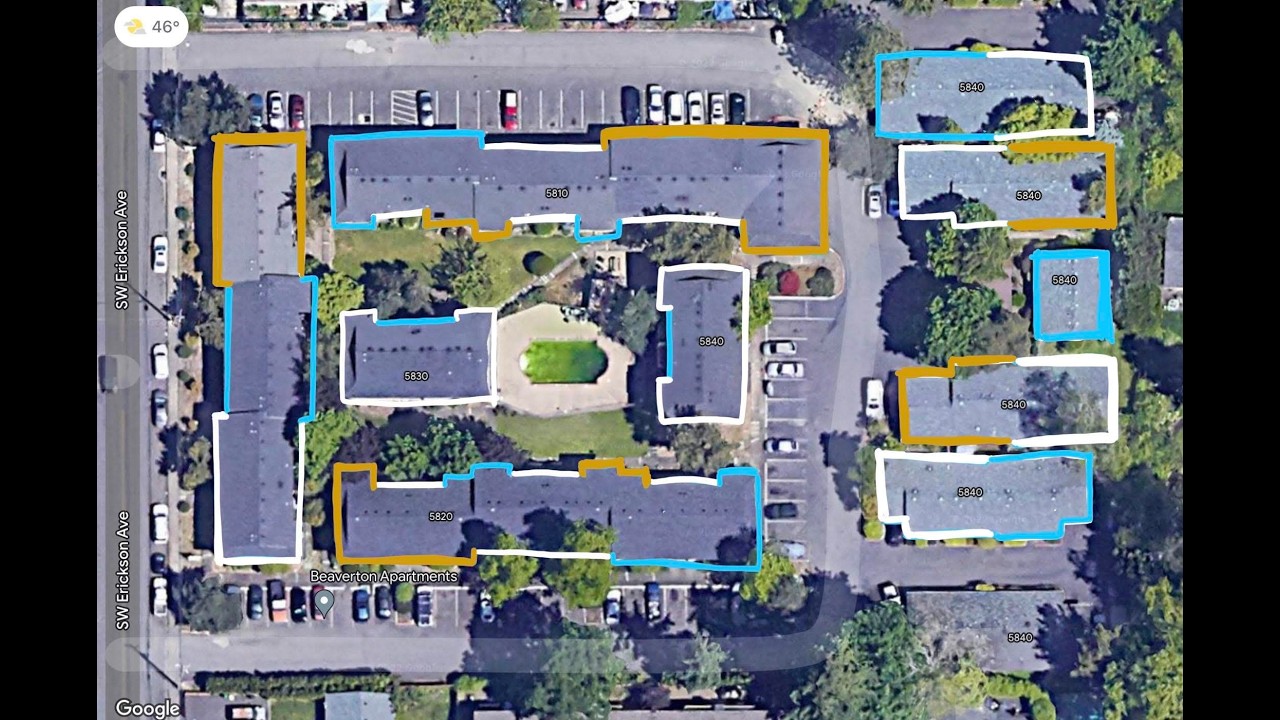
The Operational Mess vs. The Straightforward Project
For facility and property managers, a commercial repaint often presents as a deceptively simple maintenance task: select a color, choose a product, and find a window on the calendar. However, projects that seem technically straightforward frequently devolve into an "operational mess" that dismantles budgets and timelines.
The reality is that while the quality of the paint matters, the chemistry of the coating is rarely what causes a project to fail. The breakdown almost always occurs in the planning phase—or the lack thereof.
To bridge the gap between a vague estimate and a successful execution, we utilize the Commercial Repaint Planning Notebook. This tool is designed to move property professionals away from guesswork and toward a strategy that accounts for scope, phasing, and operational risk before a single drop of paint is purchased.
👉 Translation: The difference between a smooth project and a disaster is rarely the paint—it’s everything before the paint.
Things to Know
- Most repaint failures are planning failures
- Hidden prep is the #1 budget killer
- Access issues can double labor time
- Phasing reduces disruption and improves execution
- “Convenient schedules” often cost more
The "Hidden Prep" Budget Trap
The most significant driver of cost overruns in commercial repainting is "hidden prep." These are the variables that remain invisible during a casual observation but dictate the actual labor hours required.
The primary reason these issues are missed in early assumptions is the "proximity factor." Most facility managers view their buildings from the ground or through an office window. However, substrate failure and coating degradation are often only visible within arm's reach.
What looks solid from thirty feet away can be falling apart up close.
Critical Hidden Factors (Where Budgets Get Wrecked)
- Failed Sealant and Caulk
→ Usually needs full replacement, not touch-ups - Substrate Wear and Unstable Coatings
→ Requires removal, not repainting - Cleaning Requirements
→ Impacts labor, water control, and site logistics - Rust and Corrosion
→ Needs treatment systems, not coverage - Repeated Failure Zones
→ Indicates underlying moisture or structural issues
Reality Check
"A building may not need a full nightmare overhaul, but hidden prep still needs to be understood before pricing is taken seriously."
👉 If prep isn’t defined early, your “estimate” is just a guess with a deadline.
Access Is Not a "Side Detail" (It’s the Budget Driver)
In a commercial environment, access is a primary driver of the project’s financial math. If a crew cannot efficiently reach a surface, labor costs balloon, and sequencing breaks down.
Access is not a logistical detail—it is a cost center.
What Actually Impacts Cost (That People Ignore)
- Equipment Staging
→ Idle lifts = paid time doing nothing - Daily Logistics
→ Moving equipment eats hours fast - Restricted Work Zones
→ Limited working windows = longer timelines - Pedestrian Flow
→ Safety planning affects everything
👉 Awkward access doesn’t just slow things down—it changes the entire job structure.
Why Phasing Beats the "Giant Block" Approach
The instinct to treat a repaint as one giant, uninterrupted block of work is often a mistake for active commercial properties.
It looks efficient on paper.It’s not.
Why Phasing Wins in the Real World
- Targeted Tenant Coordination
→ Clear, short windows instead of vague disruption - Operational Continuity
→ Business keeps running - Managed Noise and Access
→ Controlled impact instead of chaos
In Our Experience
The projects that go smoothly aren’t the simplest—they’re the ones that are understood early. When scope, access, and phasing are clearly defined upfront, everything else becomes predictable. When they’re not, even a basic repaint turns into a moving target.
👉 A repaint project may be easier to execute when planned in phases instead of treated like one giant uninterrupted block of work.
The Reality of the "Convenient" Schedule
In the world of property planning, an unrealistic schedule is a financial liability.
The timeline you want rarely matches the timeline the building requires.
What a Real Schedule Has to Respect
- Weather constraints (especially in the PNW)
- Cure times and coating requirements
- Interior traffic patterns
- Ventilation and safety conditions
- After-hours labor costs
👉 The most convenient schedule is rarely the most realistic one.
And unrealistic schedules are where projects start bleeding money.
Walkthrough First, Pricing Second
Requesting an immediate estimate for a complex property is often premature.
If you skip planning, you don’t save time—you just delay problems.
When You Need a Walkthrough
- Early budgeting phase
- Known problem areas
- Complex access or occupancy conditions
When You Need an Estimate
- Scope is clearly defined
- Project is ready to move
- Variables are already understood
👉 Pricing before planning = pricing drift later. Every time.
The Commercial Repaint Diagnostic Checklist
Use this before calling anyone:
- ☐ Do we know the condition of coatings up close?
- ☐ Have caulking and sealants been evaluated?
- ☐ Are access challenges mapped out?
- ☐ Do we have a realistic schedule?
- ☐ Is phasing required?
- ☐ Are there known failure zones?
If you answer “no” to multiple:
👉 You’re not ready for pricing yet—you’re still in planning.
If your repaint still feels “simple,” that’s usually the first warning sign.The smartest move is getting clarity before committing to scope, schedule, or pricing.If you want a walkthrough that actually breaks down risk, access, and real cost drivers—not just a number—Lightmen Painting can help you map it out the right way.
Do You Have Questions? Give Us A Call!
If you’re in the Portland, OR metro area and you want:
a clean plan before repainting, or
help diagnosing exterior paint failures, or
a crew that resolves issues like adults or
You Just Have Questions…
Here’s the easiest path:
Email: scheduling@lightmenpainting.com
Call: 503-389-5758
-
People Also Ask:
Why do commercial painting projects go over budget?
Most overruns come from hidden prep, access challenges, and poor early planning—not material costs.
What is the most important step before a commercial repaint?
A detailed walkthrough to identify prep, access, and scheduling variables before pricing.
Should commercial painting be done in phases?
Yes. Phasing reduces disruption, improves efficiency, and allows better coordination with occupants.
-
Subscribe to Our Blog & Elevate Your DIY Game! Never miss a beat! Join the Lightmen Painting community and get the latest insights on painting, DIY projects, and expert tips delivered straight to your inbox.
Have something specific in mind? We’d love to hear your ideas! Let us know what topics or projects you’re curious about—your input could shape our next post.
Transform Your Space — Or Just Look Like You Know What You're Doing.
Ready to upgrade your painting game? From pro-approved tools to field-tested templates, the Lightmen Shop has the stuff the pros don’t want you to find.
Click in, gear up, and paint smarter.
If your in the Portland, Or. area and need advice or a free no obligation estimate call us at 503-389-5758 or email scheduling@lightmenpainting.com
Want to Learn How to Paint Like a Pro?
Whether you're a DIY enthusiast or dreaming of starting your own painting business, we've got you covered! Lightmen Painting now offers exclusive online Painting Courses designed to teach you real-world skills from real professionals. From prep work to perfect brush technique, we break it all down step-by-step.
👉 Check out the courses here: Lightmen Courses
Take the first step—level up your skills and paint with confidence. Let’s roll!
Resources:
Definitions
- Commercial repaint – Repainting of commercial buildings
- Surface prep – Cleaning, repairing, and preparing surfaces before painting
- Coating system – Layers of primer and paint used for protection
- Caulk failure – Breakdown of sealant allowing water intrusion
- Phasing – Completing work in sections instead of all at once
- Access logistics – Equipment and movement planning for job execution
- Substrate – The surface being painted
- Operational disruption – Impact on tenants or business operations
- Repaint planning – Strategy for timing, scope, and execution
- Facility maintenance painting – Painting tied to long-term property upkeep
Trusted in Portland, Happy Valley, Sherwood, Lake Oswego, and Beaverton
Cabinets, interiors, exteriors, apartment complexes
See recent projects Get an estimate
Commercial repainting projects in Portland require detailed planning due to moisture exposure, building use, and operational constraints. Commercial painting Portland projects often involve hidden prep, access challenges, and scheduling limitations that impact cost and execution. Property managers and facility managers must account for surface preparation, coating failure, caulking, phasing, and tenant coordination when planning a commercial repaint. Proper walkthroughs, accurate scoping, and strategic planning are essential to avoid cost overruns and project delays. Portland commercial painters must evaluate weather conditions, building access, and operational disruption to deliver a successful repaint project.