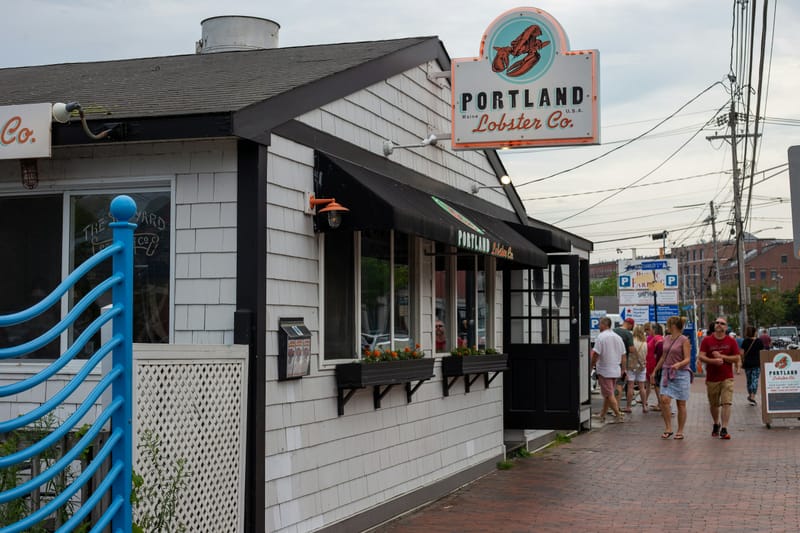
KEY FEATURES
- Built for tour and leasing support-This page is structured around the spaces and timing issues that influence office and retail perception the most.
- Bridges interior planning to leasing logic -It connects occupied interior repainting with broker tours, renewals, storefront visibility, and TI decision-making.
- Grounded in live Lightmen support pages -It ties directly into the live commercial hub, estimate page, process page, reviews page, and about page.
This is one of those categories where “just repaint it” is how people make the job worse than it needed to be.
Retail and office properties are not judged like warehouses. They are not judged like vacant buildings either. They are judged by what people see, how the place feels, whether the work makes the business look sloppy, and whether the repaint helps or hurts the property’s ability to lease, renew, tour, and keep normal activity moving. That is why retail office painting in Portland is less about paint in a vacuum and more about presentation, visibility, timing, and controlled disruption.
THINGS TO KNOW
- Retail and office repainting should be planned around perception-heavy spaces first.
- Not every repaint needs to happen entirely after-hours, but many need smarter timing than a normal occupied job.
- Reception, storefront, and shared corridor zones pull more weight than many back-of-house walls.
- Lease-support repainting and TI repainting are not the same decision.
- Daily reset matters because these properties still need to feel functional while the work is happening.
If you are dealing with a broker tour route, a reception area, a storefront, a hallway that feels tired, or an office suite that needs to stop looking like 2011 before lease conversations get real, this is the lane.
If you have not read the top of the cluster yet, start with Commercial Real Estate Painting Portland: Repaint Planning for Brokers, Owners & Asset Managers. That page is the master pillar. If the bigger challenge is occupied interiors, pair this page with Commercial Interior Painting Portland: How to Refresh Occupied Space Without Wrecking Operations. And if storefront visibility is the main issue, this page should be read next to Storefront Painting Portland.
Below is the Retail & Office Painting Portland sub-pillar.It sits under the CRE master pillar and the commercial interior branch, and it connects cleanly to the live Lightmen pages you already have: Commercial Painting Portland, Estimates, Process, Reviews, and About. Lightmen’s live reviews page also includes a commercial office review, which is useful trust support for this audience.
Why do retail and office repaint projects need their own strategy?
Because these properties live or die on perception.A warehouse can get away with looking tough.
A back-of-house industrial wall can be ugly longer than it should.
A retail frontage or office reception area does not get the same grace.Retail and office spaces are judged through:
- tours
- first impressions
- entry experience
- customer-facing visibility
- leasing photos
- reception feel
- common-area cleanliness
- whether the space feels managed or neglected
That means the repaint strategy has to match how the space is actually experienced. Not all commercial interiors need the same plan, and not all exteriors carry the same visual weight.
What should a repaint accomplish for office space?
Usually one or more of these:
- make the space show better
- support lease renewals
- remove the tired-office feel
- improve first impression for clients, brokers, or staff
- clean up common areas without triggering operational chaos
- reset a suite before or between occupants
That is why office repainting often overlaps with:
- leasing support
- tenant improvement
- common-area refresh work
- occupied interior sequencing
If the office is active during the repaint, this page should sit tightly with Commercial Interior Painting Portland, because operations and access still matter even when the core goal is visual improvement.
What should a repaint accomplish for retail space?
Retail repainting has a simpler but harsher standard: the space has to keep selling while it gets better.
That usually means the repaint should:
- protect storefront visibility
- avoid making the business look closed or messy
- improve curb appeal and customer confidence
- freshen interior customer-facing zones without killing flow
- reduce the “this place feels tired” effect
- support leasing if the space is vacant or partially vacant
Retail repaint work is less forgiving because customers, passersby, and prospective tenants judge it fast. If the active work zone looks chaotic, the business or property can feel unstable even when the work itself is fine.
That is why Storefront Painting Portland should always be tied into this pillar.
What areas usually matter most in office repaint planning?
Not every square foot matters equally.
The highest-impact office zones are usually:
- reception
- entry sequence
- conference rooms used for tours or meetings
- visible corridors
- shared tenant-facing walls
- restrooms that drag the feel down
- front-of-suite doors and trim
- break areas if they influence staff experience or tours
This is where scope control matters. You do not need to repaint every low-value back room just because paint technically sticks there. You need to improve the surfaces that shape the way the property is perceived.
For more detailed sequencing logic, Office Repaint Planning Portland should sit directly under this pillar.
What areas usually matter most in retail repaint planning?
Usually:
- storefront facade
- entry doors
- customer queue or front counter zones
- visible perimeter walls
- fitting room corridors if they exist
- signage-adjacent areas
- transition points from exterior to interior
Retail spaces get punished harder for looking half-done. If customers feel the space is mid-chaos, the repaint starts working against the business instead of for it.
That is why the job has to be staged so the space still looks intentional while work is underway.
When should retail or office painting happen after-hours?
When daytime work would interfere with the thing the property is trying to protect.
After-hours often makes more sense when:
- customer-facing activity is steady
- tours are active
- concentration-heavy office work is happening
- reception or conference areas cannot be visibly messy
- loud prep would be a problem
- the property team needs the space to stay “showable” during business hours
That said, not everything has to happen at night. A lot of smart repaint plans use a mixed schedule:
- lower-disruption tasks during operating hours
- noisier or messier tasks after-hours
- room-by-room sequencing instead of full-space activation
The point is not to act tough and say “we’ll just paint while everybody works.” The point is to keep the repaint from creating self-inflicted operational nonsense.
How do you support leasing with paint without over-improving?
By making the space feel cleaner, sharper, and more maintained without pretending paint alone is a repositioning miracle.
For leasing support, the best repaint spend is usually directed at:
- visible wear that makes prospects hesitate
- mismatched or tired finishes
- heavily scuffed or dated wall fields
- entry sequences that underperform
- common areas that weaken the rest of the building story
That is where How CRE Brokers Can Use Paint to Lease Portland Space Faster becomes a strong support page for this pillar. Leasing-support repainting is not about perfection. It is about reducing friction.
What is the difference between a lease-support repaint and a TI repaint?
A lot.
Lease-support repaint
This is about making the existing space more presentable and easier to tour or renew.
Tenant-improvement repaint
This is usually tied to a more specific suite reset, customization, or lease-driven refresh.
A lease-support scope is often broader in perception but lighter in customization.
A TI scope is often narrower in footprint but more tied to a specific occupancy or negotiation event.
That is why Tenant Improvement Painting vs Full Building Repaint in Portland belongs under this branch.
How do you refresh retail and office spaces without making them feel under construction?
By controlling:
- the active footprint
- the mess
- the sequence
- the communication
That is the game.A repaint starts feeling bad when:
- too much of the space is activated at once
- visible areas stay messy too long
- no one seems to know what is being finished when
- customer or tenant pathways feel compromised
- reception or storefront zones look abandoned
- daily cleanup is weak
A better approach:
- finish high-visibility zones cleanly
- keep work sections tight
- protect paths and key-use areas
- reset daily
- stage around the building’s real activity
That process-oriented framing is one reason the live Process page works well as a trust link under this pillar. It reinforces that the job is being handled with sequence and structure, not just raw labor.
Mini case example: office repaint done wrong vs done right
Say a Portland office suite needs repainting before broker tours and renewal conversations.
Wrong version
- all visible spaces get activated at once
- reception looks messy for days
- prep noise collides with meetings
- corridors stay half-finished too long
- the repaint technically happens, but the suite feels worse during the process than it did before it started
Better version
- reception and tour-facing zones get prioritized
- conference rooms are sequenced around use
- loud prep is scheduled more intelligently
- daily reset keeps the suite looking controlled
- the repaint supports the leasing story instead of interrupting it
That is the difference between “freshened” and “undergoing something.”
IN OUR EXPERIENCE
At Lightmen Painting, the retail and office jobs that feel strongest are usually the ones where the property team already knows whether the repaint is for leasing support, tour readiness, TI support, or just general image cleanup. The rougher jobs are the ones where people know the space feels tired, but nobody ranks the impression-heavy zones or thinks through how the work will feel while the building stays active.
How should common areas fit into retail and office repainting?
Common areas often do more perception work than tenants realize.
That includes:
- lobbies
- corridors
- stairwells
- shared restrooms
- mixed-use hallways
- elevator-adjacent zones
- front-of-suite transition areas
If these still feel beat up, the building still feels behind, even if one suite got a nice repaint.
That is why Common Area Painting for Portland Office and Mixed-Use Buildings is one of the strongest support pages under this pillar.
What mistakes waste the most money on office and retail repaint jobs?
1. Painting the wrong rooms first
Low-visibility rooms often get attention before the spaces that actually influence tours or customers.
2. Activating too much at once
This makes the whole building feel unstable.
3. Treating reception or storefront like a normal wall
Those spaces are not normal. They are impression-heavy zones.
4. Ignoring the tenant or business schedule
Not every repaint should happen like the building is empty.
5. Confusing paint refresh with full repositioning
A repaint can help a lot, but it should still be tied to the property’s actual goal.
If the broader asset decision is still fuzzy, route back up to Commercial Real Estate Painting Portland before pushing deeper into scope.
What should a property team ask before approving a retail or office repaint?
Ask these:
- What spaces matter most to tours, renewals, or customer impression?
- What can happen during business hours versus after-hours?
- What zones should be prioritized first?
- Are we supporting leasing, TI, common-area refresh, or general image cleanup?
- What should not be painted right now?
- How do we keep the active work zone from feeling too big?
- What does daily reset look like?
- Are we improving the right impression points, or just painting whatever is easiest to reach?
Those questions are usually more useful than starting with color talk.
Retail and office repaint checklist
Goal
- leasing support
- broker-tour readiness
- lease renewal support
- TI support
- common-area refresh
- general image cleanup
Scope
- high-visibility spaces ranked
- reception / storefront priorities identified
- optional low-value spaces separated
- occupied-use constraints reviewed
Execution
- work-hour strategy chosen
- active footprint kept tight
- daily cleanup defined
- routes, meetings, tours, or customer flow protected
Cheap retail/office refresh vs controlled repaint vs overbuilt makeover
| Approach | Cost now | Business continuity | Perception result | Risk | Best for |
| Cheap vague refresh | Lower | Often clumsy | Mixed | High | Owners who want lower numbers and higher friction |
| Controlled retail/office repaint | Moderate to higher | Managed | Stronger | Lower | Spaces that need to keep functioning while looking better |
| Overbuilt makeover | Highest | Heavier disruption | Sometimes stronger, sometimes unnecessary | Medium | Cases where the asset move truly supports it |
Again, the middle lane usually wins.
What live Lightmen pages already support this pillar?
These live Lightmen pages fit this branch right now:
The reviews page is especially useful because it includes a commercial office review that supports the “tight timeframe / building requirements / good communication” angle for this cluster.
Wrap-up: how do you support tours, leasing, and business continuity with paint?
By treating the repaint like a perception-and-operations problem at the same time.
That means:
- prioritize the spaces people judge first
- keep the work footprint smaller than the property
- choose the right work-hour plan
- separate leasing support from TI logic
- make common areas part of the strategy
- reset daily so the building still feels alive
That is how retail and office paint work helps the building instead of temporarily making it harder to use, show, or trust.
If you need a retail or office repaint plan that supports tours, leasing, and day-to-day use instead of fighting all three, Lightmen Painting can help sort the scope before it turns into another active-space headache.
PEOPLE ALSO ASK
What is the best time to repaint an office in Portland?
The best time is when the repaint can be planned around tours, renewals, staffing flow, and business continuity instead of being rushed after the space already feels dated.
Can a retail store be repainted while still open?
Yes, but the work needs tighter sequencing, cleaner staging, and a smaller visible footprint so the business does not feel half-shut-down.
Should office repainting happen before tours or lease renewals?
Usually yes, especially if visible wear or tired finishes are weakening the first impression of the space.
DEFINITIONS
- Retail office painting Portland – Painting work focused on office and retail properties in the Portland market.
- Office painting Portland – Interior or exterior painting for office buildings, suites, and office-adjacent spaces.
- Retail painting Portland – Painting work focused on storefronts, customer-facing interiors, and retail visibility.
- Commercial interior painting Portland – Interior repaint work for commercial spaces that often includes occupied-use planning.
- Occupied commercial painting Portland – Commercial painting completed while staff, tenants, or customers still use the property.
- Tenant improvement painting Portland – Paint work tied to a suite or lease-driven improvement scope.
- Broker-tour readiness – The condition of a space when it needs to show well for leasing tours.
- Reception priority zone – A highly visible entry or check-in space that shapes first impressions.
- Storefront visibility – How clearly active and open a retail or mixed-use frontage appears during a project.
- Daily reset – End-of-day cleanup and control that keeps the property functional and presentable during ongoing work.
Retail office painting Portland property teams need is often tied to tours, leasing, renewals, storefront presentation, and business continuity rather than simple cosmetic refreshes. Office painting Portland and retail painting Portland projects work best when reception zones, storefront-facing areas, corridors, conference rooms, and customer-facing spaces are prioritized ahead of lower-value back rooms. Commercial interior painting Portland jobs in active office and retail environments also need tighter scheduling, smaller work footprints, better daily reset, and smarter sequencing so the space still feels usable while the repaint is underway. For Portland commercial painters, the right plan usually separates lease-support repainting, tenant-improvement painting, and broader common-area refresh work instead of lumping them all into one vague scope.