Commercial Repainting Portland: When to Repaint Before It Gets Expensive
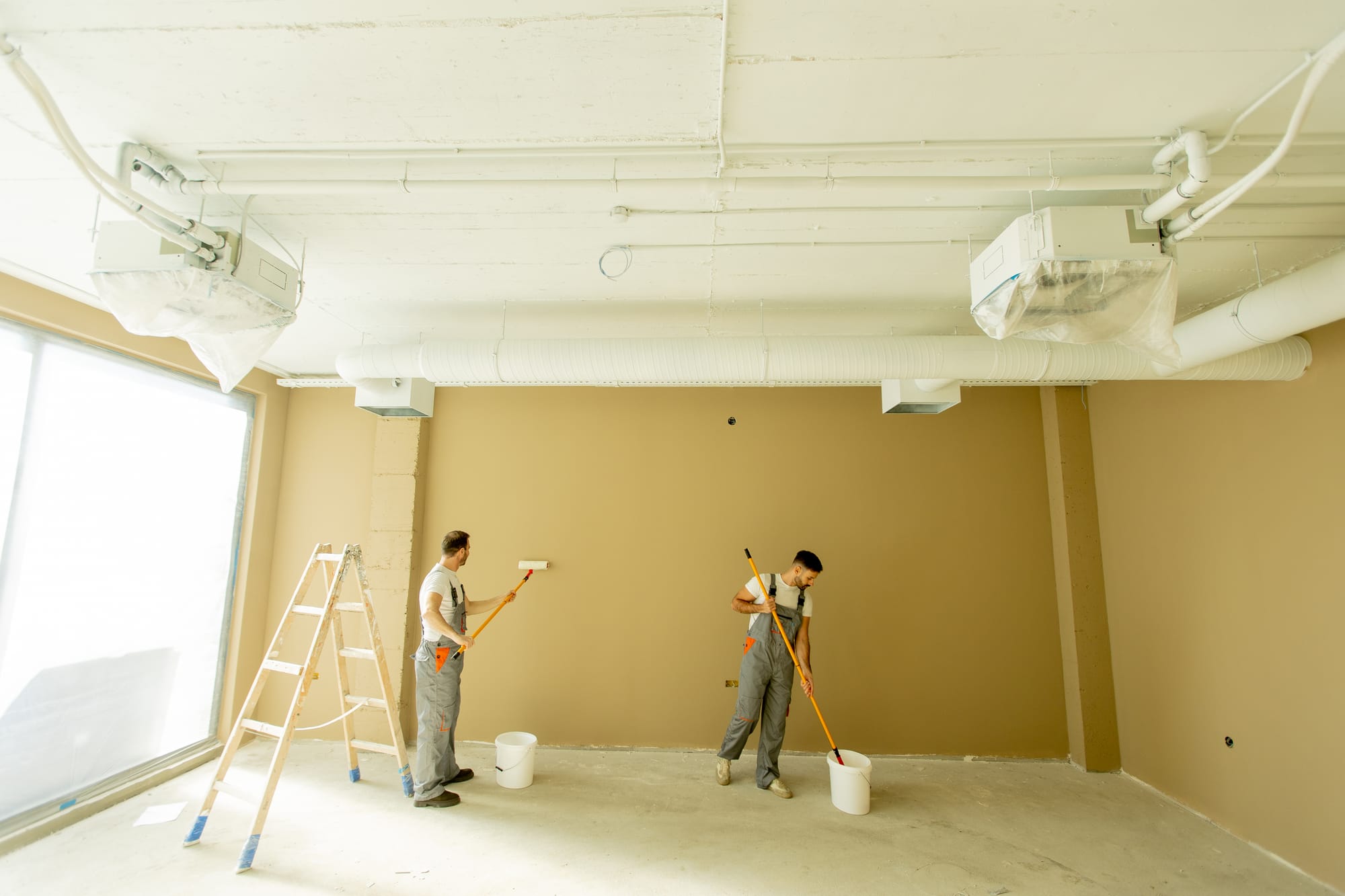
KEY FEATURES
- Protects the property before paint failure spreads - Timely repainting helps protect siding, trim, doors, metal, masonry, and interior surfaces before minor wear becomes expensive repair work.
- Reduces disruption through better planning - Commercial repainting can often be phased around tenants, customers, staff, loading areas, and business hours when it is planned early.
- Improves appearance and long-term value - A well-maintained paint system makes a commercial property look cared for while supporting leasing, customer confidence, and lower maintenance costs.
A commercial property in Portland rarely fails all at once. It fades first. Then the south and west exposures start looking tired. Trim begins to split. Exterior caulking pulls away. High-traffic interiors get scuffed beyond touch-up. Tenants start noticing. Customers notice. Then one rainy season exposes what the paint was no longer protecting.
That is when commercial repainting gets expensive.
For property managers, facility managers, building owners, and business operators, the goal is not to repaint too early or too late. The goal is to repaint at the right time, with the right coating system, using a schedule that protects the property without creating chaos for tenants, staff, or customers.
That is where a practical commercial repainting Portland plan matters.
THINGS TO KNOW
- Portland moisture makes delayed exterior repainting risky. Once coatings fail, water can start creating larger repair issues.
- The cheapest bid is not always the cheapest project. Weak prep, vague scopes, and poor scheduling can cost more later.
- Commercial repainting should be planned around operations. Tenants, staff, customers, parking, access, and safety all matter.
- Interior repainting is not just cosmetic. Worn offices, corridors, lobbies, and retail spaces affect how people judge the property.
- Good coating selection depends on the surface. Wood, metal, masonry, drywall, and high-traffic areas need different approaches.
Why Repainting Before Failure Matters in Portland
Portland buildings take a steady beating from moisture, temperature swings, UV exposure, pollen, mildew, and long damp seasons. Paint is not just decoration. On commercial properties, it acts as a protective layer between the building and everything trying to break it down.
When paint begins to fail, the cost curve changes quickly.
A timely repaint may involve washing, prep, spot repairs, caulking, priming, and applying a proper coating system. A delayed repaint may involve substrate repair, wood replacement, rust mitigation, water intrusion investigation, stucco patching, tenant complaints, and emergency scheduling.
That is a very different invoice.
For commercial exterior painting Portland projects, the timing matters even more because the weather window is not unlimited. If a property waits until late fall to deal with obvious paint failure, there may not be enough dry weather left to complete the project correctly. That creates a choice nobody likes: delay into another wet season or rush work under less-than-ideal conditions.
Neither is a great plan.
A better approach is to inspect early, budget early, and schedule before the building starts forcing decisions for you.
For a broader commercial overview, Lightmen Painting’s commercial hub can support planning here:
The Expensive Part Is Usually Not the Paint
Most commercial repaint budgets do not get blown up by the finish coat itself. The expensive part is what happens when the building has been left exposed too long.
Paint failure can create or reveal problems such as:
- Failed caulking around joints, windows, and trim
- Moisture getting behind siding or panels
- Rust forming on metal doors, railings, beams, or bollards
- Peeling paint that requires more aggressive prep
- Damaged fascia, trim, or wood elements
- Mildew growth on shaded elevations
- Tenant complaints due to poor appearance
- Extra lift time because access becomes more complicated
- More primer, more labor, and more patching than expected
This is why experienced Portland commercial painters do not only ask, “What color do you want?” They look at exposure, surface condition, access, business operations, tenant impact, coating compatibility, and timing.
A repaint is cheapest when the building is still mostly sound.
Once coating failure turns into building repair, the project becomes less predictable. At that point, the painting contractor is not just improving appearance. They are helping recover from deferred maintenance.
Clear Signs Your Commercial Property Is Ready for Repainting
Not every worn-looking surface needs a full repaint immediately. Some areas may only need maintenance, cleaning, or touch-up. But certain warning signs should get your attention fast.
Exterior signs to watch
Look for fading, chalking, peeling, cracking, bubbling, exposed wood, failing caulk, rust stains, mildew, and uneven sheen. On Portland properties, pay special attention to shaded sides of the building, areas near landscaping, parapets, trim, entryways, and surfaces that stay damp longer after rain.
Chalking is especially common on aging exterior coatings. When you rub the surface and get a powdery residue on your hand, the coating is breaking down. A little chalking may be manageable. Heavy chalking means the surface needs proper washing and preparation before repainting.
Peeling is more urgent. Once paint loses adhesion, water can get behind the coating. If that happens across large areas, prep becomes more labor-intensive.
Interior signs to watch
Commercial interior painting Portland projects often become necessary when walls no longer respond well to cleaning. High-traffic corridors, lobbies, offices, restrooms, stairwells, break rooms, and tenant turnover spaces can reach a point where touch-up makes the space look patchy instead of maintained.
Watch for scuffed walls, stained corners, damaged drywall, worn door frames, fading accent walls, and areas where previous touch-ups no longer blend.
For offices, retail spaces, and medical or professional environments, appearance matters because customers and staff read the condition of the space as a signal. Fair or not, worn paint can make a business feel neglected.
Operational signs to watch
Sometimes the best reason to repaint is not visual failure. It is timing.
If your building is about to renew leases, show vacancies, change tenants, update branding, or enter a slower operating season, repainting before the rush can reduce disruption. For property manager painting Portland projects, this is often the difference between a controlled repaint and a scramble.
Portland Weather Changes the Repaint Calendar
Commercial repainting in Portland has to respect weather. That does not mean exterior painting is impossible outside summer, but it does mean planning matters.
Moisture affects adhesion, dry time, cure time, surface prep, and scheduling. Even when the sky looks clear, the surface may still be too damp. Shaded elevations, north-facing walls, concrete, masonry, and wood details can hold moisture longer than expected.
Temperature matters too. Coatings have application ranges. If paint is applied when it is too cold, too hot, too damp, or too close to incoming rain, performance can suffer.
This is why experienced commercial repaint planning starts before the weather window is already packed. Spring inspections can identify what needs to happen. Summer and early fall often provide better scheduling opportunities for exterior work. Interior repainting can often be phased during wetter months if the property needs year-round improvements.
A smart Portland commercial painting plan separates what must be done outside from what can be handled inside, after hours, or in phases.
Do Not Wait Until Tenants Start Complaining
Tenant complaints are usually a late signal. By the time tenants complain about peeling trim, stained corridors, worn entryways, or a tired exterior, the issue has probably been visible for a while.
For multifamily painting Portland projects, this matters because residents live with the work. They care about notice, access, odor, parking, pets, safety, and how long the project will affect daily routines. Repainting too late can create more disruption because the prep is heavier and the timeline gets longer.
For office buildings, disruption affects staff productivity and client perception.
For retail properties, appearance can affect foot traffic and leasing confidence.
For warehouses and industrial sites, repainting may need to work around loading docks, shifts, forklifts, inventory, equipment, and safety zones.
Waiting until complaints pile up does not save money. It usually compresses the schedule and makes the work harder to coordinate.
Commercial Repainting Checklist for Portland Properties
Use this checklist before requesting bids or approving a repaint plan.
Property condition
- Are there areas of peeling, bubbling, cracking, or exposed substrate?
- Is caulking failing around windows, joints, trim, or transitions?
- Are there rust stains, mildew, water stains, or recurring damp areas?
- Are high-traffic interiors beyond normal cleaning or touch-up?
- Do previous paint layers appear incompatible or poorly bonded?
Business and tenant impact
- Are there occupied tenant spaces that need advance notice?
- Will work affect entrances, sidewalks, parking, loading areas, or signage?
- Does the project need after-hours, weekend, or phased scheduling?
- Are there sensitive operations such as medical, food service, childcare, or manufacturing?
- Who needs updates before and during the project?
Scope and budget
- Is this a full repaint, partial repaint, maintenance repaint, or tenant improvement repaint?
- Are repairs needed before painting?
- Are lifts, containment, special access, or traffic control required?
- Is the coating system appropriate for the substrate and exposure?
- Does the bid explain prep clearly, or does it hide behind vague language?
Long-term maintenance
- What areas are most likely to fail first?
- Should the property use more durable coatings in high-wear zones?
- Are there colors or sheens that will be easier to maintain?
- Should touch-up materials be documented for future maintenance?
- Is there a plan for periodic inspection?
For smaller owner-managed facilities, keeping basic paint prep and protection supplies on hand can help with minor maintenance between professional repaint cycles. Full commercial repainting still needs proper prep, product selection, and scheduling.
What to Expect During a Commercial Repainting Project
A well-run commercial repaint should not feel like a mystery. The process should be clear before work starts.
Step 1: Site review
The contractor should walk the property, identify substrates, note access issues, inspect failure points, and ask about operations. A good review includes more than measuring walls. It looks at how the building is used.
For example, a retail building with constant customer traffic needs a different plan than a warehouse with controlled access. A multifamily property needs resident communication and phasing. An office may need quiet, low-disruption interior scheduling.
Step 2: Scope development
The scope should explain preparation, repairs, primers, coatings, number of coats, scheduling assumptions, exclusions, and areas included. Vague scopes cause problems later.
“Paint exterior” is not enough.
A better scope explains washing, scraping, sanding, spot priming, caulking, masking, protection, application method, coating type, and cleanup expectations.
Step 3: Scheduling and communication
Commercial painting Portland projects often involve multiple stakeholders. Property managers, tenants, business owners, maintenance teams, and sometimes general contractors all need to know what is happening.
Good scheduling reduces friction. That may mean working elevations in sequence, avoiding peak customer hours, coordinating with tenant move-ins, or planning interior repainting after business hours.
Step 4: Surface preparation
Prep is where repaint quality is won or lost. Washing, scraping, sanding, patching, caulking, priming, masking, and protecting adjacent surfaces all matter.
Skipping prep is the classic cheap-bid trap.
A property can look freshly painted for a few months and then start failing because the surface was not ready to receive the coating. That is not a bargain. That is a delayed headache with a fresh color on top.
Step 5: Painting and quality review
Application should follow the coating manufacturer’s requirements and the realities of the site. After painting, the contractor should review coverage, edges, missed areas, protection, cleanup, and any punch list items.
Commercial repainting should leave the property looking better without leaving a mess for managers or tenants to deal with.
A Realistic Scenario: The Repaint That Saved the Budget
Consider a Portland-area property manager overseeing a two-story mixed-use building with ground-floor retail and offices above. The exterior still looked acceptable from a distance, but the trim was starting to crack, the south-facing elevation was badly faded, and caulking around several windows had pulled away.
The owner wanted to wait another year.During the site review, the highest-risk areas were not the large wall surfaces. They were the transitions: window trim, upper fascia, exposed wood details, and a few areas where water was moving poorly off the building.
Instead of waiting for widespread failure, the property moved forward with a planned repaint during a workable weather window. The project included washing, selective scraping, spot priming, caulking, trim repair, and a more durable exterior coating system.
The result was not just a better-looking building. It prevented small failure points from becoming rot repair, helped the retail tenants maintain a cleaner storefront appearance, and allowed the work to be scheduled in phases without blocking entrances during peak hours.
That is the difference between planned maintenance and reactive maintenance.One feels boring. The other gets expensive. Boring wins.
How to Compare Commercial Repainting Bids Without Getting Burned
Comparing commercial repaint bids can be frustrating because the numbers often do not match. One bid may be dramatically lower, another may include more prep, and another may use different coating products entirely.
The lowest number is not automatically wrong, but it needs to be understood.
Look closely at preparation
Prep is labor. Labor costs money. If one bid is much lower, check whether it includes washing, scraping, sanding, caulking, priming, masking, and protection.
A thin prep scope can make a bid look attractive while pushing risk onto the owner.
Confirm coating system details
A good bid should identify the coating type or product standard, not just say “premium paint.” Different substrates need different systems. Masonry, metal, wood, drywall, previously painted surfaces, and industrial areas all have different requirements.
For warehouse painting Portland projects, durability may matter more than decorative finish. For office painting Portland projects, cleanability, low odor, and scheduling may matter more. For exterior repainting, adhesion and moisture resistance are key.
Ask about disruption control
Commercial painting is not only a finish trade. It is an operational event. The contractor should be able to explain how they will protect tenants, customers, equipment, floors, landscaping, signage, and adjacent surfaces.
If the property remains occupied, disruption control should be part of the plan.
Watch for unclear exclusions
Some exclusions are normal. The problem is when they are vague.Common areas that should be clarified include substrate repairs, lift rental, after-hours work, color changes, specialty coatings, access restrictions, moving equipment, and unforeseen damage.
Evaluate communication
A contractor who communicates clearly before the job is more likely to communicate clearly during the job. That matters when weather changes, tenant concerns pop up, or the project needs sequencing.
Lightmen Painting focuses on practical planning because commercial repainting is rarely just paint. It is timing, protection, access, communication, and execution.
Interior Repainting: When Walls Start Hurting the Business
Commercial interior repainting is often delayed because it feels less urgent than exterior work. But interior condition affects how people experience the property every day.
In offices, worn paint can make a workspace feel dated. In retail, scuffed walls can cheapen the customer experience. In multifamily corridors, beat-up walls make residents feel like maintenance is falling behind. In warehouses, painted safety markings, doors, offices, and break areas can affect both appearance and function.
Interior repainting may be needed when:
- Cleaning no longer restores the surface
- Touch-ups flash or leave uneven patches
- Tenant turnover requires a reset
- Branding or finishes are outdated
- High-touch areas show heavy wear
- Drywall repairs are visible
- Common areas no longer match lease expectations
The right interior repaint plan considers odor, dry times, access, noise, furniture, equipment, floor protection, and business hours. Sometimes the best plan is night work or weekend work. Sometimes it is phased daytime work with clear containment and communication.
Good commercial interior painting Portland work should improve the space without making everyone hate the process.
Exterior Repainting: The Building Envelope Comes First
Exterior repainting is about appearance, but it is also about the building envelope. Paint helps protect siding, trim, doors, metal, masonry, and other exposed surfaces from weather.
Portland’s damp climate makes exterior maintenance especially important. If water gets behind failing coatings, the paint problem can become a repair problem.
Exterior repainting may be needed when:
- The coating is chalking heavily
- Paint is peeling or blistering
- Wood trim is exposed or cracking
- Caulking is split or missing
- Metal surfaces show rust
- Stucco or masonry coatings are failing
- Color has faded unevenly
- The property looks neglected compared to nearby buildings
A strong commercial exterior painting Portland plan should include surface washing, moisture-aware scheduling, proper masking, careful prep, compatible primers, and coatings that match the substrate.
Skipping those steps to save money is like buying cheap tires before driving over the mountain in February. Technically possible. Not smart.
Cost and Timing Considerations for Commercial Repainting
No responsible contractor should throw out a one-size-fits-all commercial repaint price without seeing the property. Costs depend on size, height, access, prep needs, coating system, repairs, scheduling constraints, and whether the building is occupied.
That said, the biggest cost drivers usually include:
- Surface condition
- Amount of prep required
- Building height and access
- Specialty equipment or lifts
- Interior versus exterior scope
- Number of colors and finish changes
- Occupied-space scheduling
- Substrate repairs
- Coating type
- Weather delays
Timing matters because better planning usually gives you more options. If you wait until paint is failing everywhere, you may have fewer scheduling choices and higher prep costs.
For property managers building annual maintenance plans, it often makes sense to inspect exterior paint conditions before budget season. That allows owners to make decisions before urgent repairs force the issue.
Common Mistakes That Make Commercial Repainting More Expensive
Waiting for obvious failure
By the time peeling is widespread, repainting is no longer simple maintenance. It has become recovery work.
Choosing the cheapest unclear bid
A low bid with weak prep details is risky. You may save money upfront and pay for it later.
Ignoring tenant and business disruption
Painting around occupied spaces requires planning. Poor communication creates complaints even when the paint work itself is solid.
Using the wrong coating system
Not every paint belongs on every surface. Product choice should match substrate, exposure, cleaning needs, and use.
Painting over moisture problems
Paint does not fix water intrusion. If moisture is causing failure, the source needs to be addressed before repainting.
Forgetting future maintenance
Documenting colors, products, and touch-up procedures makes future maintenance easier. It also helps avoid mismatched patches later.
How Often Should Portland Commercial Properties Be Repainted?
There is no single repaint cycle that applies to every property. A heavily exposed retail building may need attention sooner than a protected office interior. A multifamily property with busy corridors may need common area repainting more often than exterior siding. A warehouse may have interior durability needs that differ from its exterior appearance needs.Instead of relying only on a calendar, use condition-based planning.
Ask:
- Is the coating still protecting the surface?
- Are failure points isolated or spreading?
- Are tenants, customers, or staff noticing wear?
- Is the property due for leasing, sale, or repositioning?
- Will waiting increase prep or repair costs?
- Is the next good weather window already filling up?
A repaint schedule should be based on exposure, use, surface condition, and business priorities.
Where Lightmen Painting Fits Into the Planning Process
Lightmen Painting works well for commercial clients who want a repaint plan that makes sense before the project becomes urgent. That includes commercial buildings, offices, multifamily properties, retail spaces, warehouses, and other Portland-area properties where appearance, protection, scheduling, and budget all matter.
The best commercial repaint projects usually start with a practical conversation:What is failing?
What can wait?
What needs attention now?
How can the work be phased?
What will reduce disruption?
What coating system makes sense?
What does the property need to look like when the work is done?
That is the kind of conversation that helps owners and managers avoid expensive mistakes.
For service planning, see:
commercial interior painting Portland
commercial exterior painting Portland
property manager painting Portland
PEOPLE ALSO ASK
When should a commercial building in Portland be repainted?
A commercial building should be considered for repainting when paint begins fading, chalking, peeling, cracking, or failing around trim, joints, windows, or high-exposure areas. In Portland, it is smart to inspect before the wet season so small coating problems do not turn into moisture-related repairs.
Is commercial repainting mainly for appearance?
No. Appearance matters, but repainting also protects surfaces from moisture, wear, UV exposure, mildew, and long-term deterioration. For commercial properties, repainting can also support leasing, tenant satisfaction, customer perception, and lower maintenance costs.
How can commercial painting be done without disrupting business?
The project can be phased by area, scheduled after hours or on weekends, coordinated around tenant access, and planned with clear notices. A good commercial painting contractor should discuss entrances, parking, work zones, odors, noise, and cleanup before work begins.
DEFINITIONS
- Commercial repainting - Painting an existing commercial property again after the previous coating has aged, worn down, faded, or failed.
- Commercial painting - Painting services for business, multifamily, industrial, retail, office, warehouse, and other non-residential properties.
- Coating system - The combination of surface prep, primer, paint, and application method used to protect and finish a surface.
- Substrate - The surface being painted, such as wood, drywall, metal, stucco, concrete, masonry, or previously painted siding.
- Chalking - A powdery residue that forms when exterior paint breaks down from age, sun, and weather exposure.
- Adhesion - How well paint sticks to the surface. Poor adhesion leads to peeling, bubbling, or flaking.
- Spot priming - Applying primer only to specific bare, repaired, stained, or problem areas before finish painting.
- Caulking - Sealing joints, gaps, and transitions to help block moisture and improve the finished appearance.
- Flashing - Uneven sheen or visible patchiness that can happen when touch-ups, repairs, or paint absorption do not blend.
- Low-VOC paint - Paint with lower levels of volatile organic compounds, often preferred for occupied interiors where odor and air quality matter.
- Elastomeric coating - A flexible coating often used on certain masonry or stucco surfaces where movement and moisture resistance are important.
- Phased scheduling - Breaking a commercial painting project into sections to reduce disruption to tenants, staff, customers, or operations.
Commercial repainting Portland properties at the right time can help owners, property managers, and facility managers avoid larger maintenance problems caused by moisture, peeling paint, failed caulking, worn interiors, and neglected exterior surfaces. Whether the project involves commercial exterior painting Portland buildings before the rainy season, commercial interior painting Portland offices after tenant turnover, warehouse painting Portland facilities around active operations, or multifamily painting Portland communities with residents on site, the planning process matters. Experienced Portland commercial painters should understand coatings, prep, scheduling, access, tenant communication, and property protection. A smart repaint plan helps improve appearance, reduce disruption, protect surfaces, and control long-term maintenance costs for commercial properties across the Portland metro area.
If you want help planning a commercial repaint before it turns into a bigger repair project, Lightmen Painting can help. Whether you are dealing with a tired exterior, worn interiors, tenant turnover, or a property that needs a smarter maintenance plan, we can help you think through the timing, scope, coatings, and scheduling so the work makes sense for your building.